Key Points
- Andy Burnham has paused plans to release prisoners early following a wave of public backlash.
- The prime minister confirmed that “no prisoners will be let out” until an urgent review has been carried out.
- The scheme, introduced under the Sentencing Act 2026, was designed to ease overcrowding in prisons across England and Wales.
- Backlash intensified after it emerged that two of the three people convicted of killing PC Andrew Harper in 2019 could qualify for early release.
- Lissie Harper, PC Harper’s widow, said cross-party support for tougher sentencing for those who kill emergency workers “feels forgotten”.
- Chris Philp, the Conservative shadow home secretary, called for the scheme to be “urgently cancelled” on social media platform X.
- The men’s prison estate in England and Wales is currently operating at 97 per cent capacity, according to the Institute for Government.
- Up to 7,000 inmates on standard sentences were expected to be released early across ten tranches under the original policy.
- Offenders convicted of more serious crimes, including manslaughter and soliciting murder, were expected to be released after serving half of their sentence rather than two-thirds.
- Andy Burnham said his government “will not hesitate” to make further changes if the review finds them necessary.
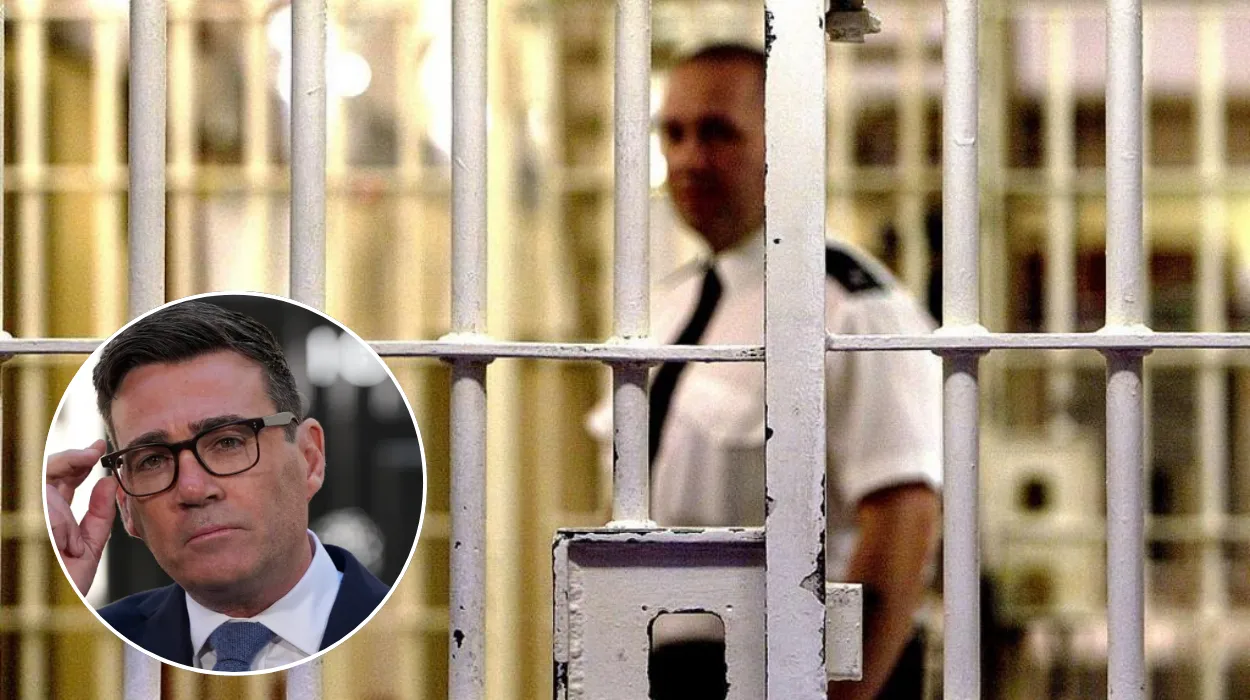
Westminster (Britain Today News) July 23, 2026 – Andy Burnham has announced that he will be pausing the government’s scheme to release some prisoners early, following widespread backlash from victims’ families, opposition politicians and members of the public. The prime minister declared that “no prisoners will be let out” under the policy until an urgent review into the legislation has been completed, in a move that marks a significant U-turn on one of his government’s flagship criminal justice reforms.
- Key Points
- What Has Andy Burnham Announced About the Prisoner Release Scheme?
- Why Was the Early Release Scheme Introduced in the First Place?
- What Sparked the Backlash Against the Scheme?
- What Did the Prime Minister Say in His Statement?
- How Many Prisoners Were Due to Be Released Under the Scheme?
- What Is the Current Capacity of the Prison Estate?
- How Has PC Andrew Harper’s Widow Responded?
- What Is Harper’s Law and Why Does It Matter?
- What Has the Tory Shadow Home Secretary Said About the Scheme?
- What Happens Next for the Early Release Scheme?
What Has Andy Burnham Announced About the Prisoner Release Scheme?
Andy Burnham confirmed on Wednesday afternoon that the early release scheme, which had been due to expand from 2 September, would be halted with immediate effect. The decision comes after days of mounting pressure from campaigners, bereaved families and MPs across the political spectrum, who argued that the policy risked freeing dangerous offenders back into communities before they had served an appropriate portion of their sentences.
In a statement issued from Downing Street, the prime minister said:
“Keeping the public safe will always be my top priority.
“I am working closely with the new justice secretary and have instructed my team to put a pause on the changes that were due to start in September.
“No prisoners will be let out under this policy until we have conducted an urgent review and done everything we can to minimise risk to the public.
“Where changes are needed, we will not hesitate to make them.”
The announcement effectively freezes the rollout of expanded early release eligibility, though it remains unclear how long the review will take or whether prisoners already released under earlier, narrower provisions of the scheme will be affected retrospectively.
Why Was the Early Release Scheme Introduced in the First Place?
The scheme was originally unveiled under the Sentencing Act 2026, brought forward under Keir Starmer, and was designed primarily as a response to chronic overcrowding across the prison estate. Ministers had argued that without intervention, prisons risked running out of usable capacity altogether, creating what officials privately described as a looming operational crisis.
Under the initial policy, low-level offenders had their sentences suspended more frequently, allowing them to be released earlier than under previous sentencing guidelines. This element of the scheme had already been in operation and had not, until now, generated significant controversy.
However, changes due to take effect from 2 September would have gone considerably further, extending the early release provisions to cover more serious offenders as well. It was this expansion that triggered the backlash which ultimately forced the prime minister’s hand.
What Sparked the Backlash Against the Scheme?
Concerns about the proposals began to escalate sharply on Wednesday, when it emerged that two of the three individuals convicted of killing PC Andrew Harper in 2019 could potentially become eligible for release under the expanded scheme. PC Harper, a Thames Valley Police officer, was killed while responding to a burglary, and his death led to significant public and political attention on sentencing for those who kill emergency service workers.
The revelation that his killers might benefit from the very policy intended to relieve prison overcrowding provoked immediate and intense criticism, with victims’ groups, opposition MPs and members of the public voicing anger that serious violent offenders could be freed early under the new rules.
What Did the Prime Minister Say in His Statement?
Beyond confirming the pause, Andy Burnham used his statement to emphasise that public safety would remain the guiding principle of any future decisions on the policy. He said:
“Keeping the public safe will always be my top priority.”
He went on to stress that the government was not abandoning efforts to address prison overcrowding altogether, but that any further changes would only proceed once the review had concluded and risks to the public had been properly assessed. His closing remark –
“where changes are needed, we will not hesitate to make them”
– was widely interpreted as leaving the door open to further amendments to the scheme, rather than a permanent scrapping of the policy.
How Many Prisoners Were Due to Be Released Under the Scheme?
According to the details of the original policy, the Sentencing Act was intended to release up to 7,000 inmates serving standard sentences, with releases staggered across ten separate tranches. Under these provisions, eligible prisoners would have been freed after serving just a third of their expected time behind bars.
Thousands more prisoners convicted of more serious offences were also expected to be released early, though under slightly different terms. Rather than serving a third of their sentence, this group would have been released after serving half of their time, compared with the two-thirds threshold that had applied previously.
The original guidance for this more serious category of offender was drawn broadly enough to include offences such as manslaughter and soliciting murder, a detail that has drawn particular scrutiny in recent days.
What Is the Current Capacity of the Prison Estate?
The pressure to introduce early release measures stemmed largely from severe overcrowding across the men’s prison estate in England and Wales. Figures show that the men’s prison estate is currently operating at 97 per cent capacity. While this represents a fall from the 99 per cent capacity recorded in 2024, campaigners and officials alike have warned that the system remains dangerously close to full, leaving little room for manoeuvre should demand for prison places rise further.
This context has shaped much of the debate around the scheme, with ministers arguing that some form of early release remains necessary to prevent the system from becoming unworkable, even as critics insist that public safety must not be compromised in the process.
How Has PC Andrew Harper’s Widow Responded?
Lissie Harper, the widow of PC Andrew Harper, issued a strongly worded statement following the revelations about her late husband’s killers. She said:
“When I fought for Harper’s Law, I was supported not only by the Conservative government of the day but by the Labour party too.
“They pledged to support our cause and agreed that those who kill emergency workers should face tougher sentences because some crimes are so grave they demand meaningful punishment.
“That cross-party support helped make Harper’s Law a reality. Today, it feels forgotten.”
Her comments reflect a broader sense among campaigners that the expanded early release scheme risked undermining protections that had previously enjoyed support from politicians across party lines.
What Is Harper’s Law and Why Does It Matter?
Harper’s Law was introduced following the death of PC Andrew Harper in 2019 and was designed to ensure that those convicted of killing emergency workers in the course of their duty face significantly tougher sentencing than might otherwise apply. The law was championed by Lissie Harper in the years following her husband’s death and received backing from politicians across the political divide at the time of its introduction.
The prospect that individuals convicted under circumstances connected to Harper’s Law could nonetheless benefit from a general early release scheme has raised questions about how such legislation interacts with broader sentencing reform, and whether further safeguards are required to prevent similar situations arising in future.
Explore More about Politics:
UK’s Constitutional Safeguards Under Scrutiny As Lords Launch New Inquiry
House Of Lords Tightens Chamber Conduct And Speaking Rules
What Has the Tory Shadow Home Secretary Said About the Scheme?
Chris Philp, the Conservative shadow home secretary, was among the most vocal critics of the policy. Writing on X, he stated that the
“early release scheme allows rapists and serious criminals out of prison early and it must be urgently cancelled.”
His comments echoed concerns raised by other opposition figures and campaigners in the days leading up to the prime minister’s announcement, and reflect the pressure that had been building on the government from across the political spectrum, not solely from within Westminster but from victims’ families and advocacy groups as well.
What Happens Next for the Early Release Scheme?
With the scheme now paused, attention turns to the scope and timeline of the promised review. The prime minister has not set out a specific deadline for its completion, nor has he clarified in detail which categories of offender will be reassessed as part of the process. What is clear is that no prisoners will be released under the expanded provisions until the review concludes and ministers are satisfied that adequate safeguards are in place.
The government continues to face the underlying challenge that prompted the scheme’s creation – a prison estate operating close to full capacity – meaning any long-term solution will likely need to balance public safety concerns against the practical realities of an overstretched justice system. Whether the review results in a scaled-back version of the scheme, additional exclusions for certain categories of offender, or a more fundamental rethink of the government’s approach to sentencing reform remains to be seen.
For now, the pause represents a significant, if potentially temporary, retreat from one of the government’s central criminal justice policies, and one that has been shaped directly by the voices of victims’ families, opposition politicians and public pressure over the course of a single week.