Key Points
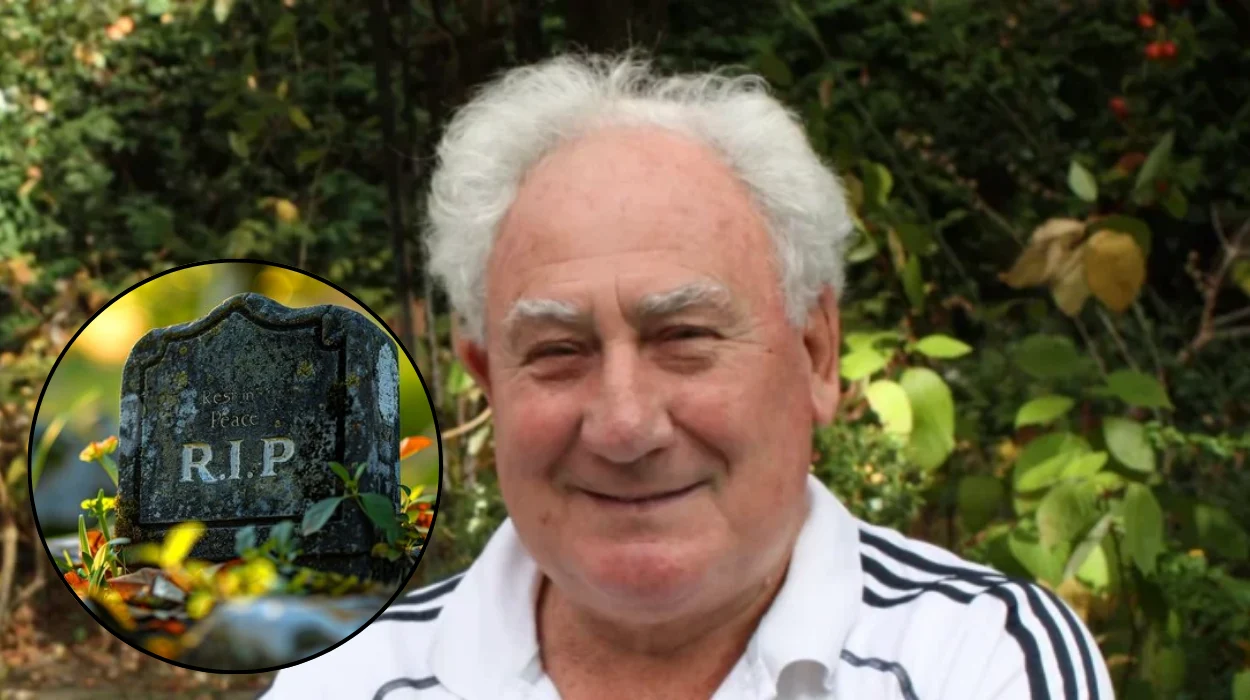
- Tom McNab, one of British athletics’ most influential post-war figures, has died aged 92.
- He was a Scottish triple jump champion who later became a National Athletics Coach for the South of England in 1963.
- McNab devised the Five Star Award scheme in 1966, a schools athletics badge system used by tens of millions of children over several decades.
- He established the national junior decathlon programme, working with a teenage Daley Thompson, who went on to win two Olympic decathlon golds.
- McNab coached at the 1972 Munich and 1976 Montreal Olympic Games.
- He served as technical director and athletics consultant on the Oscar-winning film Chariots of Fire.
- Beyond athletics, he was fitness advisor to the Rugby Football Union between 1987 and 1992, helping England reach the 1991 Rugby World Cup final.
- He later worked with British Bobsleigh, Chelsea FC, and produced a report on English amateur boxing.
- McNab was a bestselling novelist, with Flanagan’s Run (1982) winning Scottish Novel of the Year and being translated into 16 languages.
- He founded a 300-member athletics club in St Albans in 1990 and continued coaching into his seventies, including a young Greg Rutherford.
- He received the Geoff Dyson Award and a Winston Churchill Fellowship, and served as an Olympic historian to the IOC from 1976.
St Albans (Britain Today News) July 15, 2026 – Tom McNab, the Scottish triple jump champion turned National Coach, author and the technical brain behind the Oscar-winning film Chariots of Fire, has died at the age of 92, following a life that touched almost every corner of British sport across seven decades.
- Key Points
- Who was Tom McNab?
- What was Tom McNab’s career in athletics coaching?
- How did Tom McNab create the Five Star Award scheme?
- What role did Tom McNab play in Chariots of Fire?
- How did Tom McNab help England reach the 1991 Rugby World Cup final?
- What other sports did Tom McNab influence beyond athletics?
- What awards and honours did Tom McNab receive?
- What books did Tom McNab write?
- How did Tom McNab impact grassroots athletics in St Albans?
- How will Tom McNab be remembered?
McNab’s death marks the passing of one of the last surviving figures from the generation of National Coaches who professionalised British athletics coaching in the 1960s and 1970s. His influence stretched from school playing fields, through Olympic Games, to the film industry and the bestseller charts, making him one of the most versatile sporting figures Britain has produced in the modern era.
Who was Tom McNab?
Tom McNab was born in Glasgow on 16 December 1933 and was educated at Whitehill Secondary School before training as a PE teacher at Jordanhill College. He completed National Service in the RAF, reaching the rank of Flying Officer, before building a competitive athletics career as a triple jumper with Shettleston Harriers and later Victoria Park AAC.
He won the Scottish senior triple jump title five times and set a national record of 14.58 metres in Glasgow in 1958. Remarkably, he returned to competitive athletics in his sixties, switching to the hammer and continuing to collect national medals in his age group, though he was known to play down his own athletic achievements with characteristic self-deprecation.
What was Tom McNab’s career in athletics coaching?
McNab’s coaching career began in earnest in 1963, when he was appointed National Athletics Coach for the South of England — a significant and influential post in British athletics at the time. From that role, he built a reputation as one of the sport’s most inventive and energetic technical minds, going on to serve as one of Britain’s Olympic athletics coaches at both the 1972 Munich Games and the 1976 Montreal Games.
His coaching bibliography from the period became essential reading for a generation of British coaches. Modern Schools Athletics (1966), Triple Jump (1968) and Decathlon (1972) were regarded as standard technical texts, reflecting his deep interest in both the science and history of the sport.
How did Tom McNab create the Five Star Award scheme?
Perhaps McNab’s most far-reaching contribution to British sport came in 1966, when he devised the Five Star Award scheme — a straightforward system of school athletics badges designed to introduce children to technical events such as hurdling and jumping that they might never otherwise have attempted. Over the following decades, the scheme reached tens of millions of young people, becoming one of the most successful grassroots initiatives in the history of British sport.
The scheme’s badges became a familiar sight on school tracksuits throughout the 1970s and 1980s, to the extent that McNab would often joke that many children’s tracksuits of that era were effectively held together by the Five Star Award badges sewn onto them. In later years, he was openly critical of subsequent youth participation schemes, including the Shine Awards and Star:Track, which were introduced in the build-up to the London 2012 Olympics.
Alongside the Five Star Award, McNab established the national junior decathlon programme in 1966. It was through this initiative that he began working with a teenage Daley Thompson — a coaching relationship widely credited with helping set Thompson on the path to two Olympic decathlon gold medals.
What role did Tom McNab play in Chariots of Fire?
McNab’s deep historical knowledge of athletics, combined with his coaching pedigree, led producer David Puttnam to recruit him as technical director and athletics consultant on Chariots of Fire, the 1981 film that went on to win four Academy Awards, including Best Picture.
McNab personally put the film’s leads, Ben Cross and Ian Charleson, through their paces during training sessions on a freezing track in Putney as they prepared to portray Olympic athletes on screen. He was also responsible for reshaping Nigel Havers’ aristocratic hurdler character in the film, drawing inspiration from Lord Burghley and the champagne-glasses-on-hurdles training method associated with Olympic medallist Don Finlay.
His work in film did not end there. McNab went on to act as a consultant or writer on several other athletics-themed productions, including the 1984 television film The First Olympics: Athens 1896.
How did Tom McNab help England reach the 1991 Rugby World Cup final?
Although athletics remained his first love, McNab’s expertise extended well beyond the track. Between 1987 and 1992, he served as fitness advisor to the Rugby Football Union, playing a role in preparing England for the inaugural Rugby World Cup and their run to the final of the 1991 tournament. That work saw him named British Coach of the Year, a rare honour for someone whose primary background lay in a different sport altogether.
McNab often spoke of his belief that “athletic principles” underpinned success across many disciplines, and his time with the RFU became one of the clearest demonstrations of that philosophy in practice.
What other sports did Tom McNab influence beyond athletics?
McNab’s reach extended into a striking range of sporting disciplines over the years. He served as Performance Director for British Bobsleigh, advised Chelsea Football Club, and in 2004 produced an influential report on English amateur boxing. Each of these roles reflected his conviction that the fundamentals of athletic performance — speed, power, technique and conditioning — could be applied productively across sports far removed from the running track.
What awards and honours did Tom McNab receive?
McNab’s contribution to British coaching was formally recognised on several occasions. He was one of only three British coaches to receive the Geoff Dyson Award, presented for a sustained and significant contribution to coaching in the United Kingdom, joining Maeve Kyle and Frank Dick as recipients of that honour.
Earlier in his career, in 1967, he was awarded a Winston Churchill Fellowship, and from 1976 he served as an Olympic historian to the International Olympic Committee — a role that drew on his lifelong fascination with the sport’s past as much as its present.
What books did Tom McNab write?
Beyond coaching, McNab built a substantial parallel career as a novelist and journalist, contributing regularly to most of Britain’s broadsheet newspapers. His 1982 novel Flanagan’s Run, which told the story of a transcontinental foot race, won the Scottish Novel of the Year award and topped bestseller lists after being translated into 16 languages. The rights to the novel were bought by Miramax, and McNab was engaged by Harvey Weinstein to write the screenplay adaptation.
Further novels followed, including Rings of Sand (1984) and The Fast Men (1986), the latter billed at the time as the first “sports-western.” His non-fiction output was equally prolific, encompassing technical and historical works such as The Complete Book of Track & Field, and, in collaboration with fellow writer Peter Lovesey, The Guide to British Track and Field Literature.
Explore More about Sports:
Security Alert for England-Argentina Semifinal Amid Historic Tensions
Jordan Spieth Returns to Royal Birkdale for Open Championship
How did Tom McNab impact grassroots athletics in St Albans?
McNab eventually settled in St Albans, where in 1990 he founded a 300-member athletics club that became a fixture of the local sporting community for decades. He continued coaching well into his seventies, and in 2005 he helped develop an unknown club athlete named Greg Rutherford into the world’s leading junior long jumper — a reminder that, whatever else occupied his time, McNab never truly stepped away from hands-on coaching.
He remained physically active into old age, playing tennis and lifting weights into his eighties, and continued to be a visible presence at major domestic athletics events, including the English Schools’ Championships and national championships, where his distinctive booming voice was a familiar sound around the country’s tracks for many years.
How will Tom McNab be remembered?
Those who knew McNab describe him as a generous, endlessly curious figure — as comfortable discussing the training methods of Victorian-era professional “peds” as he was analysing the javelin technique of a modern decathlete. He was known throughout his life for his willingness to pass on his knowledge to the next generation of coaches, writers and athletes, and for the closeness of his friendships with fellow National Coaches such as Wilf Paish and John Anderson, alongside whom he helped shape British athletics coaching for a generation.
An energetic and restless character throughout his life, McNab leaves behind a legacy that spans Olympic Games, Hollywood, Twickenham, and school playgrounds across the country — a breadth of influence matched by very few figures in the history of British sport.