Key Points
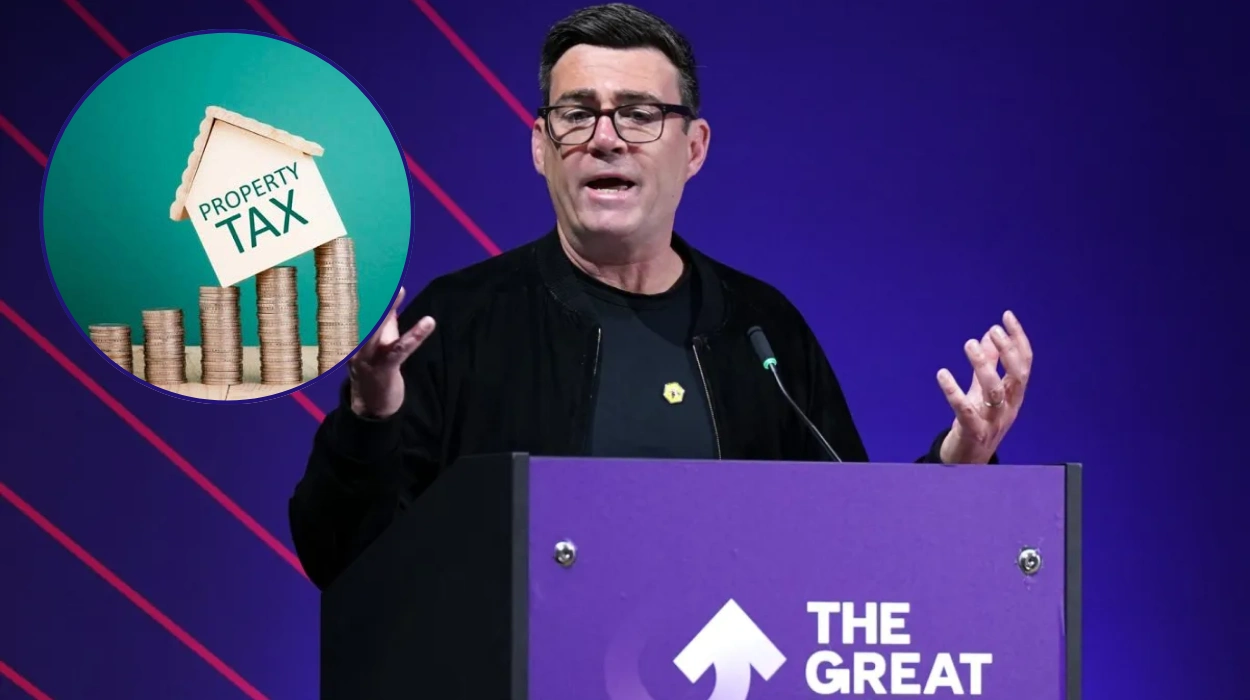
- Andy Burnham, the former Greater Manchester Mayor tipped to become Prime Minister, has previously backed reforming stamp duty.
- He has endorsed a Land Value Tax (LVT) as a potentially “more productive” alternative to the current system.
- Stamp duty is currently charged on property purchases above £125,000, or £300,000 for first-time buyers, in England and Northern Ireland.
- An economist at the Institute for Fiscal Studies has argued that almost any property tax would be an improvement on stamp duty.
- A leading property analyst has warned that introducing sweeping tax changes without a fresh electoral mandate would be difficult.
- Rightmove has separately called for stamp duty reform to help first-time buyers onto the property ladder.
- No formal manifesto commitment on the issue has yet been published.
Westminster (Britain Today News) July 11, 2026 — Andy Burnham could introduce an alternative to stamp duty, having previously endorsed reform of the tax that is charged on property purchases across England and Northern Ireland. The former Greater Manchester Mayor, widely expected to take over as Labour leader and Prime Minister, has so far kept his broader tax plans close to his chest, but his past remarks on property taxation have drawn renewed attention as speculation over his premiership grows.
- Key Points
- Who Is Andy Burnham and Why Is He Tipped to Become Prime Minister?
- What Is Stamp Duty and How Does It Currently Work?
- Why Has Andy Burnham Criticised Stamp Duty in the Past?
- What Is a Land Value Tax and How Would It Work?
- What Have Economists Said About Replacing Stamp Duty?
- What Do Property Experts Think About the Potential Change?
- What Would Be Needed to Make Any New System Work?
- What Could the Wider Housing Reform Package Look Like?
- How Have Markets and the Wider Property Sector Reacted?
- What Would Change for Existing Homeowners?
- What Happens Next?
Who Is Andy Burnham and Why Is He Tipped to Become Prime Minister?
Andy Burnham built his political profile as the Mayor of Greater Manchester, a role in which he became known for campaigning on housing, social care and devolution issues. Before taking on that role he served as a Member of Parliament and held several Cabinet positions, including Health Secretary, giving him a long track record in national policymaking that predates his time in Manchester.
He has since re-entered Westminster politics and is now widely regarded as the frontrunner to lead the Labour Party. While he has not published a full policy prospectus, his previous public statements on taxation, and particularly on property, are being closely scrutinised as indicators of the direction a Burnham-led government might take. Supporters point to his consistent focus on housing affordability during his time as Mayor as evidence that reform in this area would be a genuine priority rather than a passing comment. Critics, meanwhile, note that many of his most eye-catching remarks on tax were made outside government, and that translating them into deliverable policy from Downing Street would be a considerably more complex undertaking.
What Is Stamp Duty and How Does It Currently Work?
Stamp duty land tax is charged on the purchase of property or land in England and Northern Ireland once the price paid exceeds a set threshold. That threshold currently stands at £125,000 for most buyers, rising to £300,000 for those purchasing their first home. The tax is charged on a sliding scale above these thresholds, meaning the proportion paid increases in bands as the purchase price rises, in a similar way to income tax bands.
The tax is paid upfront at the point of purchase, and campaigners have long argued that this structure discourages people from moving house, since the cost is incurred every time a transaction takes place rather than being spread out over time. This is sometimes described by economists as a “transaction tax”, distinguishing it from taxes such as council tax, which are charged annually regardless of whether a property changes hands. Because the charge is triggered by movement rather than ownership, critics argue it can discourage older homeowners from downsizing and can add friction for growing families looking to move to larger properties, potentially reducing the overall efficiency of the housing market.
Why Has Andy Burnham Criticised Stamp Duty in the Past?
Burnham has previously been critical of stamp duty, arguing that it is not an efficient way of taxing property. He has instead pointed to a Land Value Tax as a “more productive form of taxation”, suggesting that such a system would encourage better use of land rather than penalising the act of buying and selling it.
What Is a Land Value Tax and How Would It Work?
A Land Value Tax, often abbreviated to LVT, is an annual charge based on the underlying value of a plot of land rather than on transactions involving it. Rather than being paid once at the point of sale, as with stamp duty, an LVT would be levied every year, in a similar way to council tax, but calculated according to land value rather than property banding.
Burnham has previously set out his thinking on why he favours this approach. He said the aim would be to
“make sure land is used for good, productive purposes”,
adding that those “sitting on it and hoarding it” would face a tax bill, with the proceeds “redistributed” elsewhere.
Would a Change of This Kind Definitely Happen?
Importantly, the fact that Burnham has spoken favourably about a Land Value Tax in the past does not guarantee that such a policy would be introduced were he to become Prime Minister. No formal manifesto commitment on stamp duty or an LVT has yet been published, and any change of this scale would need to clear significant parliamentary and administrative hurdles before being implemented.
What Have Economists Said About Replacing Stamp Duty?
Economists who study the property market have generally been sympathetic to the idea that stamp duty is an inefficient tax. Stuart Adam, an economist at the Institute for Fiscal Studies, has said that almost any alternative property or local tax would represent an improvement on the current system, arguing that stamp duty “discourages people from buying and selling” He has suggested that scrapping the tax could ease pressure on the housing market by reducing the need for additional housebuilding, since existing housing stock would be used more efficiently as people moved home more freely.
What Do Property Experts Think About the Potential Change?
Not everyone in the property industry is convinced that such a significant reform could be delivered easily. Lucian Cook, head of residential research at estate agency Savills, has cautioned that any move to overhaul the system would create clear winners and losers, and that pushing through a change of this magnitude without a direct electoral mandate for the policy would be challenging within the current Parliament. He has also stressed that any replacement system would need to be designed carefully so that it does not simply shift the burden elsewhere without addressing the underlying issue of suppressed transaction activity.
Why Are First-Time Buyers Central to the Debate?
First-time buyers are frequently cited as the group most affected by the current stamp duty system, even though many benefit from a higher starting threshold. Industry voices, including the property website Rightmove, have called for the tax to be scrapped entirely for first-time buyers purchasing new-build and resale properties. Alex Slater, director of new homes at Rightmove, has argued that this group underpins the wider housing market, but that affordability pressures are making it increasingly difficult for younger buyers to get onto the property ladder in the first place.
What Would Be Needed to Make Any New System Work?
Property analysts have repeatedly stressed that any replacement for stamp duty would need to be revenue neutral, meaning it should raise a broadly similar amount of money for the Treasury rather than creating a shortfall. Achieving that balance while also reducing the drag that stamp duty places on transaction activity is seen as one of the central challenges facing any government attempting reform. Analysts have also pointed out that a wider package of measures, rather than a single change to one tax, would likely be needed to meaningfully improve affordability for buyers.
What Could the Wider Housing Reform Package Look Like?
Beyond stamp duty itself, industry figures have called for a broader set of reforms addressing investment in affordable housing and measures to keep the property market moving more generally. The suggestion from some in the sector is that changes to stamp duty alone would not be sufficient to solve the affordability challenges facing first-time buyers, and that additional investment and policy changes would need to accompany any tax reform.
How Have Markets and the Wider Property Sector Reacted?
The prospect of significant tax reform under a new Prime Minister has been watched closely by those working in and around the housing market. Estate agents and mortgage brokers have said that periods of political transition can create short-term uncertainty for buyers and sellers, even before any policy is formally announced, as some transactions are delayed until the picture becomes clearer. Analysts have also noted that any large-scale change to property taxation would need to be phased in carefully to avoid destabilising a market that is still adjusting to recent shifts in interest rates and lending conditions.
Some in the sector have welcomed the renewed focus on the issue, arguing that stamp duty has needed reform for years regardless of who is in office. Others have urged caution, pointing out that previous governments have looked at similar proposals for a Land Value Tax without ultimately implementing them, partly because of the scale of administrative change required to accurately value land separately from the buildings on it.
Explore More about Politics:
UK Police Release Man Arrested Over Ann Widdecombe Killing
Andy Burnham Nears No. 10 as Labour MPs Back Him
What Would Change for Existing Homeowners?
A shift from a one-off transaction tax to an annual Land Value Tax would represent a fundamentally different relationship between homeowners and the tax system. Rather than facing a single, often substantial bill at the point of purchase, owners would instead pay a smaller amount each year based on the value of the land beneath their property. Supporters argue this would make the system fairer over time and would remove the disincentive to move house, while critics warn that some homeowners, particularly those on fixed incomes in areas where land values have risen sharply, could face higher ongoing costs than they do under the current system.
What Happens Next?
With Burnham yet to publish a full tax manifesto, much remains uncertain about whether, or in what form, stamp duty reform would proceed. Any decision is likely to depend on wider fiscal considerations facing the Treasury, as well as the political calculations involved in introducing a policy with clear winners and losers so soon after a change of leadership. For now, homeowners, buyers and the property industry are left watching closely for further signals of Burnham’s intentions on this issue. Any formal announcement is likely to be scrutinised not only for its impact on individual buyers and sellers, but for what it signals about the broader direction of tax policy under a new Labour government, at a time when the public finances remain under close watch from economists and financial markets alike.