Key Points
- Andy Burnham has secured nominations from 322 of the 403 Labour members of parliament on the first day of the leadership contest, comfortably above the 81 required to stand.
- Only one further nomination is needed to make it mathematically impossible for a rival candidate to gather enough support to challenge him.
- Burnham is expected to be formally confirmed as Labour leader around 17 July and to become prime minister after meeting King Charles III on 20 July.
- Former armed forces minister Al Carns ruled himself out of the contest on Wednesday evening, throwing his support behind Burnham.
- Wes Streeting has also dropped any leadership ambitions to back Burnham, while Angela Rayner has indicated her support.
- Burnham won the Makerfield by-election on 18 June, returning him to the House of Commons and making him eligible to contest the leadership.
- Keir Starmer announced his resignation last month following poor Labour results in the May local elections.
- Burnham has pledged a “biggest rebalancing of power” in Britain, including a plan to divide the Prime Minister’s Office between London and Manchester.
- A Lord Ashcroft Poll found only 27 percent of Britons and 45 percent of Labour voters believe Burnham should become premier without a full leadership contest.
- Nominations close on 16 July, with the outcome of an uncontested race expected to be confirmed shortly afterwards.
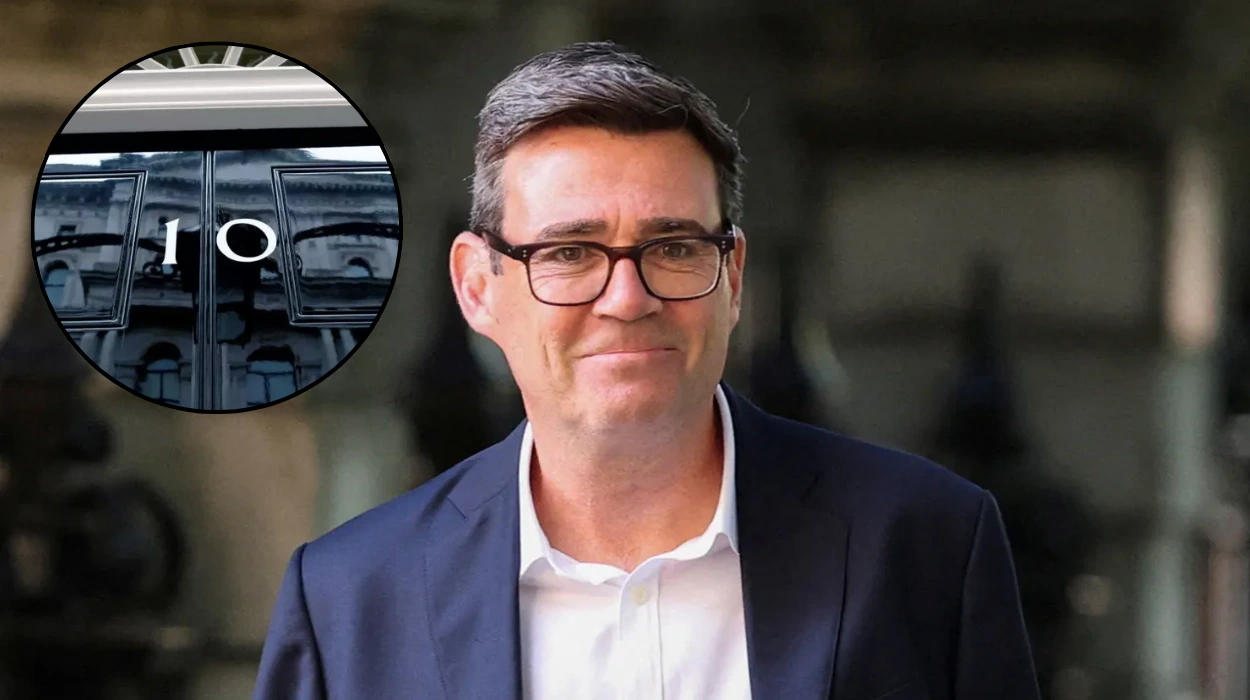
London (Britain Today News) July 10, 2026 — Andy Burnham is on the brink of becoming Britain’s next prime minister after an overwhelming show of support from Labour lawmakers left him all but certain to replace Keir Starmer. Burnham said he had received nominations from 322 of the 403 Labour members of parliament on the first day of nominations on Thursday, leaving him one short of guaranteeing he will be the only candidate in the race to lead the governing party and the country.
- Key Points
- Why Is Andy Burnham Poised to Become Britain’s Next Prime Minister?
- How Many Labour MPs Have Nominated Andy Burnham So Far?
- What Did Andy Burnham Say About His Nomination?
- Why Did Keir Starmer Step Down as Labour Leader?
- When Will Andy Burnham Be Confirmed as Prime Minister?
- Who Is Andy Burnham and How Did He Become Eligible to Run?
- Why Did Al Carns Decide Not to Challenge Andy Burnham?
- Which Other Labour Figures Have Backed Andy Burnham’s Bid?
- What Are Andy Burnham’s Key Policy Pledges?
- What Has Andy Burnham Said About Foreign Policy and Gaza?
- How Do the Public and Experts View an Uncontested Leadership Race?
- What Challenges Will Andy Burnham Face as Prime Minister?
Why Is Andy Burnham Poised to Become Britain’s Next Prime Minister?
Burnham’s rapid rise to the brink of Downing Street follows Sir Keir Starmer’s announcement last month that he intended to step down as Labour leader and prime minister, a decision that came after a difficult set of local election results in May triggered mounting pressure from within his own party. As reported by the Associated Press, Burnham secured the backing of 322 Labour MPs on the day nominations formally opened, far exceeding the 81 signatures needed to enter the race, a margin that makes it “almost impossible” for another legislator to muster sufficient support to mount a challenge.
Burnham, the former mayor of Greater Manchester known widely as the “King of the North” for winning three consecutive mayoral elections in the region, has for years been viewed as one of Labour’s most popular and recognisable figures. As reported by Al Jazeera, momentum behind his candidacy “rocketed” once senior Labour figures who had themselves been weighing bids of their own instead chose to back him.
How Many Labour MPs Have Nominated Andy Burnham So Far?
According to figures confirmed by Burnham himself and reported by the Associated Press, 322 of Labour’s 403 MPs had formally nominated him by the close of the first day of the contest, Thursday 9 July. That tally leaves him needing just one further nomination to reach the threshold at which no rival could realistically gather the 81 signatures required to stand against him. Some Labour MPs have said they were unable to cast their nomination on Thursday but intend to formally back Burnham once parliament resumes sitting on Monday, according to reporting from Agence France-Presse, which noted that Burnham
“will need to show that he has the support of 81 of Labour’s 402 MPs to become a formal candidate,”
a tally he is expected to surpass with ease.
What Did Andy Burnham Say About His Nomination?
In a short video posted to social media announcing that he had nominated himself, Burnham said:
“It’s all starting to feel very real.”
As reported by the Associated Press, Burnham also told supporters online that he was “deeply grateful” for the backing of Labour MPs, adding that the wave of support
“reflects a shared belief that Britain needs a new approach to politics.”
Why Did Keir Starmer Step Down as Labour Leader?
Starmer announced his resignation last month after a poor performance in local elections in May prompted growing calls from lawmakers for a change of leadership and direction. As reported by Al Jazeera, Starmer had become prime minister on 5 July 2024 following a landslide Labour general election victory that ended fourteen years of Conservative Party rule, but his premiership lasted barely two years amid what Al Jazeera described as political setbacks, policy missteps and declining public confidence within both the party and the wider electorate.
When Will Andy Burnham Be Confirmed as Prime Minister?
Nominations for the Labour leadership close on Thursday 16 July. Burnham is expected to be formally anointed as Labour leader the following day, Friday 17 July, and will be officially named prime minister after a meeting with King Charles III on 20 July. As reported by Agence France-Presse, should no rival candidate emerge to trigger a full contest, Burnham
“will be crowned Labour leader — and prime minister in waiting — at a special conference on 17 July.”
Should a genuine contest take place instead, AFP reported that the eventual winner would not be announced until 29 August, following a ballot of Labour Party members and affiliated trade unions.
Who Is Andy Burnham and How Did He Become Eligible to Run?
Burnham, 56, served as an MP between 2001 and 2017 before leaving Westminster to become mayor of Greater Manchester, a post he held across three consecutive terms. As reported by Al Jazeera, Burnham was not eligible to stand for the Labour leadership until he won a by-election to represent Makerfield in Greater Manchester in the House of Commons on 18 June, a victory that returned him to parliament and cleared the path for his candidacy. Agence France-Presse reported that Burnham was sworn back into parliament on the very day Starmer announced his resignation, after which some 200 Labour MPs gathered for a group photograph in Westminster in what AFP described as “a clear sign that they expect him to take over.”
What Is Andy Burnham’s Political Background?
Burnham has long been positioned on the “soft left” of the Labour Party, to the left of the more centrist Starmer. As reported by Al Jazeera, he has built his political identity around advocating “devolution” to tackle regional disparities between London and the rest of the country, alongside a large-scale social housing programme and expanded social care provision.
Why Did Al Carns Decide Not to Challenge Andy Burnham?
Burnham’s path to the leadership was effectively secured on Wednesday night when Al Carns, the former junior defence minister who had himself been considering a bid, announced he would not stand against him. As reported by the Associated Press, Carns said in a statement:
“I’d hoped a leadership contest would give us the opportunity for a proper debate. But months of internal Labour politics isn’t what the country needs right now. We’ve got to get on with the job. Andy Burnham’s earned this and he’s got my full backing.”
Agence France-Presse reported that Carns had initially hoped a contest would allow the party to properly debate its future direction, before concluding that a prolonged internal campaign would not serve the country’s interests at a time when Britain faces significant economic and political challenges.
Which Other Labour Figures Have Backed Andy Burnham’s Bid?
Beyond Carns, a string of senior Labour figures have thrown their support behind Burnham rather than pursue leadership bids of their own. As reported by Agence France-Presse, former health minister Wes Streeting announced he was dropping any intention to run and instead backing Burnham. Al Jazeera reported that former deputy prime minister Angela Rayner has indicated her support for Burnham, while Home Secretary Shabana Mahmood, though floated as a potential challenger, has not signalled any intention to mount a rival campaign.
One Labour MP, speaking to Agence France-Presse on condition of anonymity, said the party was right to “roll the dice” on Burnham, adding:
“He couldn’t be worse than Starmer. I hope he’s a breath of fresh air.”
A second MP, also speaking anonymously to AFP, said they backed Burnham but were concerned that he would have only a few weeks to prepare for government before assuming office.
What Are Andy Burnham’s Key Policy Pledges?
Burnham has used recent public appearances to set out an ambitious domestic agenda. As reported by Agence France-Presse, he vowed in a keynote speech in June to
“bring about the biggest rebalancing of power our country has seen,”
pledging to put power
“in the hands of the people and places who can use it best.”
He added:
“We need a new determination to raise living standards of every single person in this land.”
Central to his platform is a proposal for a “No. 10 North,” a play on the prime minister’s Downing Street address, under which Burnham intends to coordinate a major programme of devolution and, according to Al Jazeera, move some prime ministerial operations from London to Manchester. On the economy, Agence France-Presse reported that Burnham has pledged fiscal discipline and committed to reducing the country’s welfare bill, while also seeking to reassure financial markets by committing to the government’s existing borrowing limits.
Why Are Labour MPs Backing Burnham Over Rivals From Farage’s Reform UK?
Agence France-Presse reported that many Labour MPs view Burnham as the party’s best chance of clawing back support from Nigel Farage’s Reform UK, which has led Labour in national opinion polls for well over a year, although AFP noted the gap between the two parties has narrowed in recent weeks.
What Has Andy Burnham Said About Foreign Policy and Gaza?
Burnham has also begun setting out his position on international affairs. As reported by the Associated Press, Burnham said the British government had been “too slow to call for a ceasefire” in the conflict in Gaza, which the Gaza Health Ministry says has left more than 73,000 Palestinians dead. He added that the United Kingdom would consider
“further sanctions, both on those involved in the violence in Gaza, but also looking at measures to ban trade in goods with illegal settlements.”
Writing in The Times of London and reported on by news outlet YourNews, Burnham reaffirmed Labour’s commitment to the NATO alliance and Britain’s independent nuclear deterrent, stating that national security would remain a top priority under his leadership. He also pledged to maintain the United Kingdom’s close alliance with the United States and to continue Britain’s military, diplomatic and financial support for Ukraine amid the ongoing war with Russia.
Al Jazeera further reported that Burnham was among a small number of British politicians to back recognition of Palestinian statehood in 2015, describing it at the time as “a right,” while criticising the expansion of Israeli settlements — which are illegal under international law — as “key obstacles” to a two-state solution. He has, however, opposed boycotts of Israel, previously describing such efforts as “the wrong response,” and saying:
“I can’t judge things of that enormity from where I am as mayor of Greater Manchester. But I do have concerns about the disproportionate nature of what has happened in terms of the destruction, and there has to be a full process of investigation and accountability.”
How Do the Public and Experts View an Uncontested Leadership Race?
Not everyone is convinced that a leadership contest without a genuine challenger is desirable for Labour. As reported by Al Jazeera, a survey by Lord Ashcroft Polls found that only 27 percent of Britons and 45 percent of Labour voters believe Burnham should become prime minister without a full leadership race being held.
Paul Whiteley, emeritus professor of government at the University of Essex, told Al Jazeera it appears “increasingly likely” that Burnham will be chosen as leader without facing a rival candidate. Whiteley added, however, that an uncontested Burnham victory would probably have little lasting impact on how the public perceives his legitimacy, drawing comparisons with previous prime ministers such as Theresa May and Gordon Brown, who also entered Downing Street without facing a leadership contest.
Explore More about Politics:
Health Minister Pressured to Replace Palantir Data System
Andy Burnham Urges Tougher UK Action on Israel Settlements Amid Growing Pressure
What Challenges Will Andy Burnham Face as Prime Minister?
Should Burnham take office as expected without a general election, Al Jazeera reported he would become the fifth prime minister in a decade to enter Downing Street without having won a general election as party leader, following Theresa May in 2016, Boris Johnson in 2019, and both Liz Truss and Rishi Sunak in 2022. Britain’s parliamentary system allows a governing party to change its leader — and therefore its prime minister — without triggering a general election, and the next national vote is not required until 2029, according to both the Associated Press and Agence France-Presse.
Burnham inherits a government facing considerable domestic strain. As reported by YourNews, Britain’s economy continues to struggle with slow growth, public services remain under significant pressure, and many households are still grappling with the cost of living despite signs that inflation has eased from previous highs.
Could Andy Burnham Still Face a Leadership Challenge?
While Burnham’s position appears close to unassailable, the contest technically remains open until nominations close on 16 July. As reported by Agence France-Presse, all eyes remain on whether any alternative candidate can muster the 81 nominations required to force a genuine contest, though with Streeting, Carns, Rayner and Mahmood all declining to stand against him, the prospect of a serious challenge appears increasingly remote.
For now, Burnham’s focus remains on consolidating support among Labour’s parliamentary party ahead of what many expect to be a rapid and largely ceremonial confirmation process, culminating in his appointment as Britain’s next prime minister later this month.