Key Points
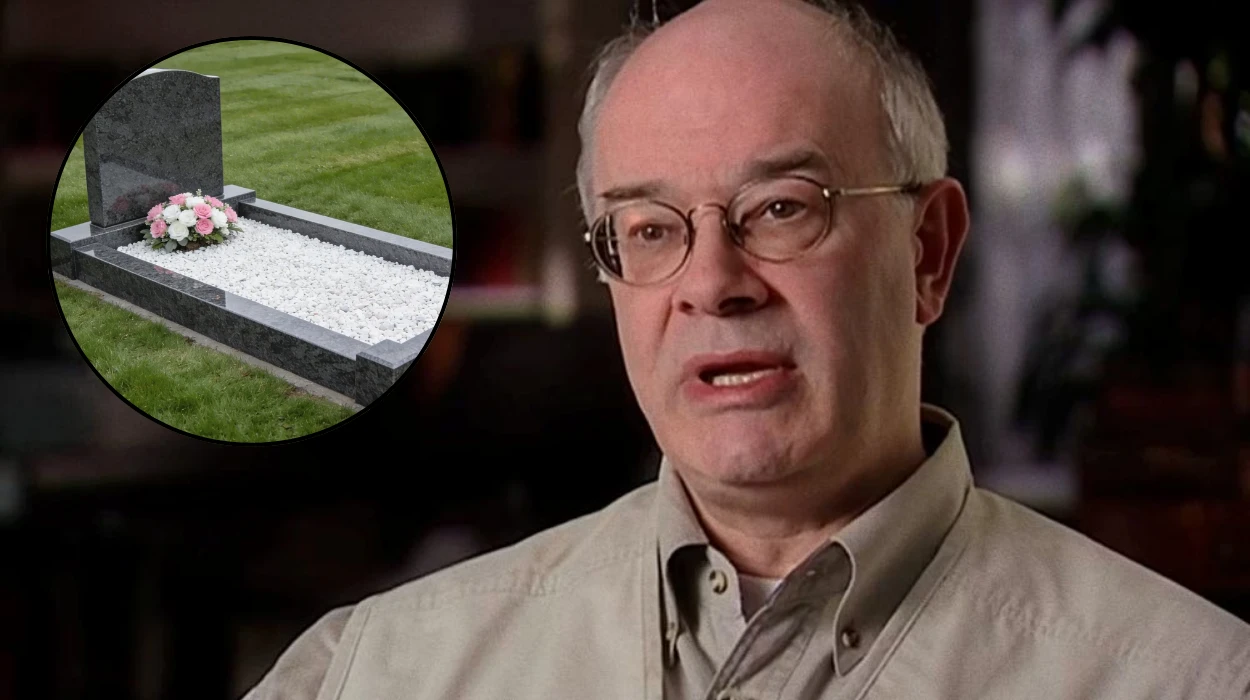
- Tony Rayns, the British film critic, festival programmer, translator and screenwriter renowned for introducing East Asian cinema to Western audiences, has died at his home aged 78.
- He was found dead on 7 July following what his sister, Stephanie Gowman, described as an accidental fall down his stairs.
- Gowman said the family had grown concerned after a period of no contact before his body was discovered.
- The Busan International Film Festival confirmed his death and paid tribute to his decades-long support for Korean and Asian cinema.
- Chinese director Jia Zhangke, who worked with Rayns for nearly 30 years, posted an emotional tribute online.
- Rayns wrote for Sight and Sound, Monthly Film Bulletin and Time Out, and provided subtitles and commentary tracks for Criterion and Eureka releases.
- He championed directors including Wong Kar Wai, Hou Hsiao-hsien, Edward Yang, Lee Chang-dong, Hong Sang-soo and Bong Joon Ho.
- He helped found the Busan International Film Festival in 1996 and coordinated Vancouver’s Dragons and Tigers Asian film competition for nearly two decades.
- Former Busan executive chairman Kim Dong-ho led further tributes from the Korean film industry.
- A family celebration of Rayns’ life and career is planned for a later date.
London (Britain Today News) July 08, 2026 — Tributes have poured in from across the international film world following the death of Tony Rayns, the British writer, festival programmer, translator and screenwriter who spent more than five decades introducing Western audiences to the cinema of China, Hong Kong, Taiwan, South Korea, Japan and the Philippines. Rayns was 78.
- Key Points
- Who Was Tony Rayns?
- How Did Tony Rayns Begin His Career In Film Criticism?
- Which East Asian Directors Did Tony Rayns Champion?
- What Role Did Tony Rayns Play In International Film Festivals?
- What Was Tony Rayns’ Connection To Korean Cinema And Busan?
- How Did Jia Zhangke Pay Tribute To Tony Rayns?
As reported by Variety, Rayns was found deceased at his home on 7 July following an accidental fall down his stairs, according to his sister, Stephanie Gowman, who confirmed the news in an email to the publication. Gowman said her brother’s death was unexpected, coming after a short period during which the absence of contact had already begun to worry friends and family about his welfare.
“We are all shocked and deeply saddened by his sudden death and the loss of a dedicated, lifelong cinephile and a passionate promoter of East Asian cinematic talent,”
Gowman told Variety.
“He will be sorely missed by many.”
According to Variety, the family intends to hold an event celebrating Rayns’ life and achievements at a later, unspecified date.
Who Was Tony Rayns?
Antony Rayns was born in 1948 and went on to become one of the most influential English-language voices in film criticism of his generation, according to details recorded by Wikipedia and echoed in tributes from the British Film Institute (BFI). Over a career spanning more than 50 years, he built a reputation not simply as a reviewer but as a translator, subtitle writer, festival adviser, documentary maker and screenwriter, roles that together made him one of the principal conduits through which East Asian cinema reached international audiences.
The BFI, in an obituary published on its website, described him as
“the British film critic, programmer, translator and tireless advocate for East Asian cinema”
and said he had
“helped introduce generations of Western audiences to filmmakers from China, Hong Kong, Taiwan, the Philippines, South Korea and Japan.”
The BFI added that he was widely regarded as one of the most influential voices in film culture.
How Did Tony Rayns Begin His Career In Film Criticism?
Rayns’ career in criticism began at the underground publication Cinema Rising, according to the BFI, whose name was inspired by Kenneth Anger’s film Scorpio Rising. From there, according to Wikipedia’s account of his career, he moved on to write for Monthly Film Bulletin from December 1970 until the magazine ceased publication in 1991, and became a regular contributor to Sight and Sound, the BFI’s flagship publication, from the early 1970s onwards — a relationship that continued until his death.
He also wrote extensively for Time Out and, in the late 1970s, for the music paper Melody Maker. The BFI recalled one of his best-known lines from that period, a capsule review for Time Out of Joseph H. Lewis’s 1955 film noir The Big Combo, which ended:
“As heady as amyl nitrate and as compulsive as stamping on insects.”
Which East Asian Directors Did Tony Rayns Champion?
Across several decades, Rayns championed a roster of directors who would go on to define East Asian cinema on the world stage. According to the BFI, these included Wong Kar Wai, Hou Hsiao-hsien, Edward Yang, Lee Chang-dong, Hong Sang-soo and Bong Joon Ho. His advocacy was not confined to writing about their work; he frequently acted as translator and subtitler for their films, ensuring international audiences and festival juries could engage with them directly.
The Korea Herald reported that Rayns was notably responsible for inviting director Bong Joon-ho’s short film “Incoherence” to the Vancouver and Hong Kong film festivals in 1994, marking the first international screening of a film by the director who would later win the Academy Award for Best Picture with Parasite.
What Role Did Tony Rayns Play In International Film Festivals?
Rayns’ influence extended well beyond the printed page. The BFI noted that he served as an adviser to the BFI London Film Festival for many years and played a key role in shaping the Vancouver International Film Festival’s Dragons and Tigers programme, a competition dedicated to Asian cinema. Wikipedia records that he coordinated the Dragons and Tigers competition from 1988 to 2006.
He was also among the figures involved in founding the Busan International Film Festival, according to the BFI, and the Korea Herald reported that he served as an adviser when the festival launched in 1996, playing a significant part in shaping it during its formative years.
What Was Tony Rayns’ Connection To Korean Cinema And Busan?
The Korea Herald reported that the Busan International Film Festival announced Rayns’ death on social media on the day it occurred, stating:
“Tony Rayns, who championed the value of Korean and Asian cinema to the world ahead of anyone else, has passed away. May he rest in peace.”
According to the outlet, Rayns first travelled to Korea in 1988 and continued discovering and promoting Korean films internationally for decades afterwards. In 2012, a documentary titled “Tony Rayns and 25 Years of Korean Cinema” was screened at the Busan festival, and he received the first plaque of appreciation for contributions to Korean cinema from the Korean Film Council, the Korea Herald reported.
Kim Dong-ho, the former executive chairman of the Busan festival who maintained ties with Rayns through their work together, paid tribute to him in comments carried by the Korea Herald.
“He made a tremendous contribution to introducing Korean cinema to the world. I am deeply saddened by his passing and pray that he rests in peace,”
Kim said. The outlet reported that Kim had visited Rayns in Britain around five years earlier, while the critic was unwell.
How Did Jia Zhangke Pay Tribute To Tony Rayns?
Among the most personal tributes came from Chinese director Jia Zhangke, who relied on Rayns for subtitling and guidance across close to three decades of filmmaking, according to Variety. The BFI reported that Jia posted a message online addressed directly to Rayns:
“Dear Tony, you left before I could say ‘thank you’ or ‘I’m sorry’. Throughout the 28 years we knew each other, it was always me asking things of you. Whenever I reached out, it was almost always because I needed something – whether it was having you subtitle my films or seeking your advice on a problem.”
The tribute reflects a working relationship that spanned much of Jia’s career as one of contemporary Chinese cinema’s most acclaimed directors, with Rayns serving as both translator and trusted adviser on numerous projects.
What Did Other Figures In The Film World Say About Tony Rayns?
Tributes also emerged from critics and film enthusiasts on social media. In a post on X, film commentator Dylan Cheung wrote:
“RIP Tony Rayns, one of the few English-language critics who genuinely knew what they were talking about (most of the time) when it came to East Asian cinema, especially Hong Kong’s.”
The BFI said it intended to publish a fuller tribute to Rayns in due course, describing him as “a familiar presence at film festivals around the globe” who had developed a renowned expertise in East Asian cinema over the course of his career.
What Books And Screenplays Did Tony Rayns Write?
Beyond criticism and festival programming, Rayns was also an author and screenwriter. According to the BFI, his books included the editing of a groundbreaking 1976 collection on the German director Rainer Werner Fassbinder. A second edition of his BFI Film Classic monograph on Wong Kar Wai’s In the Mood for Love was published in 2025, underlining his continued authority on the director’s work more than two decades after the film’s release.
In 1999, Rayns co-wrote the screenplay for Away with Words alongside director and longtime Wong Kar Wai cinematographer collaborator Christopher Doyle, the BFI noted, extending his contribution to East Asian cinema beyond criticism and into filmmaking itself.
What Was Tony Rayns’ Most Recent Work Before He Died?
Rayns remained professionally active until shortly before his death. The BFI reported that his most recent articles for Sight and Sound included an April 2025 cover interview with Bong Joon Ho, and, in May of this year, an online feature examining the restoration of Filipino director Lino Brocka’s 1988 film Macho Dancer.
His audio commentaries and critical essays had also become fixtures of prestigious home-video releases from specialist labels including Criterion and Eureka, the BFI said, cementing his standing as one of cinema’s foremost interpreters and historians of East Asian film for collectors and scholars alike.
Explore More about Entertainment:
Last-Minute Tickets Still Available for Lily Allen’s Final O2 Show
Pleasurewood Hills and Yarmouth Pleasure Beach Shortlisted for Prestigious UK Theme Park Awards
How Is The Film Industry Remembering Tony Rayns’ Legacy?
Across the tributes from the BFI, Busan festival, individual directors and critics, a consistent picture emerges of a critic whose influence was felt not only in print but directly within the industry he covered — as translator, adviser, mentor and festival architect. His decades-long relationships with directors such as Jia Zhangke, and his role in launching platforms including the Busan International Film Festival, meant his death was felt as a loss to the practical infrastructure of East Asian cinema’s international reach, not merely to its critical discourse.
Gowman’s statement to Variety, describing her brother as
“a dedicated, lifelong cinephile and a passionate promoter of East Asian cinematic talent,”
was echoed in substance by tributes from Busan, the BFI and individual filmmakers, all pointing to a career built on decades of championing artists who might otherwise have struggled to reach international audiences.
What Happens Next Following Tony Rayns’ Death?
According to Variety, Rayns’ family plans to hold an event celebrating his life and achievements at a later date, though no specific timing or location has yet been announced. The BFI said it would publish a fuller tribute to Rayns in the coming days, reflecting his standing within the institution for which he wrote for more than half a century.
For now, the film festivals, directors and critics whose careers Rayns shaped continue to pay tribute to a figure widely credited with building the bridge between East Asian filmmaking and Western audiences over five decades of writing, translating, programming and advocacy.