Key Points
- Marshall has launched the fourth generation of its Acton and Stanmore home speakers, named Acton IV and Stanmore IV.
- Both models gain upgraded tweeters and waveguides for a wider, more evenly dispersed soundstage.
- A redesigned bass port improves airflow, delivering cleaner and more powerful low-end output.
- Bottom-mounted cables allow the speakers to sit flush against a wall without affecting sound quality.
- A new Dynamic Loudness feature balances tonal detail at both low and high volumes.
- Built-in Auracast technology lets multiple Acton IV and Stanmore IV units play in sync.
- Older Acton III and Stanmore III models can join multi-speaker setups via Marshall’s new Heddon streaming hub.
- A customisable M-Button gives instant access to EQ presets and Spotify Tap.
- New RCA and AUX inputs make it easier to connect turntables and other external audio sources.
- The cabinets are built from FSC 100%-certified wood, with replaceable knobs, feet and grille components.
- Simona Berbec, Product Manager at Marshall Group, commented on the design philosophy behind the fourth generation.
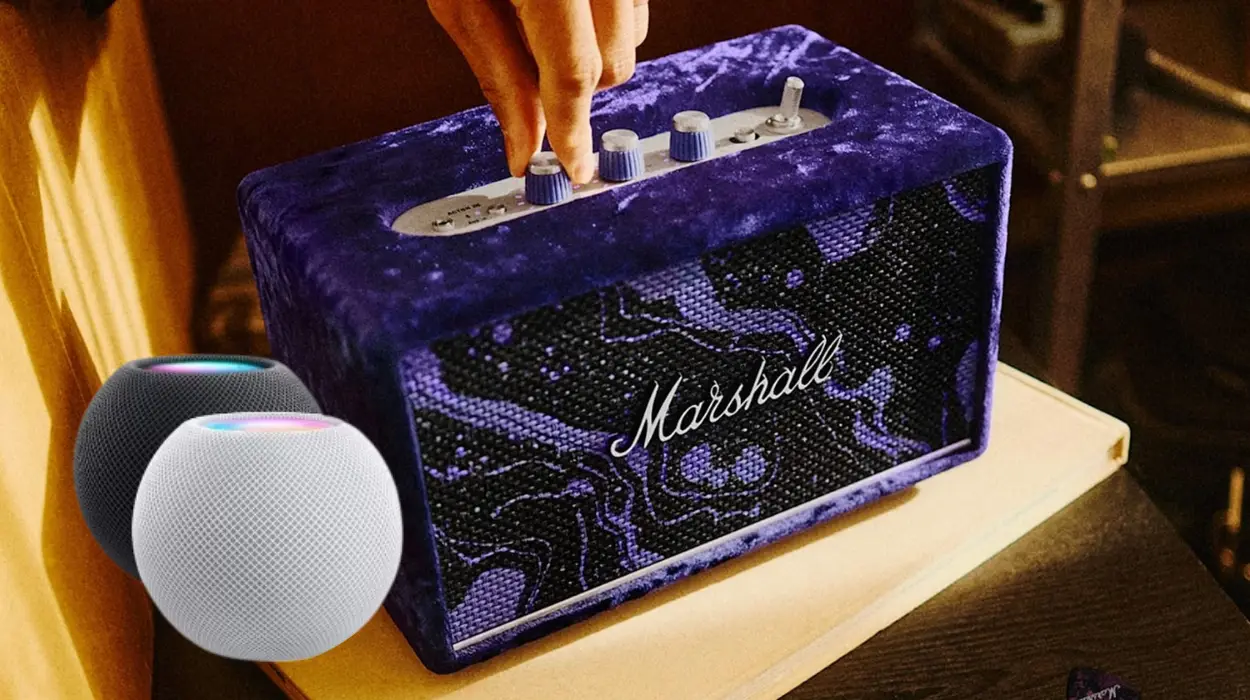
London (Britain Today News) July 08, 2026 – Marshall, the audio manufacturer known for its amplifier-inspired speaker range, has confirmed the launch of the Acton IV and Stanmore IV, the latest additions to its home speaker line-up. According to the company, both models have been engineered to deliver room-filling sound, improved usability and a design that stays close to the brand’s long-standing aesthetic while introducing several practical upgrades.
- Key Points
- What Are the Acton IV and Stanmore IV Speakers?
- What Is Dynamic Loudness and How Does It Work?
- What Design Changes Have Been Made to the Fourth Generation?
- What New Controls Does the M-Button Add to the Speakers?
- What Role Does the Heddon Streaming Hub Play in the New Setup?
- What Analogue Inputs Are Available for Vinyl Enthusiasts?
- What Materials Are Used in the Acton IV and Stanmore IV Cabinets?
- What Has Marshall Said About the Launch of the Fourth Generation?
- When Will the Acton IV and Stanmore IV Be Available?
- How Does This Launch Fit Into Marshall’s Wider Home Audio Strategy?
What Are the Acton IV and Stanmore IV Speakers?
The Acton IV and Stanmore IV form the newest pairing in Marshall’s home speaker family, sitting alongside the compact Acton and the larger Stanmore in the brand’s existing range. Marshall states that both speakers have been upgraded across sound performance and usability, while retaining the analogue, amplifier-style look that has defined the range since it first appeared. The company describes the update as an evolution rather than a reinvention, with engineering changes made to the internal components, acoustic tuning and physical controls of each unit.
How Has Marshall Improved the Sound Quality on These Speakers?
Marshall says both speakers now include upgraded tweeters and waveguides, designed to produce a wider and more evenly dispersed soundstage across a room. The company adds that this creates greater stereo separation, allowing instruments to sound more distinct from one another while adding a stronger sense of depth and spatial positioning to recordings. Alongside this, the bass port on each speaker has reportedly been redesigned by Marshall’s in-house acoustic engineers to improve airflow, which the brand says results in cleaner and more powerful bass, along with a tighter low-end response at higher volumes.
What Is Dynamic Loudness and How Does It Work?
A key addition to the Acton IV and Stanmore IV is a feature Marshall calls Dynamic Loudness. The company explains that this technology makes subtle adjustments to high and low frequencies so that tonal balance is maintained regardless of listening volume. At quieter volumes, Marshall says the speakers retain clarity, richness and warmth, while at higher volumes, improved limiters are said to help produce a cleaner overall sound. The feature is designed to ensure consistency across a range of listening environments, from background music to louder home gatherings.
What Design Changes Have Been Made to the Fourth Generation?
Visually, Marshall has kept the Acton IV and Stanmore IV close to the design language that has defined the range since 2012. Both speakers continue to use the brand’s PU leather wrapping and the familiar salt-and-pepper fret pattern, alongside amplifier-inspired controls on top of each unit. The classic brass control panel has been updated with an improved media jog and a redesigned power switch. Marshall notes that the bottom-placed cabling on both speakers is a new addition, allowing them to be positioned flush against a wall without compromising audio performance, a practical change aimed at homes with limited space.
What New Controls Does the M-Button Add to the Speakers?
Both models introduce a customisable M-Button, which Marshall describes as offering instant access to preferred music sources or personalised sound settings with a single press. The button can be configured to activate Spotify Tap or trigger preferred EQ presets, according to the brand. This sits alongside the existing brass-panel controls, which allow users to adjust volume, bass and treble, as well as manage playback, without needing to reach for a connected device or the companion app.
How Does Auracast Technology Enable Multi-Speaker Listening?
One of the most significant upgrades across the Acton IV and Stanmore IV is the addition of built-in Auracast technology. Marshall says this allows users to expand their home audio setup by linking multiple Acton IV and Stanmore IV speakers so that music plays in sync across different rooms or spaces. The technology is designed to simplify what has traditionally been a more complex process of pairing and synchronising wireless speakers, giving users a more straightforward way to build out a whole-home listening system as their needs grow.
What Role Does the Heddon Streaming Hub Play in the New Setup?
Alongside the new speakers, Marshall has also introduced Heddon, a newly launched streaming hub that extends multi-speaker connectivity to older models in the range. The brand confirms that Acton III and Stanmore III speakers can join Auracast-enabled listening sessions through Heddon, meaning existing Marshall owners are not required to replace their current speakers to take part in a synchronised, multi-room setup. Marshall states that setting up the system involves a one-time configuration through the Marshall app, after which users simply press and hold the M-Button to activate synced playback around the home.
Can Older Marshall Speakers Join the New Auracast Multi-Room System?
According to Marshall, compatibility with the Acton III and Stanmore III via the Heddon hub was a deliberate decision to extend the benefits of Auracast technology to speakers already in customers’ homes. This approach allows a mixed setup of third and fourth-generation speakers to operate together within the same synchronised listening network, rather than confining the feature exclusively to the newest models. Marshall has positioned this as a way of protecting the long-term value of speakers customers have already purchased.
What Analogue Inputs Are Available for Vinyl Enthusiasts?
For listeners who prefer physical media, Marshall has added a new RCA input to both the Acton IV and Stanmore IV, which the brand says makes it easier than before to connect a turntable directly to the speaker. An AUX input is also retained on the top panel, allowing other audio devices to be connected using a standard 3.5mm stereo jack. Marshall states that regardless of the source, each speaker is tuned by its in-house acoustic engineers to produce a sound with presence, whether the audio is streamed wirelessly or played from a connected device.
How Does the Marshall App Enhance the Listening Experience?
Marshall says the companion app remains central to setting up, customising and controlling both speakers. Through the app, users can adjust EQ presets, tailor sound profiles to different types of content such as music or podcasts, and apply room calibration, which the brand describes as optimising audio output based on where a speaker is placed. Marshall adds that this placement compensation is intended to ensure consistent sound quality regardless of a speaker’s position within a room.
What Materials Are Used in the Acton IV and Stanmore IV Cabinets?
On sustainability, Marshall confirms that the MDF cabinets used in both the Acton IV and Stanmore IV are made from FSC 100%-certified wood. The brand also states that both speakers have been designed with repairability in mind, with replaceable parts including the knobs, feet and grille available separately, allowing components to be replaced individually rather than requiring a full unit replacement.
Explore More about Technology:
Two-Thirds Back Under-16 Social Media Ban, But Backing Softens Over ID Checks
OpenAI’s Failure to Visit Key UK Site Raises Investment Doubts
What Has Marshall Said About the Launch of the Fourth Generation?
Commenting on the update, Simona Berbec, Product Manager at Marshall Group, said the brand’s home speakers have evolved since first launching in 2012 while remaining true to Marshall’s heritage. She said these speakers form the foundation of any home setup, with the Acton and Stanmore chosen repeatedly for their design, build quality, sound and tactile controls. Berbec added that with the fourth generation, the focus had been on strengthening these core qualities, noting the update was about “building on what people love rather than reinventing it.”
When Will the Acton IV and Stanmore IV Be Available?
Marshall has confirmed the technical specification and feature set of both speakers as part of this announcement, positioning the Acton IV and Stanmore IV as direct successors within its home audio range. The Heddon streaming hub has also been introduced alongside the launch to support Auracast connectivity for both new and existing Marshall speaker owners.
Acton IV and Stanmore IV: Key Features at a Glance
- Wide soundstage: Improved tweeters and waveguides create a wider soundstage by dispersing sound more evenly across a room, with enhanced stereo separation adding depth and spatial positioning to instruments.
- Enhanced bass: A redesigned bass port creates a more aerodynamic shape, resulting in cleaner, more powerful bass and a tighter sound at higher volumes, with bottom-placed cables enabling flush wall placement.
- Dynamic Loudness: Subtle adjustments to high and low frequencies maintain tonal balance at every volume, preserving clarity and warmth during quieter listening while improved limiters keep higher volumes clean.
- Customisable M-Button: A single press allows users to adjust EQ settings or activate Spotify Tap for instant music playback.
- Tactile controls: The brass control panel retains Marshall’s amplifier-inspired design, allowing volume, bass, treble and playback to be adjusted directly from the speaker.
- Analogue inputs: A new RCA input simplifies turntable connections, while the AUX input supports other devices via a 3.5mm stereo jack.
- Marshall app: Enables sound customisation, EQ adjustment and room calibration for a tailored listening experience in any space.
How Does This Launch Fit Into Marshall’s Wider Home Audio Strategy?
The introduction of the Acton IV and Stanmore IV, alongside the Heddon streaming hub, reflects a broader push by Marshall to build a more connected ecosystem across its home speaker range. Rather than treating each generation of speaker as an isolated product, the brand has structured this launch so that new and existing customers can be brought into the same Auracast-enabled network. For households that already own third-generation Marshall speakers, this means the option to expand a listening setup incrementally, adding newer units over time without losing compatibility with equipment purchased previously. Marshall’s continued emphasis on repairable components, certified materials and app-based customisation also points to a strategy focused on long-term ownership, rather than encouraging frequent full-system upgrades.