Key Points
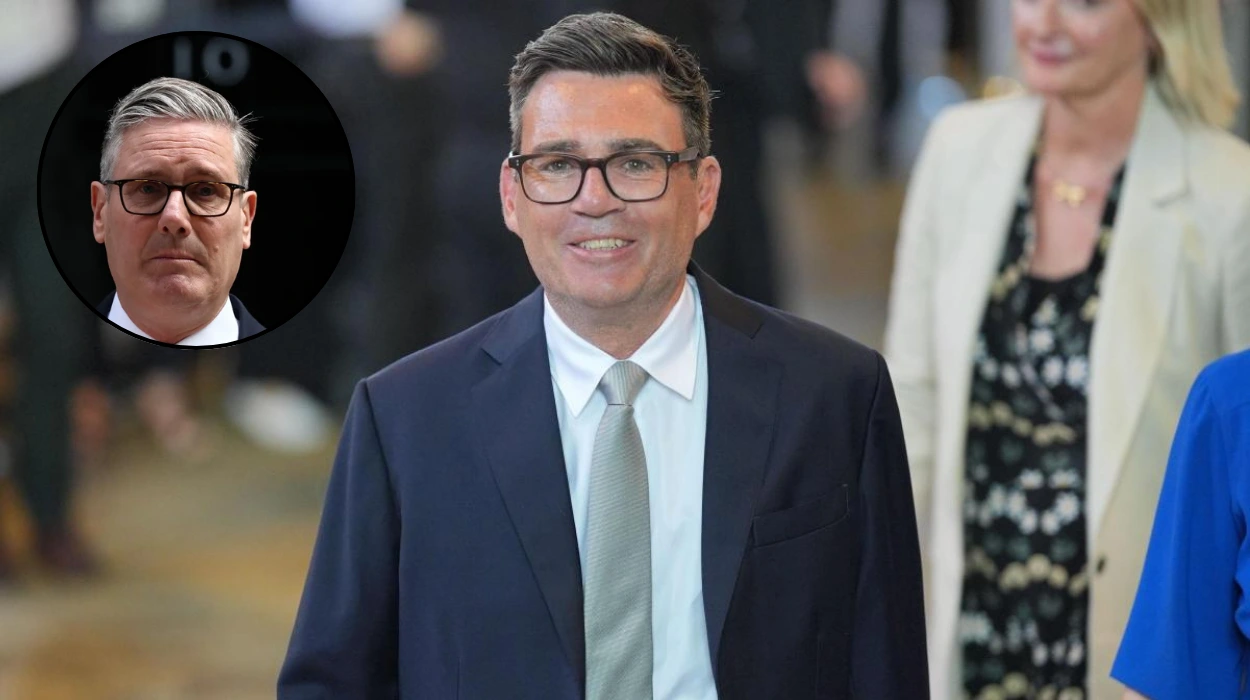
- Sir Keir Starmer has held a first face‑to‑face meeting with Labour leadership frontrunner Andy Burnham since Mr Burnham’s Makerfield by‑election victory, in what Downing Street has billed as part of a “smooth” and “orderly” transition of power.
- The Prime Minister and the former Greater Manchester mayor spoke for around an hour at an “off‑site” location, with the talks understood to have focused on transition arrangements rather than detailed policy negotiations.
- Sir Keir has authorised formal Civil Service “access talks” to begin for “prospective candidates” to succeed him, meaning Mr Burnham will start to receive confidential government briefings ahead of a likely move into No 10.
- At a weekly Cabinet meeting on Tuesday, the Prime Minister told ministers he wanted an “orderly transition” and pledged to make the process “as easy as possible” for his successor, while insisting “the normal business of Government continues”.
- Downing Street has ruled out any “major” new policy decisions or big spending commitments before the handover, but Sir Keir is determined to publish a long‑delayed defence investment plan (Dip) before the Nato summit on 7 July, despite concerns from allies of Mr Burnham.
- Figures close to former defence secretary John Healey, who resigned over the Dip earlier this month, have warned against pushing out a “half‑baked” settlement they say “falls well short” of what is needed and should instead be left to the next prime minister.
- Andy Burnham is expected to set out his policy platform next week, stressing economic growth and a commitment to Labour’s existing fiscal rules, as he seeks to reassure the City after previously warning the UK must get “beyond this thing of being in hock to the bond markets”.
- His main declared rival, former health secretary Wes Streeting, has backed him to succeed Sir Keir, while a potential challenge from Chief Secretary to the Prime Minister Darren Jones appears to be receding as allies say he is “highly unlikely” to stand.
- Former armed forces minister and Royal Marines officer Al Carns has not ruled out a leadership bid, saying he wants to “see and buy into” Mr Burnham’s “vision and policy” and warning that “a vision without a plan is a dream” that can “turn into a nightmare pretty quickly”.
- Burnham supporter Nick Thomas‑Symonds has called for a swift transition and suggested a contested race “would not be in the best interests of the country”, raising the prospect that Mr Burnham could enter Downing Street within weeks if no serious challenger emerges.
- Behind the scenes, informal conversations are under way about who might serve in a Burnham Cabinet, with Energy Secretary Ed Miliband and Home Secretary Shabana Mahmood both viewed as contenders to replace Rachel Reeves as Chancellor, although allies insist “no jobs” or “deals” have yet been agreed.
- Any future chancellor would be constrained by Ms Reeves’s fiscal rules, which seek to fund day‑to‑day spending from tax revenues and get debt falling by the end of the decade, a framework Mr Burnham has now publicly pledged to uphold.
- Labour has selected Manchester City Council leader Bev Craig as its candidate to replace Mr Burnham as Greater Manchester metro mayor in an election scheduled for 30 July, where Green Party councillor Geraldine Coggins will also stand.
- Sir Keir has asked Labour’s National Executive Committee (NEC) to draw up a timetable that would guarantee a new party leader is in place by 1 September, when Parliament returns from its summer recess, if a contest goes ahead.
- If Andy Burnham is the only candidate to secure the necessary nominations, he could be confirmed as Labour leader and become prime minister as early as 17 July, capping a rapid rise back to Westminster following his Makerfield victory.
London (Britain Today News) June 23, 2026 – Sir Keir Starmer has opened the door to Andy Burnham’s arrival in Downing Street, holding face‑to‑face talks with the Labour leadership frontrunner and promising an “orderly” and “smooth transition” of power after announcing his resignation as prime minister.
- Key Points
- How did Starmer and Burnham’s first post‑election meeting unfold?
- Why is Starmer promising a ‘smooth transition’ of power?
- What limits has Downing Street put on new decisions?
- Why is the defence investment plan causing tension?
- How strong is Andy Burnham’s position in the Labour race?
- Who else might stand against Burnham – and what are they saying?
- How quickly could Burnham enter Downing Street?
- What would a Burnham Cabinet and economic team look like?
- How is Burnham positioning himself on growth, fiscal rules and the markets?
- How are investors and institutions reading Burnham’s economic stance?
- Who will replace Burnham as Greater Manchester mayor?
- What timetable has Starmer set for choosing his successor?
How did Starmer and Burnham’s first post‑election meeting unfold?
Sir Keir Starmer and Andy Burnham met for around an hour at a discreet “off‑site” location, their first in‑person encounter since Mr Burnham’s emphatic Makerfield by‑election win paved the way for his return to Westminster. According to Downing Street sources, the discussion focused squarely on transition arrangements and institutional continuity, rather than detailed policy horse‑trading or personnel deals.
As reported by a political correspondent of a leading UK newspaper, aides characterised the atmosphere as “businesslike” and underlined that both men were keen to avoid any sense of a power vacuum in the weeks ahead. Sir Keir’s allies stressed that, while he remains in office until a successor is selected, he recognises Mr Burnham as the clear frontrunner and wants to ensure he is properly briefed on the machinery of government before potentially entering No 10.
Why is Starmer promising a ‘smooth transition’ of power?
At Tuesday’s Cabinet meeting, the Prime Minister told colleagues he wanted an “orderly transition” and vowed to make the handover “as easy as possible” for whoever replaces him, remarks that were later briefed to reporters by his official spokesman. Asked whether he feared the work of government would grind to a halt amid the leadership manoeuvring, the spokesman insisted that
“the normal business of Government continues”.
Sir Keir has authorised formal “access talks” between senior civil servants and “prospective candidates” for the Labour leadership, a process designed to give likely successors a confidential window into ongoing policy work and sensitive national security issues. As reported by political journalists covering the transition, this means Mr Burnham will now begin receiving structured Government briefings, bringing him closer than ever to the levers of power.
What limits has Downing Street put on new decisions?
Downing Street has signalled that, during the transition period, there will be no “major” new policy decisions or big‑ticket spending pledges, reflecting a desire to avoid binding the hands of the next administration. Officials indicated that routine decisions and ongoing programmes will continue, but that anything seen as a significant new commitment will be handled with extreme caution.
However, Sir Keir is adamant that certain “loose ends” should be tied up before he leaves office, especially in defence and security. That has set up a potential flashpoint over the long‑delayed defence investment plan, or Dip, which allies of Andy Burnham believe should now be left for the incoming prime minister to shape.
Why is the defence investment plan causing tension?
The defence investment plan has been in gestation for months, delayed by internal wrangling over how to fund a step‑up in spending at a time of tight public finances. Sir Keir intends to publish the document ahead of the Nato summit on 7 July, arguing that the UK must set out a credible long‑term path on defence investment before sitting down with allies.
According to reporting on the row, allies of Andy Burnham question whether a departing prime minister should be locking in a settlement that will shape defence budgets for years to come. As reported by a political editor who spoke to those close to former defence secretary John Healey, one ally warned against
“publishing a half‑baked plan before the new prime minister is installed”,
adding:
“We know this Dip settlement falls well short, and an incoming PM will still have to meet the same requirements. So clearly there is a strong argument against publishing a half‑baked Dip now.”
How strong is Andy Burnham’s position in the Labour race?
Andy Burnham’s convincing win in the Makerfield by‑election has made him the clear favourite to succeed Sir Keir, with many MPs and activists describing him as a prime minister‑in‑waiting. His position was strengthened further when former health secretary Wes Streeting, widely seen as his most serious rival, publicly endorsed him and ruled out his own leadership bid.
The prospect of a challenge from Chief Secretary to the Prime Minister Darren Jones appears to be fading as well. Sources close to Mr Jones have been quoted as saying he is “highly unlikely” to stand, although he is understood to be seeking assurances from Mr Burnham about economic policy, amid nervousness in some quarters about possible market unease.
Who else might stand against Burnham – and what are they saying?
Not all potential contenders have definitively ruled themselves out. Former armed forces minister and Royal Marines officer Al Carns told journalists at the Foreign Press Association in London that he had “not ruled out” standing in a possible contest, but suggested his decision would depend heavily on the detail of Mr Burnham’s platform.
As reported by political journalists present at the briefing, Mr Carns said Mr Burnham would “listen” to the Parliamentary Labour Party, explaining:
“He’ll take advice on policy ideas, and hopefully he’ll be able to drive them forward at a pace and with the boldness and courageousness that is required to keep that social cohesion and make us successful in the 2029 general election.”
He then issued a pointed warning:
“A vision without a plan is a dream and if you don’t have it, it can turn into a nightmare pretty quickly,”
before adding that any leadership decision “is often based on multiple factors” and that he needed to “see and buy into that vision and that policy” before deciding whether to run.
How quickly could Burnham enter Downing Street?
Burnham supporter Nick Thomas‑Symonds has made clear he favours a swift transfer of power, arguing that a drawn‑out contest would not serve the national interest. In comments reported by Westminster journalists, he said he believed “the transition should be swift” and suggested a full‑blown leadership race “would not be in the best interests of the country” at a time of economic uncertainty and international instability.
Under Labour’s internal rules, if only one candidate secures the required level of parliamentary nominations, they can be declared leader without a lengthy ballot of the wider membership. In that scenario, party sources have suggested Andy Burnham could be confirmed as Labour leader and appointed prime minister by around 17 July, only weeks after returning to the Commons, though this timetable remains contingent on no serious challenger emerging.
What would a Burnham Cabinet and economic team look like?
Even before the formal leadership process has begun, conversations are already taking place in Westminster about who might occupy key roles in a Burnham administration. According to reports from senior Labour figures, Energy Secretary Ed Miliband and Home Secretary Shabana Mahmood are both being discussed as possible successors to Rachel Reeves as Chancellor.
However, Andy Burnham’s allies are anxious to avoid suggestions that Cabinet jobs are being stitched up behind closed doors. As reported by journalists briefed on their thinking, those close to Mr Burnham insist that “no jobs had been given and no deals had been made” as of Monday evening, emphasising that the first focus is on setting out a clear governing programme rather than dividing up posts.
How is Burnham positioning himself on growth, fiscal rules and the markets?
Andy Burnham is expected to begin unveiling his policy platform in more detail in a speech next week, with a particular emphasis on unlocking economic growth while sticking within Labour’s existing fiscal framework. As reported by economics correspondents, he is preparing to underline his support for the party’s fiscal rules, which require day‑to‑day spending to be financed from tax revenues and commit to getting debt falling by the end of the decade.
Mr Burnham has previously raised eyebrows in the City by saying that
“we’ve got to get beyond this thing of being in hock to the bond markets”,
a phrase seized on by critics as a sign of potential recklessness. In more recent interviews, including with ITV, he has sought to clarify his position, stressing:
“I have never claimed that we can simply disregard the bond markets… What I have said is that politicians have put Britain in a precarious position due to the mismanagement of our finances and public expenditure,”
adding that he supports “the fiscal rules” and that “there needs to be a plan to get debt down”.
Explore More about Politics:
Peers Challenge Mahmood’s Migration Plans Over Potential Legal Issues
Keir Starmer Resigns as UK Prime Minister, Burnham Set to Succeed 2026
How are investors and institutions reading Burnham’s economic stance?
Financial commentators and institutions have been watching Mr Burnham’s rhetoric closely amid lingering memories of market turmoil under previous governments. As reported by BBC economic coverage, bond market specialist Mohamed El‑Erian suggested Mr Burnham’s recent remarks had played a role in a “strong performance” of UK government bonds, arguing that clear signals of fiscal discipline can help steady investor nerves.
International organisations have also weighed in. On the same day that Mr Burnham reiterated his backing for fiscal rules, the International Monetary Fund urged the UK to maintain those self‑imposed constraints, which cap day‑to‑day borrowing and require debt to fall as a share of national income by around 2029, a timetable that would likely still apply under a Burnham premiership.
Who will replace Burnham as Greater Manchester mayor?
Andy Burnham’s election to Parliament has automatically vacated the powerful role of Greater Manchester metro mayor, triggering a race to inherit what has become one of the most high‑profile posts in English local government. Labour has moved quickly to anoint Manchester City Council leader Bev Craig as its candidate in the mayoral contest, scheduled for 30 July.
Green Party councillor Geraldine Coggins has been selected as the Greens’ standard‑bearer in the race, setting up a multi‑party battle for an office that controls significant transport, housing and policing powers across 10 boroughs. As reported in regional political coverage, party strategists see the contest as an early test of how voters respond to the changing of the guard from Mr Burnham to a new Labour figure in Greater Manchester.
What timetable has Starmer set for choosing his successor?
Sir Keir Starmer has written to Labour’s ruling National Executive Committee asking it to draw up a clear timetable that would guarantee a new leader is in place by 1 September if there is a contested race. Parliament is due to return from its summer recess on that date, and the outgoing Prime Minister is keen that his successor should be firmly established in both party and government roles by then.
As reported by senior Labour sources, the NEC is expected to meet in the coming days to finalise the rules and schedule for any leadership contest, including thresholds for nominations and the length of any membership ballot. That process will determine whether Andy Burnham faces a full‑scale race or whether, as many at Westminster now expect, he effectively glides into No 10 unopposed within weeks.