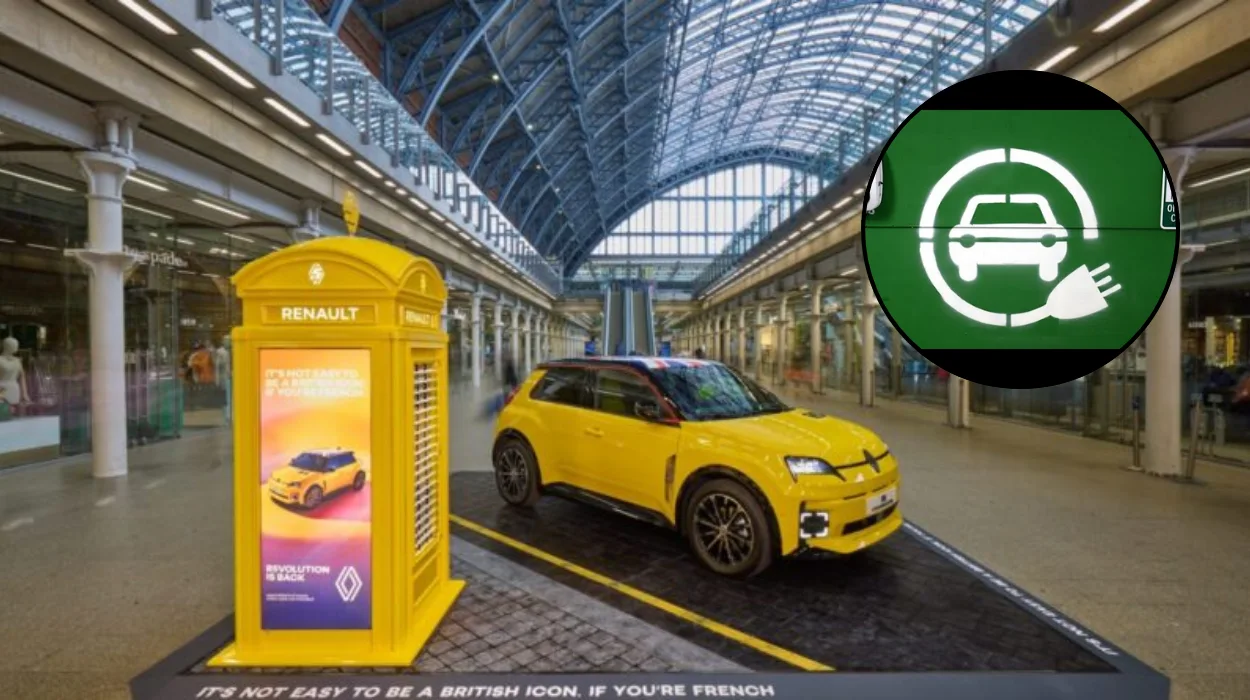
Key Points
- The UK government is considering rolling back its electric vehicle (EV) sales mandate targets.
- The original plan required 80% of new cars sold by 2030 to be electric.
- The current EV market share stands at around 23.4%, below the mandated 28% target.
- Automakers face fines of £12,000 per non-compliant vehicle.
- The automotive industry has incurred over £10 billion in losses due to EV discounting.
- Trade unions and manufacturers warn of potential job losses if mandates remain unchanged.
- Investors and charging infrastructure companies oppose weakening the targets.
- Concerns about EV range, charging infrastructure, and resale value persist among consumers.
- Environmental groups warn that relaxing mandates could increase carbon emissions.
- A public consultation is underway, with potential revised targets between 50% and 70%.
London (Britain Today News) June 16, 2026 — The UK government is reassessing its ambitious electric vehicle (EV) mandate amid mounting pressure from automakers, trade unions, and industry stakeholders who argue that current targets are outpacing market readiness.
- Key Points
- Why Are Automakers Struggling To Meet EV Targets?
- What Impact Could Policy Changes Have On Charging Infrastructure?
- How Are Energy Companies Responding To The Proposed Changes?
- What Alternatives Are Being Considered By The Government?
- Is There A Global Comparison To The UK’s EV Strategy?
- How Important Is Public Awareness In EV Adoption?
- What Does The Future Hold For The UK’s Automotive Industry?
The policy, initially introduced in 2020, aimed to phase out internal combustion engine vehicles by 2030. However, subsequent revisions pushed that deadline to 2035, while maintaining aggressive interim targets for zero-emission vehicle (ZEV) adoption. Under the mandate, 28% of all new vehicles sold in 2025 were required to be electric, a figure the market failed to meet.
Industry insiders suggest that the gap between policy ambition and consumer demand has become increasingly evident. Despite steady growth in EV adoption, the pace has not aligned with regulatory expectations, prompting calls for a more pragmatic approach.
Why Are Automakers Struggling To Meet EV Targets?
The automotive sector has voiced significant concerns about the financial burden imposed by the mandate. Manufacturers have resorted to heavy discounting strategies to boost EV sales, resulting in losses exceeding £10 billion over the past two years.
A senior industry executive stated,
“The mandate is running ahead of demand, and without immediate relief, the consequences will be severe for jobs, investments, and business viability.”
Automakers also face steep penalties of £12,000 per vehicle for failing to meet ZEV quotas. While some companies offset this by purchasing credits from competitors, the system has added complexity and cost pressures across the industry.
Trade unions have echoed these concerns, warning that strict enforcement could lead to widespread job losses. One union leader described the situation as
“an act of self-harm to a sector that remains a cornerstone of British manufacturing.”
Are Consumers Ready To Fully Embrace Electric Vehicles?
Consumer hesitation remains a critical barrier to EV adoption. Surveys and market data indicate that potential buyers are still concerned about driving range, availability of charging infrastructure, and long-term vehicle value.
Industry analysts note that these concerns are particularly pronounced in rural areas, where charging networks are less developed. Additionally, depreciation rates for second-hand EVs have raised questions about resale value, further dampening consumer confidence.
A market analyst explained,
“There is a perception gap. While EV technology has advanced significantly, public understanding has not kept pace.”
What Impact Could Policy Changes Have On Charging Infrastructure?
Investors and infrastructure providers have reacted strongly against the proposed rollback. They argue that the mandate has been instrumental in driving billions of pounds in private investment into charging networks.
A leading infrastructure executive said,
“Charging investment depends on long-term policy certainty. Any weakening of targets sends a negative signal to investors and risks slowing down deployment.”
Industry groups warn that inconsistent government policies could undermine confidence and delay the expansion of essential infrastructure. This, in turn, could create a feedback loop, further discouraging EV adoption due to inadequate charging availability.
How Are Energy Companies Responding To The Proposed Changes?
Energy sector leaders have been particularly vocal in their opposition. One prominent CEO criticised the government’s approach, stating,
“Choosing short-term pressures over long-term strategy risks undermining the UK’s leadership in clean energy.”
Energy providers, many of which have invested heavily in EV charging and leasing services, argue that policy stability is crucial for sustaining growth and innovation. They emphasise that the global shift towards electrification is accelerating, and any hesitation could leave the UK trailing behind international competitors.
Explore More about Technology:
London Tech Week 2026 ends with £6 billion AI investment and 8,000 new jobs created
Japan and UK Partner to Invest in Next-Generation AI and Drone Startups
Could Relaxing EV Targets Increase Carbon Emissions?
Environmental experts warn that scaling back EV mandates could have significant consequences for the UK’s climate goals. A reduction in EV adoption would likely result in millions more internal combustion engine vehicles on the road, increasing greenhouse gas emissions.
Data suggests that electric vehicles produce significantly lower lifetime emissions compared to petrol or diesel cars. Even plug-in hybrid vehicles, recently included in compliance measures, emit considerably more carbon dioxide than fully electric models.
A climate policy expert stated,
“Weakening the mandate risks reversing progress made in reducing transport emissions, one of the largest contributors to the UK’s carbon footprint.”
What Alternatives Are Being Considered By The Government?
The government has launched a consultation process to determine revised targets for 2030. Early indications suggest that the new benchmark could range between 50% and 70% EV sales, significantly lower than the original 80% goal.
Officials have emphasised the need for a balanced approach that supports both environmental objectives and economic stability. A government spokesperson commented,
“The EV market remains strong, but we must ensure that policies are practical and sustainable for industry and consumers alike.”
Is There A Global Comparison To The UK’s EV Strategy?
International comparisons highlight varying approaches to EV adoption. Some countries have prioritised long-term planning and policy consistency, achieving higher rates of electrification.
For instance, markets with stable regulatory frameworks and strong incentives have seen rapid growth in EV sales, demonstrating the importance of predictability for both consumers and investors.
Analysts argue that frequent policy changes in the UK risk undermining confidence and slowing progress. One expert noted,
“Consistency is key. Businesses and consumers need clear signals to make long-term decisions.”
How Important Is Public Awareness In EV Adoption?
Experts increasingly point to education as a critical factor in accelerating EV uptake. Many consumers remain unaware of the cost savings and efficiency benefits associated with electric vehicles.
Studies indicate that EVs are significantly more energy-efficient than traditional vehicles, with lower operating costs over time. Additionally, the growing number of EVs on UK roads is already contributing to substantial reductions in fuel consumption and emissions.
An industry commentator remarked,
“The challenge is not just technology—it’s informational. People need to understand the real advantages of EV ownership.”
What Does The Future Hold For The UK’s Automotive Industry?
The outcome of the government’s consultation will have far-reaching implications for the automotive sector. A revised mandate could provide short-term relief for manufacturers but may also slow the transition to a low-carbon economy.
Industry leaders are calling for a collaborative approach that addresses both supply-side and demand-side challenges. This includes expanding charging infrastructure, offering consumer incentives, and improving public awareness.
At the same time, environmental advocates stress the urgency of maintaining ambitious targets to meet climate commitments. Balancing these competing priorities will be a defining challenge for policymakers in the coming months.
A Critical Crossroads For EV Policy
The UK’s decision on whether to roll back its EV mandate represents a pivotal moment in the country’s transition to sustainable transport. While economic and practical concerns cannot be ignored, the long-term implications for climate goals and industrial competitiveness are equally significant.
As the consultation process unfolds, all eyes will be on the government’s ability to strike a balance between ambition and realism. The choices made today will shape the future of mobility, industry, and environmental policy for decades to come.