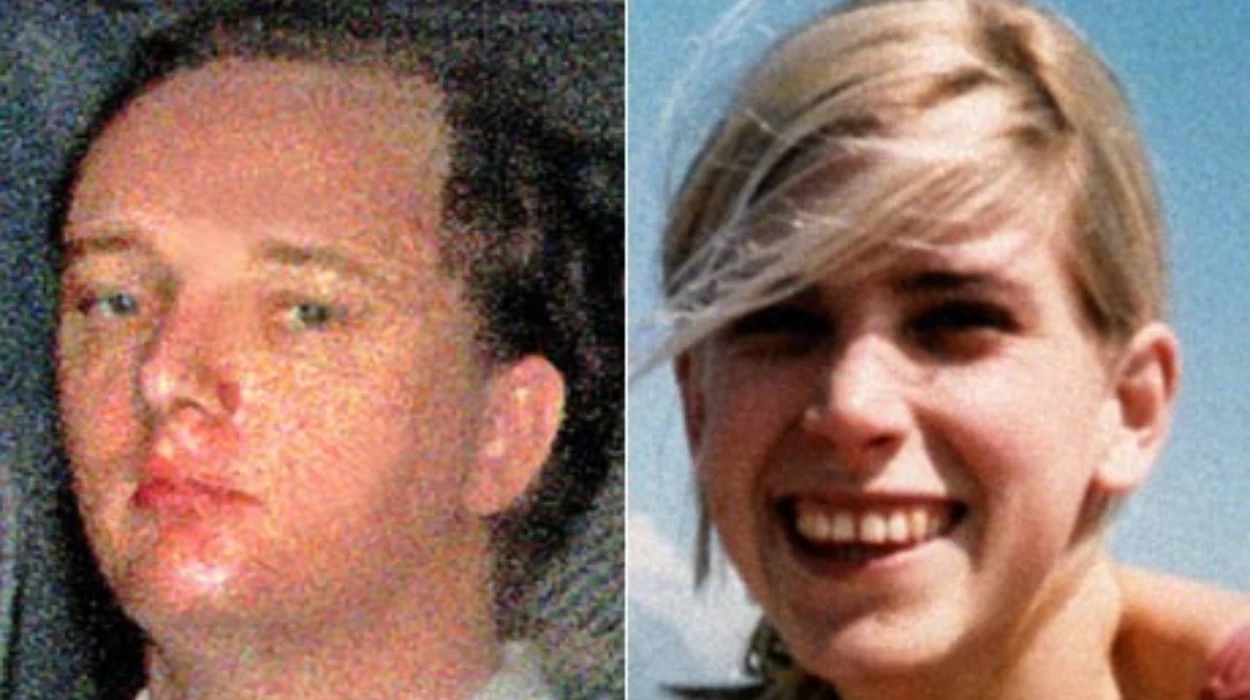
Robert Napper killed Rachel Nickell. He stabbed her 49 times on Wimbledon Common on July 15, 1992, while she walked with her two-year-old son Alex. Napper, a serial rapist diagnosed with paranoid schizophrenia, pleaded guilty to manslaughter in December 2008 on grounds of diminished responsibility and remains indefinitely detained at Broadmoor Hospital.
- Who killed Rachel Nickell and what is the shocking truth?
- What happened on the day Rachel Nickell was murdered?
- Why was Colin Stagg wrongly accused of Rachel Nickell’s murder?
- How did Operation Edzell the honeytrap fail to prove Stagg’s guilt?
- When and how was Robert Napper identified as the real killer?
- What crimes did Robert Napper commit before and after killing Rachel Nickell?
- Why did Robert Napper plead manslaughter instead of murder?
- Where is Robert Napper now and will he ever be released?
- How much compensation did Colin Stagg receive for wrongful prosecution?
- What police failures allowed Robert Napper to remain free for 16 years?
- What impact did Rachel Nickell’s murder have on her family?
- How has Rachel Nickell’s case been portrayed in popular culture?
Who killed Rachel Nickell and what is the shocking truth?
Robert Napper is Rachel Nickell’s killer. The shocking truth is police wrongly arrested Colin Stagg, an innocent man who spent 14 months in custody and received £706,000 compensation. Napper remained free for 16 years while committing further murders before DNA technology finally linked him to the crime.
Rachel Jane Nickell (23 November 1968 – 15 July 1992) was a 23-year-old British part-time model living near Wimbledon Common in southwest London with her partner André Hanscombe and their son Alexander Louis. On the morning of July 15, 1992, she walked her dog Molly through a secluded area of Wimbledon Common when Napper attacked her. He stabbed and slashed her neck and torso 49 times in a frenzied assault, then sexually assaulted her before fleeing. A passer-by found two-year-old Alex clinging to his mother’s blood-soaked body, repeating “Wake up, Mummy,” with a paper bandage stuck to Rachel’s forehead.
The Metropolitan Police launched one of their largest murder investigations under intense public pressure. Detective Sergeant Keith Penrose described the toddler as “caked in mud and blood.” Police questioned 32 men but quickly targeted Colin Stagg, an unemployed 29-year-old from Roehampton who walked his dog on the Common. Despite having zero forensic evidence linking Stagg to the scene, detectives pursued him for years.
What happened on the day Rachel Nickell was murdered?
Rachel Nickell died on July 15, 1992, at approximately 10:30 AM on Wimbledon Common. She was stabbed 49 times in her neck and torso during a sexual assault while walking her dog Molly with her two-year-old son Alex. The attack occurred in a secluded area, and Alex witnessed the entire murder before a passer-by found him.
Rachel had been living in Wimbledon since 1990 with André Hanscombe, a warehouse worker, and their son. The morning of the murder was ordinary—they walked their dog as they did daily. Rachel wore casual clothing suitable for a summer walk. Wimbledon Common spans 479 acres of ancient woodland and open space in southwest London, attracting thousands of visitors weekly.
The assailant’s attack was brutally violent. Forensic pathologists documented almost 50 stab wounds, describing it as one of the most brutal scenes Metropolitan Police officers had encountered. The sexual assault occurred after Rachel’s death. Napper placed a paper bandage on Rachel’s forehead before fleeing, suggesting some attempt to cover injuries.
Alex remained physically unharmed but suffered psychological trauma from witnessing his mother’s murder. He was discovered approximately two hours after the attack. The killing triggered unprecedented media coverage and public outrage, forcing police to find the perpetrator quickly.
Why was Colin Stagg wrongly accused of Rachel Nickell’s murder?
Colin Stagg was wrongly accused because police had no forensic evidence and relied on criminal profiling plus a deceptive honeytrap operation. Stagg matched psychologist Paul Britton’s offender profile but never committed the crime. Police launched Operation Edzell, using an undercover officer posing as a romantic interest to extract a confession. The judge later ruled this “deceptive conduct of the grossest kind” and threw out the case.
Colin Stagg was a 29-year-old unemployed man from Roehampton, southwest London, who frequently walked his dog on Wimbledon Common. He lived near the crime scene on the tough Alton estate. Police identified him within weeks of the murder despite lacking DNA, fingerprints, or any physical evidence connecting him to the scene.
Criminal psychologist Paul Britton created an offender profile based on the crime’s violent, sexual nature. Britton described the killer as likely unmarried, living near the common, and walking dogs regularly. Stagg matched this profile perfectly. Police consultants believed he was guilty despite zero forensic corroboration.
Operation Edzell (also called Operation Ezdell) began in early 1993. An undercover policewoman from Metropolitan Police Special Operations Group (SO10) contacted Stagg through a lonely hearts’ column connection. Over five months, she feigned romantic interest, meeting him, speaking on telephone, and exchanging letters containing sexual fantasies. During a Hyde Park meeting, they discussed the Nickell homicide. Stagg later claimed he only participated because he wanted romance.
The undercover officer won Stagg’s confidence and drew out violent fantasies Britton interpreted as significant. However, Stagg never admitted killing Rachel. Police released a taped conversation where the officer claimed to enjoy hurting people. Stagg mumbled,
“Please explain, as I live a quiet life.”
When she said,
“If only you had done the Wimbledon Common murder,”
he replied,
Police arrested Stagg on September 18, 1992, and charged him in August 1993 based on claims he described murder scene details only the killer would know. He spent 14 months in custody awaiting trial. The prosecution’s entire case relied on the honeytrap evidence.
How did Operation Edzell the honeytrap fail to prove Stagg’s guilt?
Operation Edzell failed because the judge ruled the police used “excessive zeal” and deceptive conduct to incriminate Stagg. Mr. Justice Ognall excluded all entrapment evidence at Old Bailey in September 1994, stating Stagg’s murder descriptions were not close to reality. With no other evidence, prosecution withdrew the case and Stagg was acquitted.
The undercover operation represented aggressive police misconduct. Profiler Paul Britton later admitted he disagreed with the fantasy-filled letters and knew nothing until after they were sent. This revealed internal police division about the operation’s ethics.
During the trial, Stagg’s defense argued the police manufactured evidence through deception. The judge found police showed “excessive zeal” and attempted incrimination through “deceptive conduct of the grossest kind.” The taped conversation proved Stagg explicitly denied killing Rachel.
Lead detective Keith Pedder received heavy public criticism. Even after Stagg’s rightful acquittal, Pedder continued promoting Stagg’s guilt theory. In 2001, he told ITV Real Crime:
“I do not believe the system served anybody that particular day.”
Pedder took early retirement and later faced corruption charges, though the case was thrown out due to insufficient evidence.
The undercover officer took early retirement from Metropolitan Police in 1998. She sued for damages arising from psychiatric injury, receiving £125,000 in 2001. Her solicitor said the payout indicated Met Police recognition of serious harm. This outrage was amplified because Alex received only £22,000 from Criminal Injuries Compensation Authority.
When and how was Robert Napper identified as the real killer?
Robert Napper was identified in July 2003 through advanced DNA profiling that matched him to evidence from Rachel’s body. The case went cold by 2002. Forensic scientist Dr. Angela Gallop re-examined evidence using refined DNA techniques only recently available. She isolated male DNA that didn’t match Stagg, then ran it through the national DNA database, which matched Napper—who was already detained at Broadmoor Hospital.
Robert Clive Napper (born 25 February 1966 in Erith, London) is an English serial killer and rapist known as “The Green Chain Rapist” and “The Plumstead Ripper.” At the time of Rachel’s murder, he was 26 years old and living in southeast London. Napper had been diagnosed with paranoid schizophrenia and Asperger syndrome (autism spectrum disorder).
Napper’s criminal history began before Rachel’s murder. In August 1989, he carried out his first rape. In March 1992, he attempted two rapes and completed one just weeks before killing Rachel. On July 15, 1992, the same day as Rachel’s murder, witness descriptions matched Napper to a rape suspect e-fit police released in August.
Police had multiple opportunities to catch Napper before Rachel died. In 1989, Napper’s mother reported to police that her son confessed to raping a woman in Plumstead. Police rejected this information. A member of the public suggested Napper resembled an identikit image of the Green Chain Walk rapist. Officers visited him and requested a blood sample. Napper agreed but never attended the station, instead fleeing the area. Police dropped the inquiry after deciding he was taller than witness descriptions (6’2″ vs. 5’7″).
The critical mistake occurred in November 1993, sixteen months after Rachel’s murder. Single mother Samantha Bisset (27) and her four-year-old daughter Jazmine were murdered in their Plumstead home. Samantha was stabbed and mutilated; Jazmine was sexually assaulted and suffocated. Detective Superintendent Micky Banks told colleagues to “brace themselves,” describing the killer as a “maniac”.
The similarities were undeniable: both victims were young mothers, both attacks involved extreme violence with dozens of stab wounds, and both occurred with young children present. Bisset detectives sat down with Nickell detectives to discuss the same suspect theory. Nickell detectives, who had Stagg in custody and stopped looking for suspects, rejected their theory with “hostility”.
This mistake had devastating consequences. Napper remained free and committed further violent crimes. A breakthrough came when police re-examined fingerprints at Samantha’s flat and realized several belonged to Napper. He was arrested in May 1994 by DS Alan Jackaman, who later identified him as a suspect in Rachel’s murder.
When detectives searched Napper’s home, they discovered a red toolbox containing knives, a book about strangulation, and a map marked with potential attack locations including near where Rachel was killed. Napper denied murder but admitted manslaughter of Samantha and Jazmine. He was convicted at Old Bailey in October 1995 and detained at Broadmoor Hospital.
In 2002, Scotland Yard used a cold case review team with refined DNA techniques. In July 2003, after 18 months of tests on Rachel’s clothes, police found male DNA insufficient for identity confirmation but large enough to rule out suspects. Dr. Angela Gallop’s team re-examined tapings from Rachel’s body, noticing original scientists found no DNA. New testing isolated both Rachel’s DNA and male DNA profile.
Investigators first compared the sample with Colin Stagg’s DNA—no match. The profile was run through the national DNA database and matched Robert Napper, who was already held at Broadmoor. In November 2007, Napper was charged with Rachel’s murder. He pleaded not guilty initially, but on December 18, 2008, at Old Bailey, he pleaded guilty to manslaughter on grounds of diminished responsibility.
Mr. Justice Griffith Williams said Napper would be detained indefinitely at Broadmoor because he was “a very dangerous man.” It is unlikely he will ever be released.
What crimes did Robert Napper commit before and after killing Rachel Nickell?
Robert Napper committed at least 70 savage attacks across southeast London as the “Green Chain Rapist,” plus two confirmed murders and one manslaughter. His crimes spanned from July 15, 1992 to November 1993. He convicted of two murders (Samantha and Jazmine Bisset), one manslaughter (Rachel Nickell), two rapes, and two attempted rapes.
Napper’s first rape occurred in August 1989. In March 1992, he committed three attacks: attempted rape on March 10, attempted rape on March 17, and rape of his fourth victim on March 24—just weeks before killing Rachel. On July 15, 1992, he sexually assaulted and stabbed Rachel 49 times.
In November 1993, Napper murdered Samantha Bisset and her daughter Jazmine in Plumstead. Samantha was stabbed in neck and chest, then mutilated. Napper took body parts as trophies. Jazmine was sexually assaulted and smothered. The crime scene was so grisly the police photographer took two years’ leave.
Napper is believed to have committed most or all attacks attributed to the “Green Chain Rapist,” who carried out at least 70 savage attacks across southeast London over four years ending in 1994. The earliest Green Chain rapes have been linked to Napper. He kept detailed records of potential and actual attack sites on women.
Why did Robert Napper plead manslaughter instead of murder?
Napper pleaded manslaughter because he suffered severe paranoid schizophrenia at the time, qualifying for diminished responsibility under British law. The court accepted he had paranoid schizophrenia and Asperger syndrome. Under Section 2 of the Homicide Act 1957, diminished responsibility applies when abnormal mental functioning substantially impaired ability to understand/conduct conduct. He received an indefinite hospital order under Sections 37 and 41 of the Mental Health Act 1983.
Diminished responsibility means the defendant’s mental illness reduced culpability below murder threshold. Napper’s paranoid schizophrenia caused delusions and impaired judgment. The court heard he suffered from severe mental illness during the attack. This legal framework means he cannot be discharged without joint Ministry of Justice and Mental Health Tribunal approval.
Explore More about Entertainment:
Bob Harris: Top Stories, Interviews and Latest Buzz Today!!
Justin Fletcher Age, Family, Biography & Life Story Trending
Where is Robert Napper now and will he ever be released?
Robert Napper remains indefinitely detained at Broadmoor Hospital in Crowthorne, Berkshire, and will almost certainly never be released. Born February 1966, he is in his late fifties. He is held under Sections 37 and 41 of the Mental Health Act 1983 with a restriction order without time limit. Discharge requires joint Ministry of Justice and independent Mental Health Tribunal approval, which is highly improbable given his history.
Broadmoor Hospital is a maximum-security psychiatric facility for dangerous patients with severe mental illnesses. Napper was diagnosed with severe paranoid schizophrenia and Asperger’s syndrome before his 1995 transfer. He has been held there since 1995.
How much compensation did Colin Stagg receive for wrongful prosecution?
Colin Stagg received £706,000 compensation in August 2008, believed to be a record for wrongful arrest compensation. The Home Office awarded this under a discretionary compensation scheme decided by independent assessor Lord Brennan, QC. Stagg sued police for £1 million damages following 14 months in custody.
In January 2007, the Home Office confirmed Stagg would receive compensation. On August 13, 2008, it was announced as £706,000. In December 2008, Stagg received a public apology from Metropolitan Police. He also received an apology from Robert Napper delivered via his QC.
Stagg co-wrote two books:
“Who Really Killed Rachel?”
(with David Kessler, 1999) and “Pariah: Colin Stagg” (with Ted Hynds, 2007), published the same day Napper appeared in court.
What police failures allowed Robert Napper to remain free for 16 years?
The Independent Police Complaints Commission (IPCC) released a damning report on June 3, 2010, describing a “catalogue of bad decisions and errors” by Metropolitan Police. Officers missed opportunities to remove Napper from streets. Rachel Cerfontyne, an IPCC commissioner, said police failed to investigate the 1989 report from Napper’s mother and inconceivably eliminated him from Green Chain rape inquiries because he was over 6 feet tall. Without these errors, Napper could have been off streets before killing Rachel, Samantha, and Jazmine.
Detectives excluded anyone over 6 feet based on a 5’7″ rapist description, despite conflicting witness reports. Napper walked with a stoop, making him appear shorter. Police failed to investigate Napper’s mother’s telephone call reporting his rape confession; no record of the call exists.
An internal review estimated the pursuit of Stagg cost the public £3 million and vital scientific information was missed. No police officer faced disciplinary action because all retired and one key senior detective died. Criminal prosecutions were not considered.
What impact did Rachel Nickell’s murder have on her family?
Rachel’s partner André Hanscombe and son Alex suffered devastating trauma. In 1996, André moved with Alex to France driven by media intrusion. André wrote “The Last Thursday in July” about life with Rachel, coping with homicide, and life with their son. He strongly criticized reporters tracking him and Alex to their French “sanctuary”.
Alex Hanscombe (now Alexander Louis Hanscombe) gave his first press interview in 2011. He published
“Letting Go: A true story of murder, loss and survival by Rachel Nickell’s son”
(Harper Element, 2017). In 2021, Alex revisited Wimbledon Common in Channel 4 documentary “Rachel Nickell: My Mother’s Murder” (also known as “Death on the Common”).
The 2026 Netflix series “The Witness” (also titled “The Murder of Rachel Nickell”) details police failures allowing Napper to evade justice while focusing on wrongful Stagg prosecution. The series debuted June 2026.
How has Rachel Nickell’s case been portrayed in popular culture?
Rachel Nickell’s murder appeared in the 2021 British miniseries “Deceit” retelling Operation Edzell, with Napper portrayed by Jack Riddiford. The 2026 Netflix drama “The Witness” dramatized the murder. Multiple books document the case including works by Alex Hanscombe, André Hanscombe, Colin Stagg, Keith Pedder, and Laurence J. Alison.
The case remains one of Britain’s greatest unsolved cases of modern times until Napper’s 2008 conviction. It triggered unprecedented Metropolitan Police investigation and remains a landmark example of wrongful prosecution combined with catastrophic police failure.