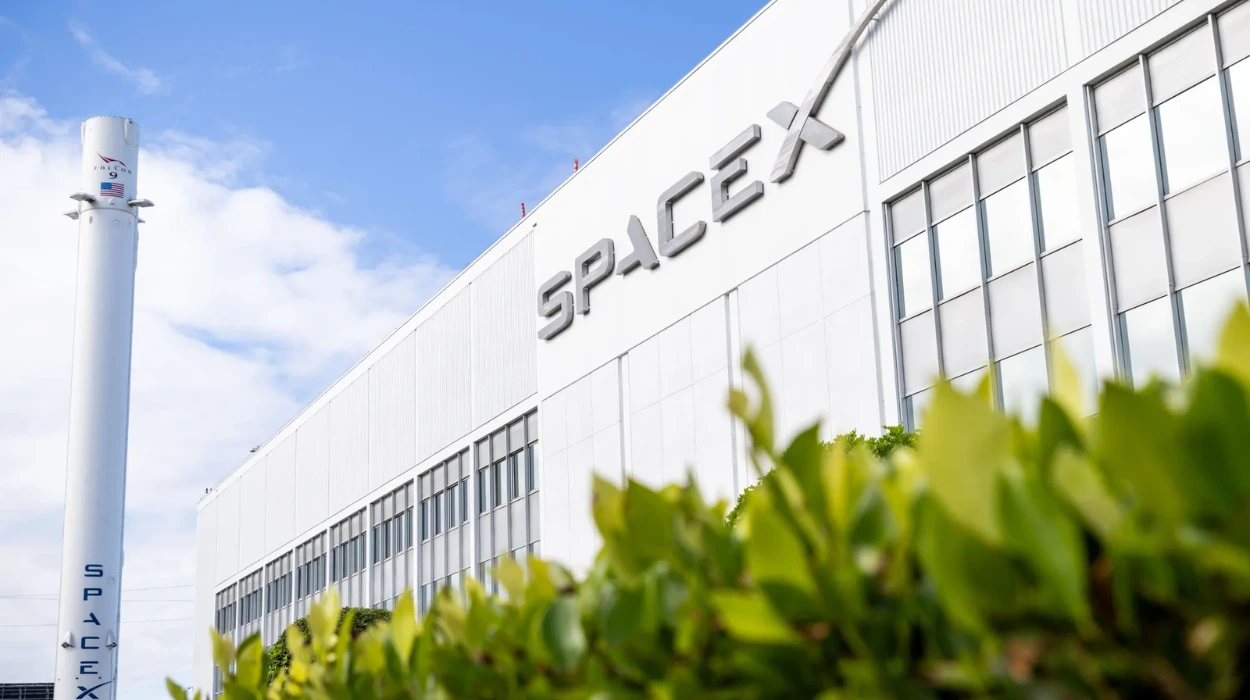
Space Exploration Technologies Corporation, commonly known as SpaceX, is an American aerospace manufacturer, space transport services provider, and communications corporation. Founded in 2002 by Elon Musk, the entity has transitioned from a private venture into the dominant infrastructure provider for global launch services and low Earth orbit satellite internet connectivity. On May 20, 2026, SpaceX advanced toward public markets by filing its Form S-1 registration statement with the United States Securities and Exchange Commission, initiating the formal process for an initial public offering. This move consolidates the core aerospace launch business, the Starlink satellite internet constellation, and the recently acquired artificial intelligence firm xAI into a single public entity.
- When is the SpaceX IPO date?
- What is the expected SpaceX IPO price and valuation?
- What do the audited financial statements reveal about SpaceX?
- How does Starlink affect the overall valuation forecast?
- What role does artificial intelligence play in the stock forecast?
- What are the long-term growth drivers for the core launch business?
- What risks face institutional and retail investors in the IPO?
- How is the SpaceX IPO impacting the broader space economy?
When is the SpaceX IPO date?
SpaceX is targeting an initial public offering debut date of June 12, 2026, on the Nasdaq exchange under the ticker symbol SPCX. The management team submitted a confidential draft registration statement to the Securities and Exchange Commission on April 1, 2026, followed by the public disclosure of its Form S-1 on May 20, 2026.
The formal regulatory filing dictates that the institutional investor roadshow will commence during the week of June 4, 2026. The final pricing of the common stock is scheduled for June 11, 2026, allowing public trading to begin the next day. This schedule is subject to federal regulatory review by the Securities and Exchange Commission and general capital market stability. Goldman Sachs is acting as the lead underwriter for the transaction, supported by joint bookrunners Morgan Stanley, Bank of America, Citigroup, and JPMorgan Chase.
Historically, corporate leadership indicated that Starlink would be spun off as an independent public entity before the parent company listed. The internal corporate strategy shifted following the February 2026 all-stock acquisition of xAI, an artificial intelligence research firm. This acquisition altered the structural composition of the company, leading executives to pursue a combined “Total SpaceX” initial public offering. The consolidated corporate structure retains all key operational divisions within a single investment vehicle rather than issuing separate equity trackers for individual business units.
What is the expected SpaceX IPO price and valuation?
The initial public offering targets a corporate valuation range between $1.75 trillion and $2 trillion, with the company seeking to raise between $40 billion and $75 billion in new equity capital. This valuation follows a rapid expansion from a $350 billion private market valuation in late 2024.
The private market valuation of the corporation climbed to $800 billion in December 2025 during an internal secondary share sale priced at $420 per share. By March 2026, secondary market transactions valued the combined entity at $1.5 trillion, driven by the integration of artificial intelligence assets. The proposed public market valuation range of $1.75 trillion to $2 trillion represents a significant premium over historical aerospace companies, reflecting a forward price-to-sales multiple exceeding 100 times based on the audited financial statements.
If the transaction closes within the target parameters, it will become the largest initial public offering in global financial history. The current record is held by Saudi Aramco, the state-owned oil enterprise of Saudi Arabia, which raised $29.4 billion in its 2019 public listing. At a midpoint valuation of $1.875 trillion, the company would immediately rank as one of the most valuable publicly traded entities globally, positioned behind technology corporations including Nvidia, Alphabet, Apple, Microsoft, and Amazon.
What do the audited financial statements reveal about SpaceX?
The Form S-1 filing reveals that SpaceX generated $18.67 billion in consolidated revenue for the full year of 2025, representing a 33 percent increase year-over-year. However, the corporation recorded a consolidated net income loss of $4.94 billion for 2025.
The financial disclosures provide the first comprehensive look at the internal balance sheet and structural profit margins of the enterprise. While the net income shows a significant deficit due to capital expenditures, the company generated an adjusted Earnings Before Interest, Taxes, Depreciation, and Amortization of $6.58 billion in 2025. The net loss accelerated into the first quarter of 2026, with the corporation posting a net income loss of $4.3 billion for the single quarter ending March 31, 2026, driven by infrastructure deployment and research costs.
The consolidated financial architecture is divided into distinct operational lines. The core launch services segment contributed $4.1 billion to the 2025 revenue total. The connectivity and satellite broadband division, primarily operating under the Starlink brand, generated $11.3 billion in 2025, which accounts for 60.5 percent of total corporate revenue. The mobile connectivity segment, which operates satellite-to-phone systems, generated $632 million during the same period.
How does Starlink affect the overall valuation forecast?
Starlink acts as the primary revenue engine and financial anchor for the corporation, generating $4.4 billion in operating income from its satellite connectivity division in 2025. The business segment crossed 10.3 million paid subscriptions across global markets during the first quarter of 2026.
The satellite internet division provides the recurring subscription revenue necessary to balance the high-risk, capital-intensive rocket development programs. The subscriber base doubled over a twelve-month period, rising from 5 million accounts in early 2025 to 10.3 million by March 2026. These subscriptions span three primary operational tiers: Residential, Roam, and Business. The corporation has deployed approximately 9,600 low Earth orbit satellites to sustain this network, holding $12.9 billion in total hardware assets on its balance sheet.
Industrial research firms predict that Starlink subscriptions will expand to 16.8 million accounts by the end of 2026. To facilitate this expansion, the enterprise reduced the average manufacturing cost of its customer hardware kits by 59 percent compared to 2022 levels. Despite subscriber growth, the global average revenue per user declined to $66 per month in the first quarter of 2026, down from $86 per month in the prior year, due to international pricing adjustments in developing economic regions. The company estimates its total addressable market for global satellite connectivity at $870 billion.
What role does artificial intelligence play in the stock forecast?
The integration of xAI adds an enterprise software and computing layer to the aerospace business, with SpaceX projecting a $26 trillion total addressable market for orbital artificial intelligence data centers designed to service enterprise computing demands.
The inclusion of artificial intelligence assets is a major factor driving the target valuation above the $1 trillion threshold. The company plans to construct and launch a specialized constellation of orbiting data centers. These satellites are designed to bypass terrestrial infrastructure constraints, utilizing laser cross-links to provide high-speed, secure machine learning inference and data processing directly from low Earth orbit.
The strategy carries near-term financial obligations that constrain corporate net margins. The artificial intelligence division depends on heavy computing infrastructure, with inference costs projected to reach $14.1 billion. Under the corporate structure established during a October 2025 recapitalization, Microsoft holds an estimated 27 percent as-converted equity stake in the artificial intelligence segment. This arrangement includes a revenue-share agreement running through 2030, requiring SpaceX to make approximately $6 billion in infrastructure payments during 2026, with a total payment cap set at $38 billion. Financial analysts do not project cash-flow breakeven for this specific artificial intelligence segment before 2029.
What are the long-term growth drivers for the core launch business?
The core launch business is anchored by a $5.9 billion contract with the United States Department of Defense under the National Security Space Launch Phase 3 program. This contract guarantees steady launch revenue through the fiscal year 2029.
The launch services division relies on a high-frequency operational cadence utilizing the reusable Falcon 9 and Falcon Heavy rocket systems. This segment completed over 138 successful missions within a single calendar year, capturing the majority of the commercial satellite launch market. Revenue visibility is secured by long-term institutional agreements with government agencies, including the National Aeronautics and Space Administration and the United States Space Force, alongside private commercial satellite operators.
The future expansion of this division rests on the operational commercialization of the Starship launch system. Starship is a fully reusable, heavy-lift transportation vehicle designed to carry payloads exceeding 100 metric tons to low Earth orbit. Achieving regular, automated flight profiles with Starship is necessary to lower the cost per kilogram of launching next-generation Starlink hardware and heavy industrial payloads. It also fulfills existing contractual milestones for the NASA Artemis lunar landing program.
Explore More about Business:
Halifax Bank Login, Offers & Services Explained Simply
Aberdeen Clothing Manufacturer Closure: Impacts on the Local Economy
What risks face institutional and retail investors in the IPO?
Investors face primary structural risks involving dual-class share voting control, high capital expenditure requirements for deep-space infrastructure, and intense regulatory oversight from federal transportation and environmental agencies.
The proposed corporate governance structure utilizes a dual-class share framework that centralizes voting concentration within the Elon Musk Trust. The trust retains 54 percent of the total equity and a higher percentage of voting control. This structure permits the founder to dictate long-term corporate direction without institutional shareholder consensus, a mechanism that has drawn formal objections from several public pension funds preparing for the public listing.
Operational and execution risks are concentrated around the technical timelines of the Starship program and the ongoing capital requirements of the satellite networks. The company must continuously deploy capital to replace older satellite cohorts, which have operational lifespans limited to several years in low Earth orbit. Furthermore, the launch cadence remains dependent on regulatory clearances, licensing, and environmental approvals from the Federal Aviation Administration and international telecommunication bodies, meaning administrative delays or flight anomalies can halt launch revenue generation.
How is the SpaceX IPO impacting the broader space economy?
The pending public listing has driven significant capital inflows into the broader space sector, lifting public proxy equities such as Rocket Lab up 57 percent and Intuitive Machines up 46 percent since March 25, 2026.
The transition of a large-scale private aerospace operator into public markets establishes a liquid benchmark for valuing space industrial assets. Investment banks have updated their sector coverages to accommodate this change, with Morgan Stanley tracking the industry through a specialized index of sixty space-related equities, twenty-four of which have doubled in value over the first half of the year. This market movement indicates that institutional asset managers are actively reallocating capital into liquid space-economy equities to establish thematic exposure ahead of the indexation of the public vehicle.
The transaction also influences exchange-traded funds and specialized asset management platforms, which are restructuring their portfolio weights to accommodate the upcoming issuance. The introduction of a multi-trillion-dollar security creates an anchor asset for aerospace, telecommunications, defense, and artificial intelligence exchange-traded products. This structural shift moves space industrialization from a speculative, venture-backed niche into a core component of public equity asset allocation.