Key Points
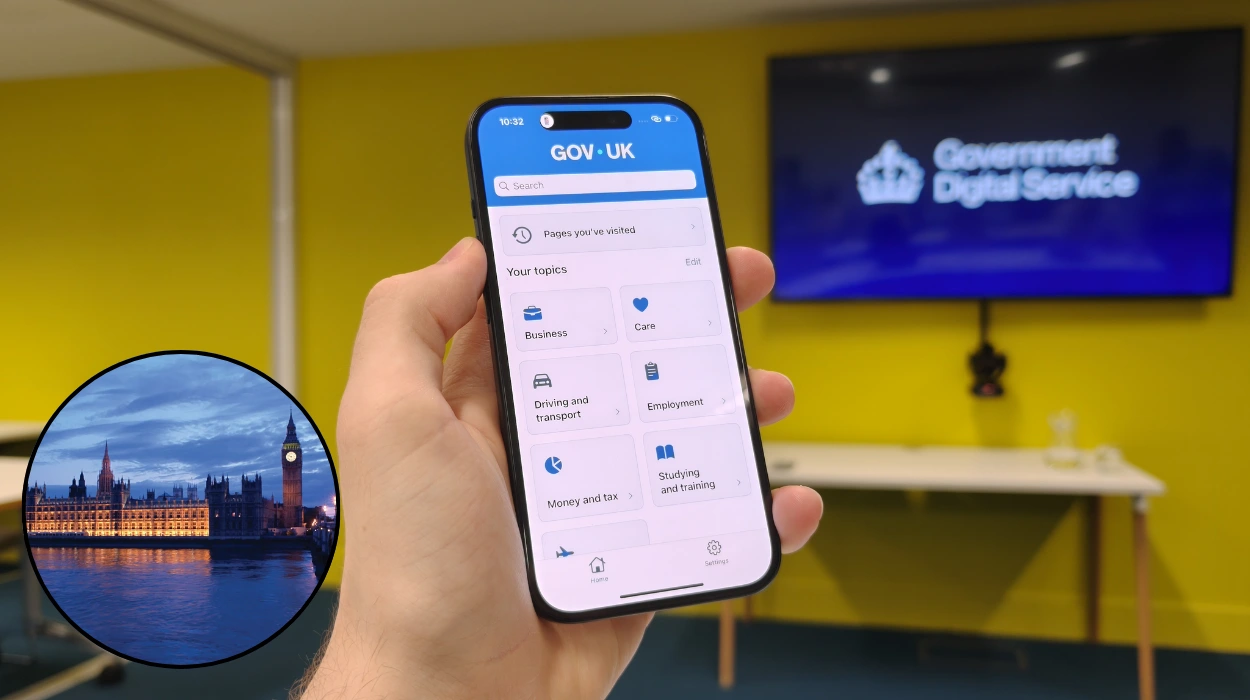
- Gov.uk Chat, an AI chatbot, is now available through the Gov.uk app to help citizens and businesses access UK government services faster.
- The tool draws on tens of thousands of pages of guidance from UK government public websites and targets high-demand topics such as tax, driving and transport, and benefits.
- Gov.uk Chat is accessible only via the Gov.uk app on modern smartphones: iOS 16+ (iPhone 8 and newer) and Android 10+ (phones from around 2019), limiting reach for older devices.
- Accessibility issues remain: incompatibilities with Assistive Touch and Reachability on iOS, difficulties with external keyboards on both platforms, and navigation problems for long responses.
- The State of digital government review cited heavy demand for contact with services: HMRC handles roughly 100,000 calls a day; DVLA processes around 45,000 letters daily; Defra still manages hundreds of paper-based services.
- DSIT says early trials show strongest demand for help on taxes, driving/transport and benefits; the tool also targets small businesses with guidance on tax, company setup and grants.
- Technology Secretary Liz Kendall described the launch as central to modernising digital government and reducing the need to trawl hundreds of web pages.
- The chatbot aims to reduce pressure on phone and postal channels by offering a natural-language interface for routine queries, but technical constraints and device requirements could leave some users behind.
- Gov.uk Chat responses link users to authoritative government pages, but some chat responses are long and the app may not auto-scroll to highlighted content, hampering usability.
- The service currently has known compatibility and accessibility limitations that the government recognises in its March 2026 accessibility statement.
North West England (Britain Today News) May 14, 2026 — Gov.uk Chat, built into the Gov.uk app, is now live as a conversational AI assistant designed to help citizens and businesses find clear, authoritative answers to questions about tax, driving, benefits and other government services, the Department for Science, Innovation and Technology (DSIT) confirmed on Friday.
- Key Points
- Who will Gov.uk Chat help first, and what problems does it aim to solve?
- Why does the government say Gov.uk Chat is important?
- How will small businesses and sole traders use Gov.uk Chat?
- What are the device and compatibility requirements for the Gov.uk app?
- What accessibility issues does the March 2026 statement identify?
- How reliable and up-to-date are Gov.uk Chat’s answers?
- What are the privacy, security and transparency safeguards?
- How will Gov.uk Chat affect traditional contact channels like phone and post?
- What are known limitations and risks to inclusion?
- What feedback and next steps have been signalled?
- How are journalists and commentators responding?
- What does this mean for everyday users?
Who will Gov.uk Chat help first, and what problems does it aim to solve?
As reported by DSIT, Gov.uk Chat draws on tens of thousands of pages of guidance across UK public websites to answer queries that are often hard to find in traditional menus. DSIT said early trials show demand concentrated around tax, driving and transport, and benefits. The State of digital government review shared in January underlined the scale of demand: HM Revenue & Customs (HMRC) handles approximately 100,000 calls each day, the Driver and Vehicle Licensing Agency (DVLA) processes around 45,000 letters daily, and the Department for Environment, Food and Rural Affairs (Defra) still manages more than 500 paper form-based services. The chatbot is intended to offer a faster path to reliable information, reducing the need for citizens to wait to speak to call handlers or to sift through lengthy web guidance.
Why does the government say Gov.uk Chat is important?
Technology Secretary Liz Kendall said:
“Modernising our digital services is central to building a government that works for everyone. For too long, navigating government has felt like a full-time job.”
Ms Kendall added:
“Whether you’re a parent trying to find out what childcare you’re entitled to, a first-time buyer working out which schemes you can access, or someone approaching retirement, you shouldn’t have to spend time trawling through hundreds of web pages to get a straight answer. Gov.uk Chat changes that – putting clear, reliable information in people’s hands in seconds, at any time of day.”
How will small businesses and sole traders use Gov.uk Chat?
DSIT noted that Gov.uk Chat can be used by businesses to find practical guidance. The department said the tool can help sole traders understand their tax obligations, guide entrepreneurs in setting up a new company, and point small business owners to relevant grants and support. By pulling authoritative answers from across government websites, DSIT said Gov.uk Chat will help businesses spend less time navigating government and more time on growth.
What are the device and compatibility requirements for the Gov.uk app?
Gov.uk Chat is available only through the Gov.uk app, which launched last year. The app requires iPhones running iOS 16 or later, meaning devices from around 2022 onwards (the oldest supported iOS models are the iPhone 8 and the 5th-generation iPad). Android users need Android 10 or later, which generally covers smartphones introduced from about 2019. The government acknowledges that these requirements mean some people will be unable to use the service on older devices, and that Android 10 reached end of life in March 2023 when Google stopped issuing official security updates for that version.
What accessibility issues does the March 2026 statement identify?
The government’s March 2026 accessibility statement for the Gov.uk app notes several limitations. For iOS users, it is not possible to use Assistive Touch and iOS Reachability at the same time within the app. Some parts of the app cannot be easily navigated with an external keyboard, preventing some users from accessing all content or selecting links. On Android, users report screen navigation difficulties; in Gov.uk Chat conversations, it is not possible to select individual links within chat responses when using an external keyboard. Another issue flagged is that long chat responses can fail to auto-scroll to the content currently being read or highlighted, which can confuse users trying to follow long answers. The government statement accepts these limitations and documents them as part of ongoing improvements.
How reliable and up-to-date are Gov.uk Chat’s answers?
DSIT says Gov.uk Chat sources information directly from government websites and guidance pages to deliver “fast, reliable answers.” The chatbot aims not to generate new policy interpretation but to point users to the relevant official pages and guidance. By concentrating on established, published government content, DSIT intends to limit hallucinations and maintain authoritative responses. Nevertheless, the department expects to continue refining the system and its sourcing to ensure up-to-date coverage as guidance and services evolve.
What are the privacy, security and transparency safeguards?
DSIT emphasised that Gov.uk Chat is designed to provide responses based on public guidance rather than personal data processing. The app environment and data-handling practices are governed by existing government digital service standards and privacy policies. DSIT said that the chatbot will signpost official pages and guidance rather than replacing formal transactions or secure account-based services; users needing to complete transactions will be directed to the correct, secure parts of government websites or account portals.
How will Gov.uk Chat affect traditional contact channels like phone and post?
The State of digital government review’s figures for call and mail volumes helped frame the case for Gov.uk Chat: large volumes of routine queries drive cost and delay in traditional channels. DSIT argues that by answering routine queries in natural language, Gov.uk Chat can cut pressure on call centres and postal services, allowing human staff to focus on complex cases. However, the effectiveness of that shift will depend on adoption rates and the app’s accessibility: users who cannot run the app will still rely on phone, post and in-person services.
What are known limitations and risks to inclusion?
The app-only rollout creates a structural access limit: citizens without compatible devices, reliable internet, or the technical skills to use the app will be excluded from this channel. The government recognises that accessibility features are imperfect; the March 2026 statement openly lists problems affecting users who rely on assistive technology. These factors risk entrenching a digital divide if alternative, accessible routes are not maintained and improved.
Explore More About Technology:
Starmer adviser Varun Chandra held private talks with US tech firms in AI and regulation row 2026
More private UK Biobank health records appear on Chinese website 2026
What feedback and next steps have been signalled?
DSIT said early trials informed prioritisation for tax, driving/transport and benefits topics. The department appears to plan iterative improvements based on user testing and accessibility audits. The government’s transparency about current limitations suggests a route of progressive updates, but it has not published a public timetable for resolving every known issue or widening device compatibility.
How are journalists and commentators responding?
As reported by several observers, reactions have ranged from praise for an effort to modernise public services, to concern that the app-only approach and current accessibility shortcomings could leave vulnerable people behind. Supporters say a reliable chatbot could save time for millions of routine enquiries; critics urge stronger commitments to accessibility, broader device support and parallel improvements to non-digital channels.
What does this mean for everyday users?
For many citizens and small businesses with modern phones, Gov.uk Chat could offer faster, clearer answers on taxes, driving, benefits and routine enquiries, saving time otherwise spent on searches, telephone queues or paperwork. For people with older devices, limited connectivity, or who rely on assistive technology, the current rollout may offer limited benefit until the government resolves the documented compatibility and accessibility issues.