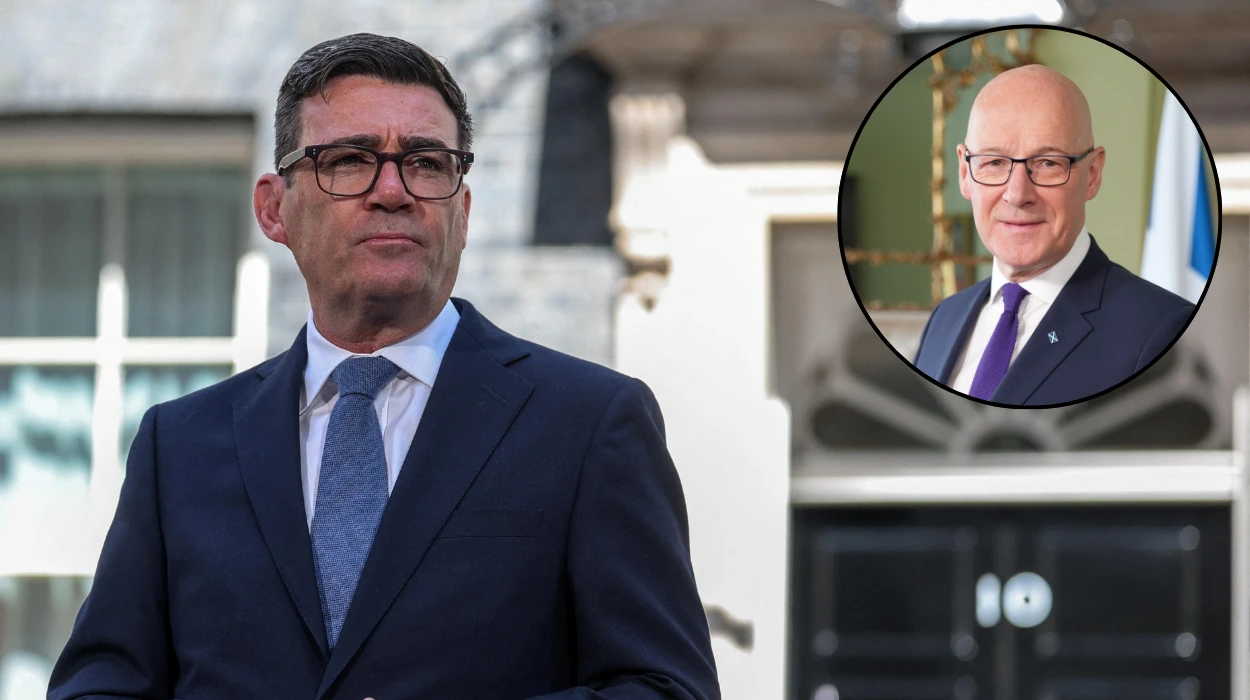
Key Points
- The Prime Minister met Scotland’s First Minister John Swinney in Glasgow on 23 July 2026.
- The meeting took place ahead of the Commonwealth Games opening ceremony.
- The Prime Minister congratulated Glasgow and the Scottish Government for hosting the Games at short notice.
- Both leaders discussed strengthening cooperation under devolution to improve lives across Scotland.
- Economic growth, re-industrialisation, and job creation were central to discussions.
- The Prime Minister emphasised that a new Scottish independence referendum is “off limits”.
- Both sides agreed on the importance of a constructive and collaborative relationship.
- The Prime Minister expressed commitment to regular engagement with the First Minister.
- The talks also focused on tackling cost-of-living challenges affecting families.
- The meeting signals a reset in UK-Scotland relations amid political and economic pressures.
Glasgow (Britain Today News) July 23, 2026 – The Prime Minister held high-level talks with Scotland’s First Minister John Swinney in Glasgow on Thursday, marking a significant moment in UK-Scottish relations as both leaders gathered ahead of the Commonwealth Games opening ceremony.
- Key Points
- What was the purpose of the Prime Minister’s meeting with John Swinney?
- What did both leaders say about devolution and cooperation?
- What stance did the Prime Minister take on Scottish independence?
- What role does the cost-of-living crisis play in the discussions?
- What are the broader political implications of this meeting?
- What does this mean for Glasgow and Scotland’s global image?
What was the purpose of the Prime Minister’s meeting with John Swinney?
The meeting between the Prime Minister and John Swinney was primarily aimed at strengthening intergovernmental cooperation while addressing key political and economic priorities affecting Scotland and the wider United Kingdom.
According to an official statement released by Downing Street, the Prime Minister
“began by congratulating the First Minister and the city of Glasgow for hosting the Commonwealth Games, especially at short notice.”
The Prime Minister added that he was
“looking forward to watching the opening ceremony later that evening.”
The timing of the meeting was notable, coinciding with a major international sporting event that places Glasgow at the centre of global attention. The engagement also reflects a broader attempt to reinforce unity and collaboration across devolved governments.
How does the Commonwealth Games factor into the political context?
The Commonwealth Games provided both a symbolic and practical backdrop for the meeting. Hosting such a large-scale event requires coordination between multiple layers of government, making it an opportunity to demonstrate effective governance.
As stated in the Downing Street release, the Prime Minister praised Glasgow’s organisational efforts, highlighting the city’s ability to step in and deliver the Games under challenging circumstances. This recognition underscores the importance of civic pride and national unity during global events.
The Games also serve as a platform for showcasing Scotland’s economic and cultural strengths, which aligns with broader discussions about regional growth and investment.
What did both leaders say about devolution and cooperation?
A central theme of the discussion was the future of devolution and how both governments can collaborate more effectively.
According to the official statement,
“the conversation then turned to how the Prime Minister and First Minister can work more closely together to build a model of devolution to improve people’s lives across Scotland.”
The Prime Minister reiterated his belief that
“deeper devolution could make a real difference in helping communities across the UK to re-industrialise – creating jobs, transforming high streets and reviving local economies.”
John Swinney reportedly welcomed the opportunity for engagement, signalling openness to dialogue on devolved powers and policy alignment.
Why is re-industrialisation a key focus of the talks?
Re-industrialisation emerged as a cornerstone of the meeting, reflecting ongoing concerns about economic stagnation and regional inequality.
The Prime Minister emphasised that revitalising local economies is essential to long-term prosperity. He highlighted the role of devolution in enabling tailored economic strategies that respond to local needs.
The Downing Street statement noted that such efforts would help
“create jobs, transform high streets and revive local economies,”
indicating a holistic approach to economic renewal.
This focus aligns with broader UK government priorities aimed at levelling up regions and addressing disparities between urban and rural areas.
What stance did the Prime Minister take on Scottish independence?
One of the most politically sensitive aspects of the meeting was the issue of Scottish independence.
The Prime Minister made his position clear, stating
“up front that another referendum on independence was off limits because it would take our focus away from growing the economy and helping families with the cost of living.”
This firm stance signals the UK government’s continued opposition to revisiting the independence question in the near term. It also reflects a strategic emphasis on economic stability over constitutional debates.
The statement underscores a desire to shift political discourse towards practical issues affecting citizens’ daily lives.
How did John Swinney respond to the independence discussion?
While the Downing Street statement does not provide direct quotes from John Swinney, it indicates that the First Minister was willing to engage constructively on broader governance issues.
His openness to dialogue on devolution suggests a pragmatic approach, even as the question of independence remains a defining issue in Scottish politics.
The meeting appears to have prioritised areas of common ground, such as economic development and public service delivery, rather than escalating constitutional tensions.
What role does the cost-of-living crisis play in the discussions?
The cost-of-living crisis was another critical topic addressed during the meeting.
The Prime Minister stressed the importance of maintaining focus on “helping families with the cost of living,” highlighting the ongoing financial pressures faced by households across the UK.
This emphasis reflects a broader government strategy to address inflation, energy costs, and wage stagnation through coordinated policy measures.
By prioritising economic relief, both leaders signalled a commitment to tackling immediate challenges affecting citizens.
How will UK-Scotland relations evolve following this meeting?
The meeting marks a potential turning point in UK-Scotland relations, with both sides expressing a willingness to work together more constructively.
According to the Downing Street statement,
“the Prime Minister said this was a moment for both sides to work together in a constructive relationship.”
He also noted that he
“looked forward to regular engagement with the First Minister in the months ahead,”
indicating a commitment to sustained dialogue.
This approach suggests a move towards greater cooperation, even amid ongoing political differences.
Explore More about Politics:
Brian Leishman Urges Labour To ‘Rediscover Radicalism’
Andy Burnham Pauses Early Release Prisoner Scheme After Backlash
What are the broader political implications of this meeting?
The talks between the Prime Minister and John Swinney carry significant political implications for the UK.
By emphasising collaboration and economic priorities, the meeting signals a shift away from confrontational politics towards a more pragmatic approach.
The explicit rejection of an independence referendum also sets the tone for future debates, potentially reshaping the political landscape in Scotland.
At the same time, the focus on devolution and local empowerment reflects an evolving governance model that seeks to balance central authority with regional autonomy.
Could this meeting impact future policy decisions?
The outcomes of the meeting are likely to influence future policy decisions at both the UK and Scottish government levels.
Areas such as economic development, infrastructure investment, and public services may see increased coordination as a result of the discussions.
The emphasis on regular engagement suggests that this meeting is part of an ongoing process rather than a one-off event.
This continued dialogue could lead to more aligned policies and improved outcomes for communities across Scotland.
What does this mean for Glasgow and Scotland’s global image?
Hosting the Commonwealth Games and facilitating high-level political discussions enhances Glasgow’s global profile.
The Prime Minister’s praise for the city reinforces its reputation as a capable host for international events.
This visibility can attract investment, tourism, and cultural recognition, contributing to Scotland’s broader economic and social objectives.
The meeting also highlights Scotland’s role within the UK and the international community, positioning it as a key player in both domestic and global affairs.