
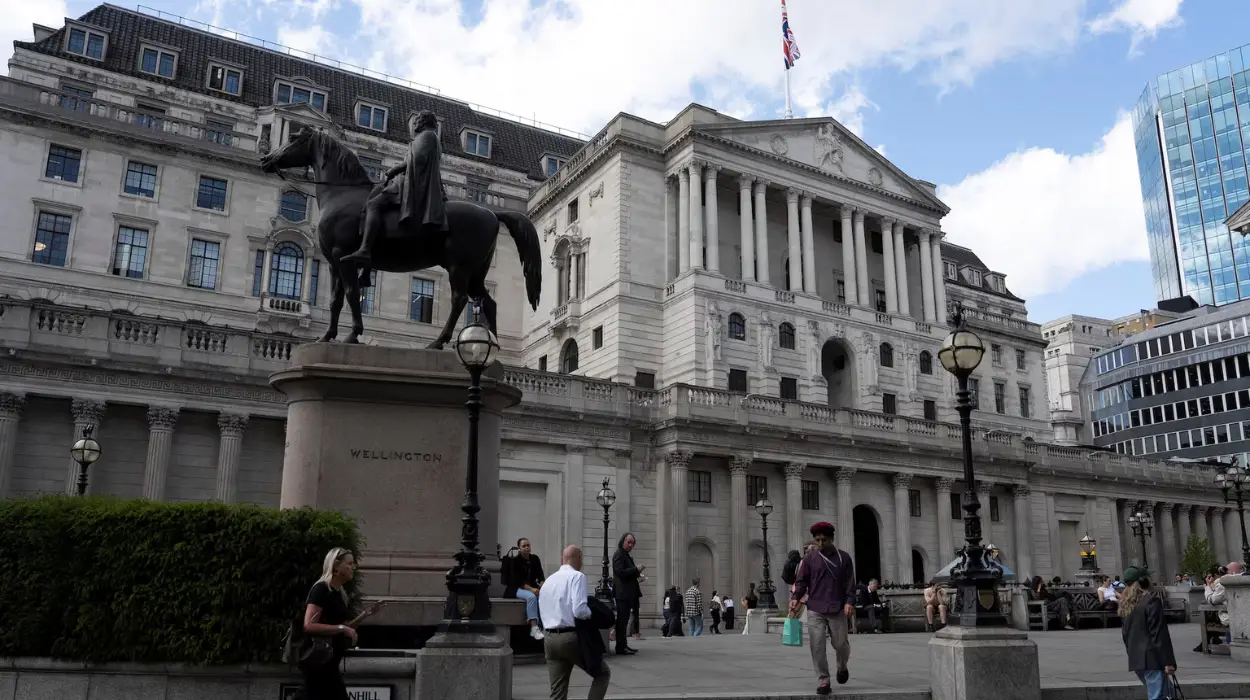
For millions of households across Britain, the cost of borrowing could be heading in the wrong direction just as they struggle to manage rising living expenses. The Bank of England is expected to raise its benchmark interest rate on Thursday, potentially increasing pressure on mortgage holders, businesses and consumers already facing a difficult financial climate.
The Bank’s Monetary Policy Committee (MPC) is scheduled to announce its decision at 12 noon GMT. Economists surveyed by Reuters widely expect the Bank Rate to increase from 3.75% to 4%, which would mark the first increase since August 2023. If confirmed, it would also be the Bank’s first rate rise in more than three years.
The decision comes at a challenging moment for the UK economy, with inflation climbing again, energy costs remaining elevated and borrowing becoming increasingly expensive.
Inflation puts pressure on policymakers
The latest figures from the Office for National Statistics (ONS), released on 21 October, show that UK Consumer Prices Index (CPI) inflation increased to 3.5% in September, up from 3.1% in August. This is considerably above the Bank of England’s 2% inflation target.
Transport costs, particularly motor fuels, made the largest upward contribution to the monthly change in inflation. The annual inflation rate for transport reached 6.6% in September, compared with 4.6% in August.
Higher energy prices have added to the pressure. According to Reuters, oil prices have remained close to $100 a barrel amid the continuing US-Iran conflict, while natural gas prices have risen to around three times their pre-conflict levels. These developments have complicated the Bank’s efforts to bring inflation under control without placing further pressure on economic growth.
At its September meeting, the MPC voted 6-3 to keep interest rates unchanged at 3.75%. However, the latest inflation figures and signs of stronger economic activity have increased expectations of a change in policy.
Mortgage holders face another financial challenge
For homeowners, the possibility of higher interest rates comes with an immediate concern: how much more will their monthly mortgage payments cost?
More than 2.3 million UK households are expected to move off fixed-rate mortgage deals in 2027, potentially exposing them to more expensive borrowing. According to The Guardian’s reporting on 2 November, many of these borrowers could face higher repayments when they secure new deals.
The housing market is already showing signs of pressure. Reuters reported on 29 October that mortgage approvals for house purchases fell to 53,443 in September, down from 54,814 in August. This was the lowest monthly figure since December 2023. Net mortgage lending also declined to £3.866 billion, its lowest level since May.
Richard Pinch, a senior director at financial advisers Broadstone, told Reuters that the continued decline in mortgage approvals and borrowing pointed to a housing market facing increasing pressure from affordability constraints and higher mortgage costs. The situation is particularly significant for first-time buyers and households in London, where high property prices can make even modest changes in borrowing costs financially important.
However, an increase in Bank Rate does not automatically mean that every homeowner’s mortgage payment will rise immediately. Borrowers on fixed-rate deals generally retain their agreed interest rate until the deal expires, while those on tracker or variable-rate mortgages may be affected more quickly.
Economists divided over the next move
Although markets are anticipating a rate increase, economists remain divided over how far the Bank should go.
Reuters reported that economists expect a 7-2 vote in favour of increasing the rate to 4%. Hetal Mehta, chief economist at wealth manager St James’s Place, said the rise in energy prices and stronger-than-expected economic growth were likely to have tipped the balance in favour of a rate increase.However, the outlook beyond November remains uncertain.
Peder Beck-Friis, an economist at PIMCO, told Reuters that he expected only one further increase in February 2027, followed by an extended period without further changes. He described the potential tightening as a risk-management adjustment in the absence of stronger evidence that inflation was spreading into underlying prices.
The Bank’s own July Financial Stability Report also highlighted the pressure facing borrowers. It estimated that just over five million households could see their mortgage repayments increase by the end of 2028. For households coming off fixed-rate deals, the report projected an average monthly repayment increase of £45 over the following two years, based on the market conditions at that time.
A difficult balancing act for the Bank
The Bank of England faces a delicate challenge: raising rates could help contain inflation by making borrowing more expensive and discouraging spending, but it could also weaken household demand and investment.
For businesses, higher borrowing costs can make expansion, recruitment and investment decisions more difficult. For consumers, increased mortgage and loan repayments could leave less money available for shopping, travel and other everyday spending. The decision will therefore extend beyond the financial markets in the City of London. Its effects could be felt in households across the capital and throughout the country.
All eyes will now turn to the Bank’s announcement and its latest economic forecasts. The key question is not simply whether borrowing will become more expensive, but how much financial pressure British households can absorb while the Bank tries to bring inflation back under control.