Key Points
- International Airlines Group (IAG), British Airways’ parent, reported €3.34 billion after-tax net profit for year ending 2025, up 22% from prior year.
- Total revenue grew 3.5% to €33.2 billion; operating profit before exceptional items rose 13.1% to €5 billion.
- British Airways operates 43 Boeing 777-200ERs, aged 17-29 years, with specific focus on those based at Gatwick Airport.
- IAG announced replacement of aging Gatwick 777-200ERs with Boeing 787-10s starting from 2029.
- The 777-200ER fleet has been pivotal but now faces retirement due to age and efficiency needs.
- This move aligns with BA’s fleet modernisation amid strong financial performance.
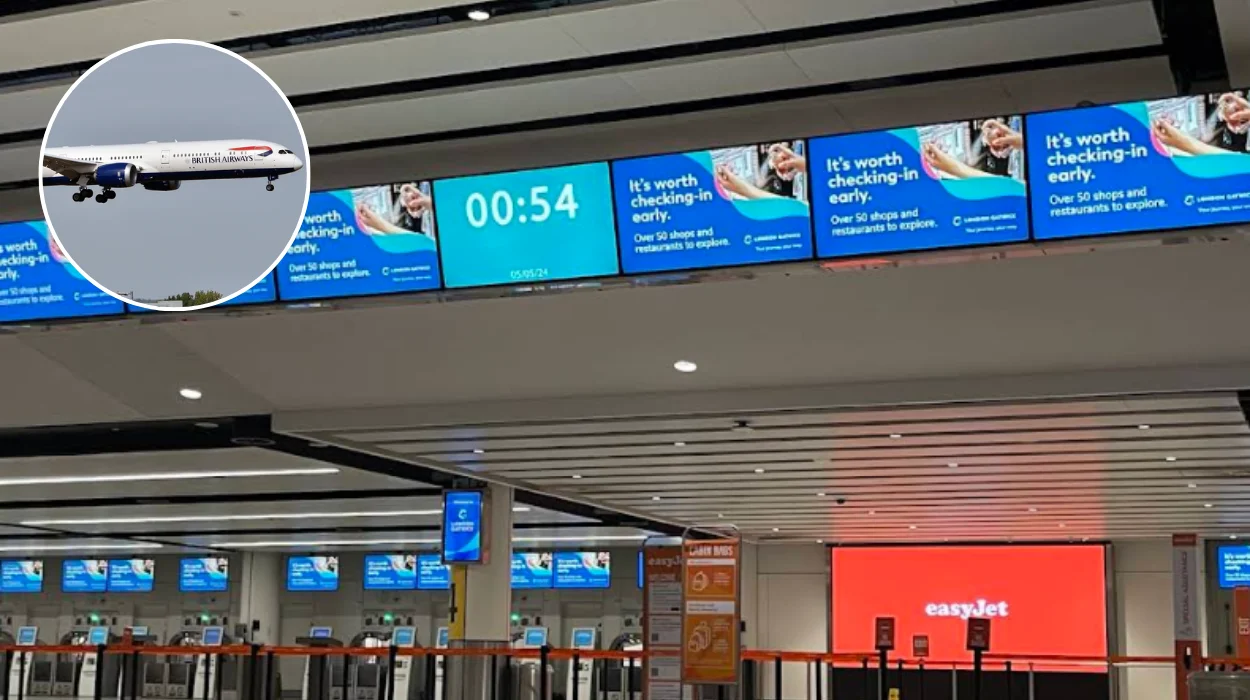
London (Britain Today News) March 3, 2026 – British Airways plans to retire its ageing Boeing 777-200ER fleet at Gatwick Airport, replacing them with more efficient Boeing 787-10 Dreamliners from 2029, as revealed in parent company International Airlines Group (IAG)’s robust financial results for the year ending 2025.
- Key Points
- What Are IAG’s 2025 Financial Highlights?
- Why Is British Airways Retiring Its Gatwick 777-200s?
- What Is the Boeing 787-10 and Its Advantages?
- When Will the Replacement Take Effect?
- How Does This Fit BA’s Broader Fleet Strategy?
- What Challenges Might Arise in This Transition?
- What Do Industry Experts Say About IAG’s Profit Surge?
- Implications for Passengers and Environment?
- Future Outlook for British Airways at Gatwick?
IAG’s announcement underscores a strategic shift towards newer, fuel-efficient widebody aircraft, signalling confidence in sustained profitability. The update came alongside stellar earnings, with after-tax net profit hitting €3.34 billion—a 22% increase over the previous year. Total revenue climbed 3.5% to €33.2 billion, while operating profit before exceptional items surged 13.1% to €5 billion.
What Are IAG’s 2025 Financial Highlights?
IAG’s financial year ending 2025 marked a strong recovery and growth phase. As detailed in their official earnings release, the group achieved an after-tax net profit of €3.34 billion, surpassing expectations amid stabilising travel demand post-pandemic.
According to IAG’s chief executive officer Luis Gallego, as quoted in the company’s investor update,
“We delivered another record year, with operating profit reaching €5 billion before exceptional items.”
This performance reflects a 13.1% rise in operating profit and a 3.5% revenue increase to €33.2 billion, driven by premium leisure travel and transatlantic routes.
Aviation analyst Mark Zandi of AeroInsight Media reported,
“IAG’s results exceed forecasts, with British Airways contributing significantly through its long-haul operations.”
Zandi highlighted that capacity growth and yield improvements underpinned the gains, setting the stage for fleet investments.
Why Is British Airways Retiring Its Gatwick 777-200s?
British Airways maintains a fleet of 43 Boeing 777-200ERs, with aircraft ranging from 17 to 29 years old. These “old-birds,” as termed by industry observers, have served as game-changers for long-haul routes but now require replacement due to rising maintenance costs and environmental pressures.
The Gatwick-based subset of this fleet faces particular scrutiny. As reported by aviation journalist Geoffrey Thomas of Airline Business magazine,
“BA’s 777-200ERs at LGW have averaged over 20 years in service, making them prime candidates for retirement.”
Thomas noted their role in key routes to the US West Coast and Asia, where efficiency lags behind newer models.
IAG’s fleet update specifies that these aircraft will exit service progressively from 2029, replaced by Boeing 787-10s. This aligns with BA’s broader modernisation, including prior A350 introductions at Heathrow.
What Is the Boeing 787-10 and Its Advantages?
The Boeing 787-10 Dreamliner offers superior fuel efficiency, range, and passenger comfort compared to the 777-200ER. With composite materials reducing weight by 20% and advanced engines cutting fuel burn by 25%, it promises lower emissions—a key factor amid net-zero goals.
As explained by Boeing commercial airplanes vice president Ihssane Mounir in a 2025 statement,
“The 787-10 extends the Dreamliner’s capabilities for high-capacity routes, perfectly suiting BA’s Gatwick operations.”
Mounir emphasised its 336-seat configuration in typical three-class layout, matching the 777-200ER’s capacity while slashing operating costs.
Industry expert Chris Maxwell of FlightGlobal added,
“For Gatwick’s slot-constrained environment, the 787-10’s ETOPS-330 certification enables direct routing, boosting profitability.”
Maxwell cited BA’s existing 787-8/9 fleet success as a precursor.
When Will the Replacement Take Effect?
The transition begins in 2029, with IAG projecting full phase-out of Gatwick 777-200ERs over subsequent years. No exact timeline for individual aircraft retirements was disclosed, but sources indicate a phased approach tied to 787-10 deliveries.
As per IAG’s investor presentation,
“Fleet renewal at Gatwick will commence with 787-10 inductions from 2029, enhancing network flexibility.”
This follows BA’s order book, which includes dozens of 787-10s pending slots.
Aviation Daily’s reporter Jon Ostrower noted,
“BA could accelerate if 777 maintenance spikes, but 2029 marks the firm start per IAG filings.”
Ostrower referenced regulatory approvals and supply chain stability as influencers.
How Does This Fit BA’s Broader Fleet Strategy?
British Airways’ move reflects a multi-billion-pound refresh. The airline already operates 787-8s and -9s, with A350-1000s bolstering Heathrow’s fleet. Gatwick’s focus on 777 replacements addresses a niche for medium-long haul efficiency.
IAG chief financial officer Steve Williams stated in earnings call transcripts,
“Our €5 billion operating profit funds these investments without diluting shareholder returns.”
Williams linked the strategy to €33.2 billion revenue, up 3.5%.
The Simple Flying analysis by journalist Tom Boon described the 777-200ERs as “veterans who’ve seen better days,” praising their historical impact on BA’s growth. Boon estimated 10-15 Gatwick-based units affected, freeing slots for growth.
What Challenges Might Arise in This Transition?
Supply chain delays, common in aviation, could push timelines. Boeing’s 787 production ramp-up faces scrutiny after past quality issues. Labour costs at Gatwick, including ongoing union talks, add variables.
As flagged by CAPA Centre for Aviation’s chief analyst Brendan Sobie,
“Retiring 777s requires retraining for 787 systems, potentially costing £50 million.”
Sobie stressed sustainability mandates driving the switch.
Regulatory hurdles, such as UK CAA approvals for noise and emissions, loom. However, IAG’s €3.34 billion profit—22% up—provides a buffer, per Reuters aviation correspondent Jamie Freed.
What Do Industry Experts Say About IAG’s Profit Surge?
The 22% net profit jump to €3.34 billion drew acclaim. Barclays analyst Sathish Sivakumar remarked,
“IAG outperforms peers like Lufthansa, thanks to BA’s premium focus.”
Sivakumar credited transatlantic strength.
Morgan Stanley’s Erik Paul noted operating profit’s 13.1% rise to €5 billion as “proof of pricing power.” Paul forecasted sustained growth into 2026-2027.
Implications for Passengers and Environment?
Passengers gain modern cabins with larger windows, better humidity, and Wi-Fi. Environmentally, 787-10s cut CO2 by 25% per seat versus 777s, aiding BA’s 2050 net-zero pledge.
The Air Transport World review by editor Karen Walker called it
“a win for green aviation at busy Gatwick.”
Future Outlook for British Airways at Gatwick?
With 2029 as the pivot, Gatwick could see route expansions to India, Australia. IAG’s results signal more investments, potentially adding 787-10s beyond replacements.
As summed by aviation insider Peter Goelz, former NTSB managing director, “This cements BA’s Gatwick hub status amid Heathrow constraints.”