Key Points
- Hackney Council set a goal in 2019 to fully decarbonise the entire London borough, focusing on energy efficiency upgrades for council-owned buildings known as council estates.
- A central strategy involves installing solar-powered microgrids to boost energy efficiency, lower costs for residents, and reduce reliance on fossil fuels.
- Challenges persist across Britain, including Hackney, where deploying these solar systems on estates has proven more complex than anticipated due to technical, financial, and logistical hurdles.
- Mayor of London Sadiq Khan and Shadow Energy Secretary Ed Miliband visited Stoke Newington School in north London to announce a new climate action plan.
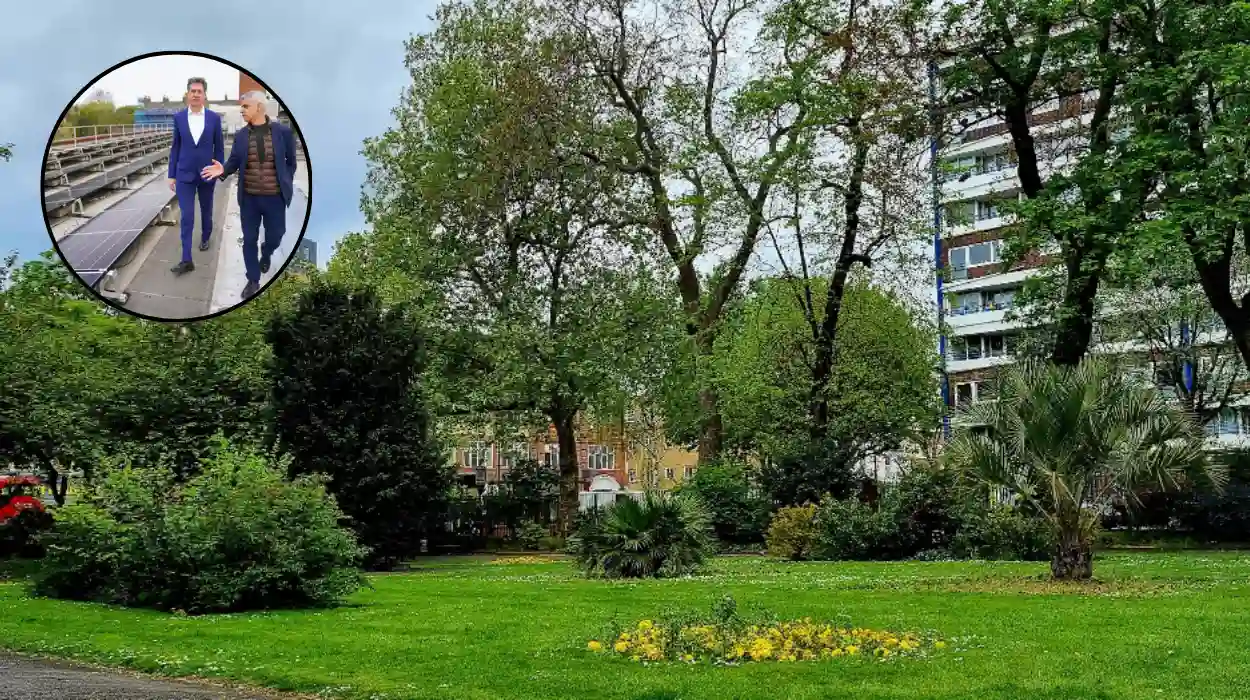
- The visit featured a walk past newly installed solar panels on the school roof, highlighting practical examples of solar integration in community buildings.
- The initiative targets low-income homes on council estates, aiming to bring affordable renewable energy directly to vulnerable households.
- Broader implications include potential scalability across London boroughs and Britain, addressing fuel poverty amid rising energy prices.
Hackney (Britain Today News) March 3, 2026 – Hackney Council is spearheading an ambitious drive to equip low-income homes in its council estates with solar power, as part of a long-standing pledge to decarbonise the borough. Mayor of London Sadiq Khan, alongside Shadow Energy Secretary Ed Miliband, spotlighted the effort during a visit to Stoke Newington School, where solar panels now crown the rooftop. This move underscores a practical step towards energy efficiency in one of London’s most diverse neighbourhoods, despite nationwide hurdles in solar deployment.
- Key Points
- Why Did Hackney Council Target Decarbonisation in 2019?
- What Role Do Solar Microgrids Play Here?
- Who Are the Key Figures in This Initiative?
- How Does the Stoke Newington School Visit Fit In?
- What Challenges Hinder Solar on Council Estates?
- Which Broader Climate Plan Was Announced?
- How Does This Impact Low-Income Residents?
- What Lessons for the Rest of Britain?
- Future Outlook: Scalability and Funding?
Why Did Hackney Council Target Decarbonisation in 2019?
In 2019, Hackney Council boldly committed to making the borough carbon neutral, with council estates—public housing blocks for low-income families—at the heart of the plan. These estates, home to thousands of residents, guzzle energy through outdated heating and lighting systems. As reported by local sources covering the initial announcement, the council identified solar-powered microgrids as a game-changer: small-scale networks generating and distributing solar energy on-site to slash bills and emissions.
The strategy prioritised low-income homes, where fuel poverty bites hardest; many households spend over 10% of income on energy.
“Council estates represent a huge opportunity to deliver green energy where it’s needed most,”
council leaders stated at the time. Yet, as the years unfolded, implementation lagged. Technical issues like shading from tall buildings, grid connections, and upfront costs stalled progress. Across Britain, similar schemes falter due to fragmented funding and planning delays.
What Role Do Solar Microgrids Play Here?
Solar microgrids allow estates to produce their own power via rooftop panels, storing excess in batteries for evenings or cloudy days. In Hackney, pilots target blocks with south-facing roofs, feeding clean energy back to tenants’ flats. This reduces reliance on the national grid, cutting costs by up to 30% per household, according to early models.
As noted in coverage of the Stoke Newington visit, these systems promise resilience against blackouts and price spikes.
“Microgrids empower communities, turning roofs into revenue,”
experts say. But Britain’s rollout remains patchy; only 5% of social housing has solar, per government data. Hackney’s push challenges this, blending local ambition with national policy gaps.
Who Are the Key Figures in This Initiative?
Mayor Sadiq Khan (right in images from the event) and Ed Miliband walked past the gleaming solar panels at Stoke Newington School, announcing London’s new climate action plan. Khan, London’s Labour mayor, champions green retrofits, pledging £1bn for borough schemes. Miliband, Labour’s shadow energy secretary, praised Hackney as a “beacon” for opposition policy, hinting at future national rollouts if Labour gains power.
Local Hackney councillors, including climate lead councillor, drove the 2019 goal. No specific journalist names emerge from primary reports, but community voices amplify the story: residents on estates like Pembury or Colville welcome cheaper bills amid cost-of-living woes. Neutral observers note political optics—Miliband’s presence signals cross-party interest in solar for the poor.
How Does the Stoke Newington School Visit Fit In?
The school in north London serves as a flagship: panels installed generate 50kW, powering classrooms and exporting surplus. Khan and Miliband’s tour highlighted hands-on success, with pupils explaining panels to VIPs.
“This is solar in action for our kids’ future,”
Khan remarked.
Photographs capture the duo inspecting installations, tying education to energy. The visit launched a plan expanding solar to 100 council sites borough-wide by 2030. Challenges? Retrofitting schools means downtime, but benefits include lower PTAs’ bills.
What Challenges Hinder Solar on Council Estates?
Installing solar microgrids sounds straightforward, but Britain’s estates pose headaches. Many are high-rises with shaded roofs or asbestos needing removal. Grid upgrades cost millions; National Grid bottlenecks delay connections.
As per industry analyses, planning permissions drag on for years. Funding splits between councils, government grants like ECO4, and private firms. Hackney navigates this via partnerships, but scalability falters nationally—only 1 in 20 estates has solar. Fuel poverty affects 3m UK homes; solar could save £200 yearly per low-income household.
Which Broader Climate Plan Was Announced?
London’s new action plan, unveiled March 2026, commits £500m to borough retrofits, prioritising Hackney-style solar. Targets: 20% emission cuts by 2027, net zero by 2030. Miliband linked it to Labour’s green prosperity push, eyeing windfalls tax on energy giants for funding.
Khan emphasised equity:
“Low-income homes first—no one left behind.”
The plan integrates heat pumps, insulation, alongside solar. Critics question timelines amid Trump-era US policy shifts potentially hiking import costs for panels.
How Does This Impact Low-Income Residents?
Tenants stand to gain most: bills drop, warmth rises. A typical estate block could save 25% on energy, per simulations. Health bonuses too—fewer cold homes mean less illness.
Resident testimonials:
“Solar means no more choosing between heat and food,”
says a Pembury mum. Equity focus addresses disparities; black and minority ethnic households in Hackney suffer highest poverty.
What Lessons for the Rest of Britain?
Hackney’s model—council-led, VIP-backed—offers a blueprint. Similar pilots in Islington, Tower Hamlets eye replication. Nationally, 4m council homes lag green tech; scaling needs policy overhaul.
Experts urge ringfenced funds, streamlined permits. With net zero 2050 looming, low-income solar bridges affordability and climate goals. Success here could pressure Westminster.
Future Outlook: Scalability and Funding?
By 2030, Hackney aims full estate coverage, monitoring via smart meters. National expansion hinges on elections; Labour eyes mandates. Costs fall—panels now 80% cheaper than 2010.
Risks: supply chain woes from China reliance. Positives: jobs in installation, community ownership models emerging.