Key Points
- Government reveals near-miss cases when nationwide emergency alerts were almost used in the UK.
- Alerts system, launched in 2023, designed to warn of danger to life via mobile phone sirens.
- The Southport riots in July 2024 were most serious among the near-misses.
- A falling Chinese rocket (Zhuque‑3) in early 2026 raised fears of debris hitting Britain.
- Parasitic water contamination in Devon in May 2024 nearly prompted an alert telling residents to boil drinking water.
- Data obtained through Freedom of Information by PA Media details Cabinet Office considerations.
- Officials confirmed alerts were “ultimately stood down” in all cases after assessment.
- Experts say the system remains “vital yet sensitive” to public use thresholds.
United Kingdom (Britain Today News) April 7, 2026 — The UK Government has disclosed several incidents that came within inches of triggering the nationwide emergency alert system, including riots in Southport, space debris fears, and a parasitic water outbreak affecting thousands. Research obtained by the PA news agency through a Freedom of Information request reveals how officials weighed the potential consequences before standing down alerts in each instance.
- Key Points
- What is the UK emergency alert system and how does it work?
- Why did the Southport riots nearly trigger an emergency alert?
- How close did the Chinese Zhuque‑3 rocket come to Britain?
- Why was Devon’s parasitic water outbreak also considered a potential emergency?
- When does the government decide to use emergency alerts?
- Could emergency alerts be expanded in future?
- What lessons did officials learn from the ‘near misses’?
What is the UK emergency alert system and how does it work?
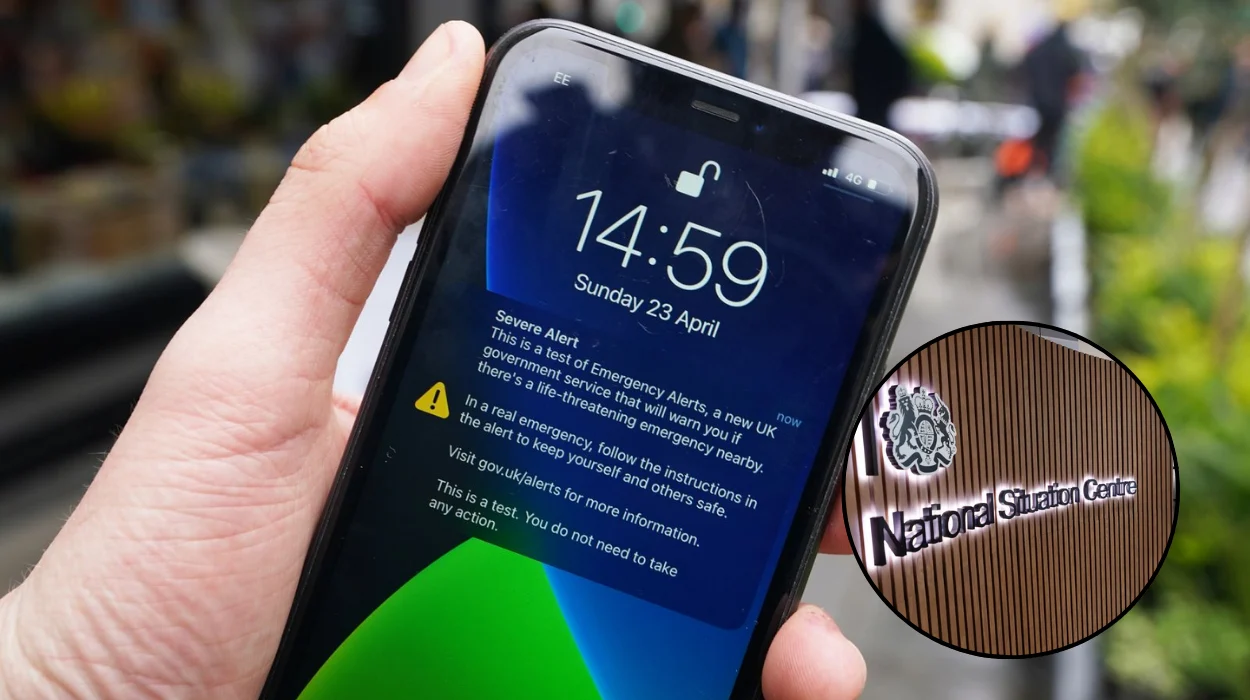
Launched in April 2023, the government’s emergency alert system is designed to deliver warnings about imminent threats to life, such as extreme weather, public disorder or environmental hazards. Messages appear instantly on mobile phones accompanied by a high-pitched siren-like sound and vibration to draw attention. The alerts are geo-targeted, meaning only people in the affected area receive them, and do not require personal data to function.
According to the Cabinet Office, the system was developed following years of testing and collaboration with the National Police Chiefs’ Council (NPCC), emergency services and the Environment Agency. Its purpose, officials emphasised, is to provide rapid, authoritative communication during crisis situations.
Why did the Southport riots nearly trigger an emergency alert?
As reported by PA Media journalist Sam Blewett, one of the closest instances to a real alert activation occurred during the Southport riots of July 2024. Widespread unrest erupted after a tragic triple murder of three young girls at a Taylor Swift-themed dance class. The killings, later linked to British-born Axel Rudakubana, led to online misinformation falsely alleging the suspect was a migrant. That rumour became a flashpoint for violent, far-right agitation.
As covered by multiple national outlets at the time, rioters targeted mosques, community centres, libraries, and hotels accommodating asylum seekers. The scale of damage and threat to life led the Cabinet Office to consider deploying an alert nationwide or regionally to advise residents to stay indoors.
A government analysis later concluded that the disturbances were
“largely instigated by far-right groups spreading disinformation across digital platforms”.
Officials judged that using the emergency alert system could escalate tensions further rather than calm them, leading to the decision to stand down the alert.
Security commentator Professor Claire Dunbar from King’s College London noted to PA that
“the choice not to activate the system during Southport reflected careful balance — between public safety and the risk of amplifying unrest.”
How close did the Chinese Zhuque‑3 rocket come to Britain?
In early 2026, ministers again found themselves poised to activate an emergency alert, this time for an entirely different kind of danger: space debris. When the Chinese Zhuque‑3 rocket re‑entered Earth’s atmosphere, tracking data initially suggested part of its wreckage could fall over British territory.
According to Cabinet Office briefings disclosed under FOI, officials considered sending every mobile phone in the UK a national alert warning people about potential falling debris, described as “larger than usual” by government scientists. However, updated trajectory models eventually proved those fears unfounded — the rocket’s remains crashed more than 1,000 miles south of New Zealand, near Antarctica.
A spokesperson told PA that
“while the size and uncertainty of the Zhuque‑3 debris warranted high‑level consideration, our risk analysis confirmed no threat to the UK public.”
Spacewatch analysts and the UK Space Agency subsequently reviewed the incident, recommending improvements to cross‑border debris tracking protocols.
Why was Devon’s parasitic water outbreak also considered a potential emergency?
The emergency alert system was also nearly used in May 2024 during a severe outbreak of cryptosporidium — a microscopic parasite causing gastrointestinal illness — in Brixham, Devon. Tens of thousands of residents were impacted as untreated water entered the supply network, prompting boil‑water advisories across the region.
Government documents confirmed that the Cabinet Office considered issuing an emergency alert instructing households not to drink tap water. Ultimately, local water companies and councils managed communication effectively without invoking the system.
Health authorities later reported a number of hospitalisations but found the outbreak had stabilised after rapid local interventions. According to the same FOI disclosures, senior officials decided that
“existing communications were sufficient to ensure public protection,”
thus avoiding national alert activation.
When does the government decide to use emergency alerts?
Under current policy, decisions to trigger an alert are taken jointly by the Cabinet Office and the lead department responsible for each hazard — for example, Home Office for public disorder, Department of Health for disease outbreaks, or the Environment Agency for flooding.
Officials rely on the National Situation Centre (SitCen) to gather data and determine whether a threat meets the “danger to life” threshold required for mass alerts. The process involves coordination with local emergency services and telecoms providers to ensure message clarity and avoid misinformation.
A senior Cabinet Office figure told PA Media:
“We ensure each activation is justified by verified data. While the system is ready for deployment, restraint remains essential to avoid alarm fatigue among the public.”
Could emergency alerts be expanded in future?
Civil contingencies analysts believe near‑miss cases since the system’s launch demonstrate its growing strategic importance. Testing throughout 2023 and 2024 familiarised citizens with the siren sound, and public surveys reviewed by Ofcom indicate over 90% awareness of the alert tone.
Analysts predict future use could integrate regional responses for incidents such as flash floods or terrorist attacks. Professor Dunbar added that
“these events show the system’s adaptability — from cyber‑threats to environmental emergencies.”
In Parliament last month, MPs debated expanding the alert system’s capability to cover heatwaves and chemical leaks. Ministers are reviewing the threshold policy and technological reach, especially regarding non‑smartphone users.
What lessons did officials learn from the ‘near misses’?
From Southport’s violent unrest to the Zhuque‑3 rocket and the Devon water crisis, officials described these “near misses” as vital exercises in testing operational readiness. Each case highlighted different communication dilemmas — misinformation, over‑estimation of danger, and coordination with local authorities.
The Cabinet Office, in its internal assessment obtained by PA Media, stated the situations
“represent near misses where the capability was considered but ultimately stood down.”
The report concludes that flexibility, not just speed, determines the system’s effectiveness.
Dr. Melissa Carmichael, a policy adviser at the London School of Economics, summarised the issue succinctly:
“A successful alert system isn’t measured by how often it sounds — it’s measured by how wisely it’s used.”
As the UK continues refining its national preparedness, the government is expected to update public guidance later this year, reinforcing how alerts will function across regions during future emergencies.