Key Points
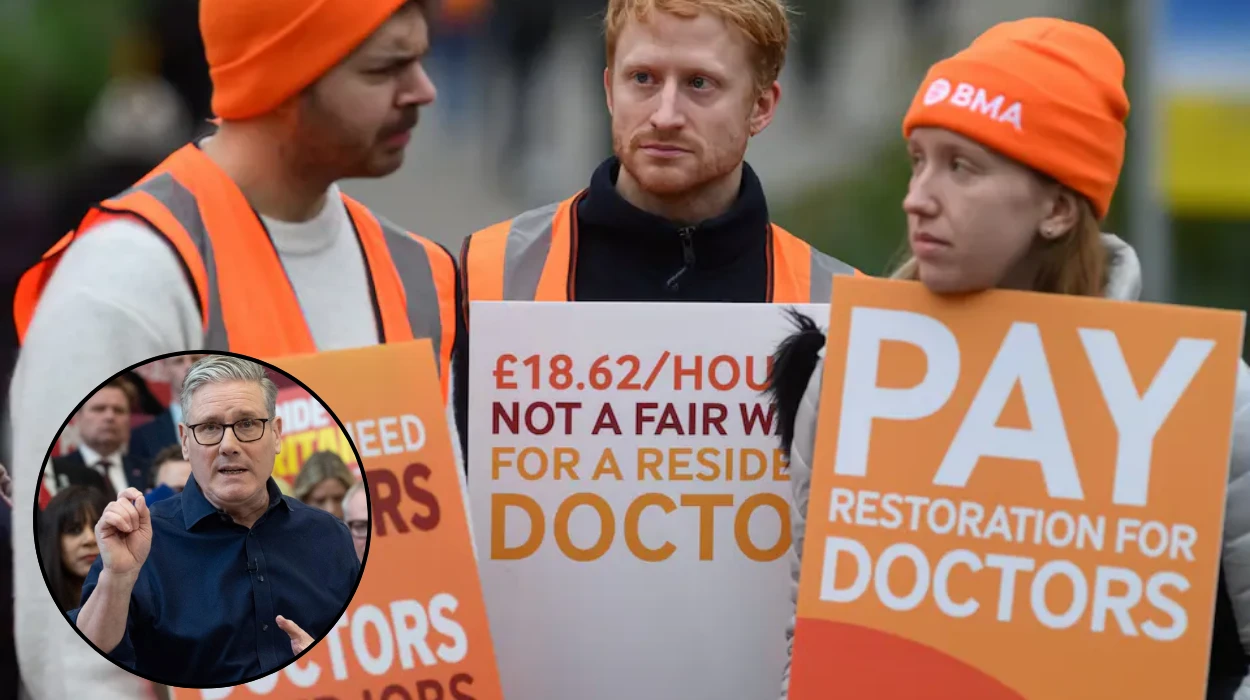
- Prime Minister Sir Keir Starmer has given junior doctors 48 hours to end strikes.
- The ultimatum threatens to withdraw 4,000 new NHS speciality training posts.
- Six-day strike planned from April 7 after Easter, marking the 15th walkout in 3 years.
- British Medical Association (BMA) rejected a 7.1% pay rise offer from Health Secretary Wes Streeting.
- Resident doctors could earn up to £100,000 with the government’s proposed deal.
- Strike coincides with Labour’s struggles to reduce NHS waiting lists before local elections.
- NHS warns of severe disruption due to strike timing and reduced staffing.
- Labour facing internal conflict, with Left factions historically supportive of NHS industrial action.
- Starmer calls strike “reckless” and urges reconsideration within 48 hours.
- Each strike day costs NHS £250 million, according to Starmer’s article in The Times.
London (Britain Today News) March 30, 2026 – Prime Minister Sir Keir Starmer has issued a dramatic 48-hour ultimatum to striking junior doctors, telling them to abandon plans for next week’s walkout or face the loss of 4,000 new NHS speciality training posts. The Labour leader warned that continuing industrial action would leave
- Key Points
- Why has Starmer issued a 48-hour ultimatum?
- What is the dispute between the BMA and the Government?
- How disruptive will the April strike be for the NHS?
- Is Starmer risking a clash with Labour’s Left wing?
- What are the broader implications for Labour and the NHS?
- How have patients and the public responded?
- Is there any hope for a last-minute resolution?
“resident doctors with less, weaken the NHS, and make patients pay the price”.
Starmer’s remarks come as tensions peak between the Government and the British Medical Association (BMA) over pay restoration demands. The strike, set to begin on April 7, marks the 15th round of industrial action in three years.
Why has Starmer issued a 48-hour ultimatum?
Sir Keir’s move is seen as an attempt to pressure the union before the highly disruptive Easter strikes, which are expected to paralyse hospitals across England. Writing in The Times, the Prime Minister warned that
“walking away from this deal is the wrong decision. It is a reckless decision.”
He added:
“There are still 48 hours left to choose a better path — for patients, the NHS, and our doctors.”
According to The Telegraph’s health correspondent Laura Donnelly, Starmer’s warning represents his strongest stance yet against public sector strikes since becoming Prime Minister. The Labour government, elected on promises to “fix the NHS”, now faces the risk of losing public credibility as waiting lists continue to rise.
A YouGov poll cited by the Telegraph found that 52% of respondents oppose the planned strike action, while only 38% support the doctors. The data suggests growing public frustration as routine operations and appointments face disruptions.
What is the dispute between the BMA and the Government?
At the core of the dispute lies the BMA’s demand for a 26% pay rise, which the union says would restore real wages to 2008 levels. The Government, however, insists that such an increase is unaffordable amid economic pressures worsened by the Iran conflict and resulting inflation, as noted in a Telegraph Business report on March 30.
Health Secretary Wes Streeting offered a 7.1% pay rise, increasing the salary of first-year resident doctors to an average of £52,000, while senior medics could earn over £100,000 with overtime. The deal also included 4,000 new speciality training positions, key to NHS workforce expansion.
However, Dr Jack Fletcher, BMA Chairman, told BBC News:
“The offer barely treads water against inflation and does not undo over a decade of pay erosion. Resident doctors deserve fair restoration, not political pressure disguised as reform.”
The BMA’s decision to reject the offer without balloting members drew criticism from Government ministers, with Streeting telling MPs, as reported by The Guardian, that
“the union leadership has denied their own members a chance to decide.”
How disruptive will the April strike be for the NHS?
According to Mike Prentice, the NHS national director for emergency planning, this upcoming strike
“will represent a significant strain on staffing resources.”
In a circular to hospital leaders obtained by The Independent, he warned that the Easter timing
“creates compounded challenges due to staff leave and reduced cover availability.”
The NHS estimates that each strike day costs roughly £250 million, a figure confirmed by Sir Keir in his Times article. Hospitals have been directed to maintain 95% of routine appointments, but NHS England sources cited by Sky News say that
“achieving such a threshold will be extremely difficult given rota gaps.”
This six-day strike will add to the 59 days of disruption already recorded since the start of the dispute, compounding backlogs in elective surgery and outpatient care.
Is Starmer risking a clash with Labour’s Left wing?
Starmer’s uncompromising tone, analysts say, signals a strategic shift toward fiscal discipline to reassure centrist voters ahead of the May local elections. However, the approach could alienate Labour’s Left factions, which have historically supported NHS staff strikes.
As reported by Rachel Wearmouth of The New Statesman, several Labour MPs aligned with the Socialist Campaign Group privately expressed discontent at the Prime Minister’s
“combative positioning” toward health unions. One unnamed Labour backbencher told the outlet: “We should be healing this rift, not threatening those who kept the NHS alive through the pandemic.”
Political observers note that any fallout could affect Labour’s performance in upcoming council elections, where analysts predict thousands of seat losses amid public concerns about local services.
What are the broader implications for Labour and the NHS?
Writing in The Telegraph’s editorial, analysts suggested that Starmer’s firm handling of the BMA could define his leadership on economic prudence, but might also expose Labour’s long-standing division over public sector wages.
A detailed Telegraph data analysis of NHS England figures revealed that Labour’s pledge to clear NHS waiting lists could take up to two decades under current trends — a daunting prospect that strikes only worsen.
Meanwhile, experts quoted by The Financial Times caution that undermining relations with the medical workforce could hinder Labour’s ability to enact reforms.
“Without buy-in from doctors, crucial training pipelines and retention strategies will falter,”
said Professor Sarah Neville, a health policy researcher at King’s College London.
How have patients and the public responded?
Public sentiment remains divided. While some support the doctors’ right to demand fair pay, many express despair at the ongoing disruptions. Patient advocacy groups quoted by The Guardian lamented
“the politicisation of the NHS workforce”,
urging both parties to resume talks.
Health campaigner Fiona Loud of Kidney Care UK told The Independent:
“Patients are exhausted by the endless strikes and cancellations. This cycle helps no one — not doctors, not patients, not hospitals.”
Her remarks underscore a growing fatigue among NHS service users as waiting times reach record highs, with routine treatments often postponed multiple times due to strike-related staffing shortages.
Is there any hope for a last-minute resolution?
With fewer than two days remaining until the ultimatum expires, both sides appear entrenched. Downing Street maintains that the 7.1% offer “is the final and fair proposal”, while the BMA insists no deal will proceed without serious movement toward pay restoration.
Sources quoted by BBC Political Editor Chris Mason suggest behind-the-scenes discussions may resume midweek, but “no substantive progress” is expected before April 7.
Should the strikes go ahead, observers predict massive cancellations nationwide, particularly across emergency and elective departments.
For now, the situation remains volatile — a test of Sir Keir Starmer’s authority and Labour’s ability to govern amid deeply rooted NHS challenges.