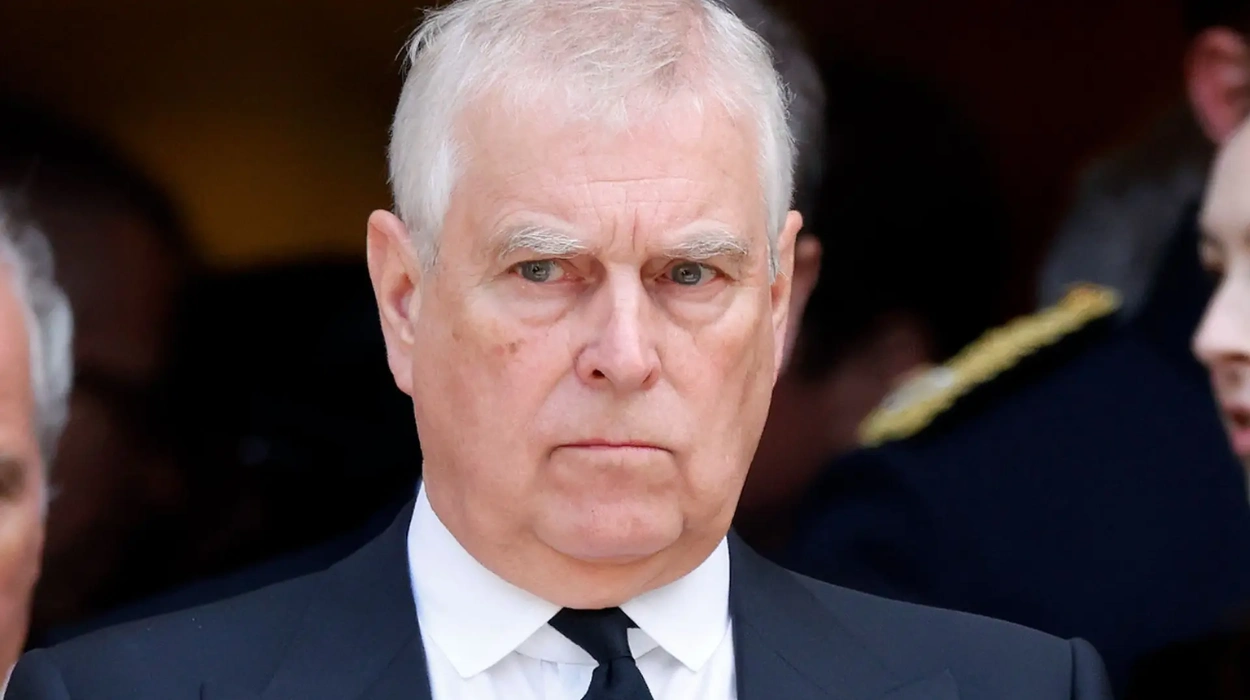
Who Is Andrew Mountbatten-Windsor?
Andrew Mountbatten-Windsor is the former Prince Andrew, second son of Queen Elizabeth II and Prince Philip, stripped of all royal titles in 2025 over his links to convicted sex offender Jeffrey Epstein. He was born on February 19, 1960, at Buckingham Palace, making him the third child and second son of the late Queen. He is the younger brother of King Charles III and the older brother of Princess Anne and Prince Edward. For decades he held the title Duke of York, granted upon his 1986 marriage. He now holds no royal title, no military rank, and no HRH style. He remains eighth in the line of succession to the British throne as of mid-2026, a position tied to bloodline rather than conduct or public standing.
- Who Is Andrew Mountbatten-Windsor?
- What Was Andrew Mountbatten-Windsor’s Royal Title Before 2025?
- What Is Andrew Mountbatten-Windsor’s Family Background?
- What Military Service Did Andrew Mountbatten-Windsor Complete?
- What Royal Duties Did Andrew Mountbatten-Windsor Perform?
- Why Did Andrew Mountbatten-Windsor Step Back From Royal Duties in 2019?
- Who Is Jeffrey Epstein and How Is He Connected to Andrew Mountbatten-Windsor?
- What Civil Lawsuit Did Andrew Mountbatten-Windsor Face?
- Why Was Andrew Mountbatten-Windsor Stripped of His Royal Titles?
- What Happened to Andrew Mountbatten-Windsor’s Home at Royal Lodge?
- Why Was Andrew Mountbatten-Windsor Arrested in February 2026?
- Where Does Andrew Mountbatten-Windsor Stand in the Line of Succession?
- What Is Andrew Mountbatten-Windsor’s Current Public Status?
- What Is the Future Outlook for Andrew Mountbatten-Windsor?
Andrew Mountbatten-Windsor built his adult identity around two roles: naval officer and working royal. Both roles ended in disgrace. His fall from senior royal status began in 2019 and concluded with the formal removal of his titles in 2025, followed by a criminal arrest in February 2026. His case represents the most significant disciplinary action taken against a member of the immediate royal family in the modern history of the British monarchy.
What Was Andrew Mountbatten-Windsor’s Royal Title Before 2025?
Andrew Mountbatten-Windsor held the title Duke of York from 1986 until October 2025, when King Charles III formally removed his Prince title, Duke of York title, and HRH style through a Buckingham Palace announcement. The Duke of York title dates back centuries as a traditional designation for the monarch’s second son. Queen Elizabeth II granted it to Andrew on the day of his wedding to Sarah Ferguson, July 23, 1986.
Before the 2025 removal, Andrew carried multiple formal styles: Prince Andrew, Duke of York, Earl of Inverness, and Baron Killyleagh. He also held the style His Royal Highness from birth. Buckingham Palace’s October 2025 statement specified that the King had initiated a formal process to remove the Style, Titles and Honours of Prince Andrew. The palace confirmed he would be known going forward as Andrew Mountbatten Windsor, using the family surname adopted by descendants of Queen Elizabeth II and Prince Philip. That surname combines Windsor, the royal house name, with Mountbatten, the anglicized surname Philip adopted from his mother’s family. Legally, removing hereditary peerage titles normally requires an Act of Parliament, so Andrew’s dukedom technically remains dormant rather than abolished, but he does not use it and the palace does not recognize it.
What Is Andrew Mountbatten-Windsor’s Family Background?
Andrew Mountbatten-Windsor is the son of Queen Elizabeth II and Prince Philip, Duke of Edinburgh, and the father of Princess Beatrice and Princess Eugenie from his marriage to Sarah Ferguson. He married Sarah Ferguson, known as Fergie, on July 23, 1986, at Westminster Abbey. The couple had two daughters: Princess Beatrice, born in 1988, and Princess Eugenie, born in 1990. Andrew and Sarah divorced in 1996 after four years of separation, but the two have continued living in close proximity and have maintained a cordial relationship for decades, including periods of shared residence at Royal Lodge in Windsor.
Both of Andrew’s daughters retained their royal status and public standing despite their father’s disgrace. Beatrice and Eugenie continued to appear at royal Christmas services and family gatherings through 2025, even as their father was excluded. Andrew’s grandchildren, including Beatrice’s daughter and Eugenie’s sons, are part of the wider royal family but hold no working royal roles. Andrew’s siblings are King Charles III, born 1948; Princess Anne, born 1950; and Prince Edward, Duke of Edinburgh, born 1964.
What Military Service Did Andrew Mountbatten-Windsor Complete?
Andrew Mountbatten-Windsor served 22 years in the Royal Navy, including active combat duty as a helicopter pilot during the 1982 Falklands War, before retiring from active service in 2001. He trained at the Britannia Royal Naval College in Dartmouth and qualified as a helicopter pilot, flying Sea King helicopters. During the Falklands conflict, he flew anti-submarine and anti-surface warfare missions and reportedly acted as a decoy target to draw Exocet missiles away from British ships.
His naval career earned him a series of honorary ranks over subsequent decades, culminating in the honorary rank of Vice-Admiral. In November 2025, Defence Secretary John Healey confirmed the Ministry of Defence had withdrawn that honorary rank. On December 13, 2025, the Ministry of Defence confirmed a further reduction, reverting Andrew’s rank to Commander (Retired), the substantive rank he held upon leaving regular naval service in 2001. This marked the final removal of any military distinction connected to his decades of service.
What Royal Duties Did Andrew Mountbatten-Windsor Perform?
Andrew Mountbatten-Windsor served as the United Kingdom’s Special Representative for International Trade and Investment from 2001 to 2011, promoting British business interests abroad on behalf of the government. In this role, commonly referred to as UK trade envoy, he traveled extensively, meeting foreign officials, business leaders, and heads of state to support UK export and investment activity. The role placed him in contact with a wide network of international contacts, including individuals later linked to serious criminal conduct.
Andrew stepped down from the trade envoy position in 2011 amid growing criticism of his judgment in cultivating certain international relationships. Before his 2019 withdrawal from public royal duties, he also patronized numerous charities and organizations, including Outward Bound and the Duke of York’s initiatives supporting entrepreneurship among young people. Following the 2025 title removal, all patronages and honorary military appointments connected to his name were formally withdrawn or transferred to other family members.
Why Did Andrew Mountbatten-Windsor Step Back From Royal Duties in 2019?
Andrew Mountbatten-Windsor withdrew from public royal duties in November 2019 following widespread criticism of a televised BBC interview in which he defended his friendship with convicted sex offender Jeffrey Epstein. The interview, broadcast on BBC Newsnight, addressed his decades-long association with Epstein and allegations made against him by Virginia Giuffre, an American woman who said she was trafficked to Andrew when she was 17 years old. Public and media reaction to the interview was overwhelmingly negative, with critics citing a lack of empathy for Epstein’s victims and inconsistencies in his account of specific dates and events.
Within days of the interview’s broadcast, corporate sponsors and charitable partners severed ties with Andrew. Buckingham Palace announced on November 20, 2019, that Andrew would step back from public duties for the foreseeable future, with his consent. This marked the effective end of his active working-royal career, five years before his titles were formally removed.
Who Is Jeffrey Epstein and How Is He Connected to Andrew Mountbatten-Windsor?
Jeffrey Epstein was an American financier convicted of soliciting prostitution from a minor in 2008 and later charged with federal sex-trafficking offenses before dying in a New York jail cell in 2019. Epstein and Andrew Mountbatten-Windsor developed a friendship in the late 1990s that continued for years after Epstein’s initial 2008 conviction, a decision that drew sustained criticism of Andrew’s judgment. Photographs and records placed the two men together on multiple occasions, including a widely circulated 2010 visit by Andrew to Epstein’s New York townhouse, which occurred after Epstein had already served time for a sex offense involving a minor.
Court documents and later government disclosures, including material released by the U.S. Department of Justice in 2025 and 2026, expanded public knowledge of Andrew’s contacts with Epstein and Epstein’s associate Ghislaine Maxwell. These disclosures formed the basis for renewed scrutiny of Andrew in late 2025 and directly preceded both the removal of his titles and his February 2026 arrest.
What Civil Lawsuit Did Andrew Mountbatten-Windsor Face?
Virginia Giuffre filed a civil sexual assault lawsuit against Andrew Mountbatten-Windsor in a U.S. federal court in 2021, which he settled out of court in February 2022 without admitting liability. Giuffre alleged that Epstein and Maxwell trafficked her to Andrew for sexual purposes on three occasions when she was 17, including once in London, once in New York, and once on Epstein’s private island in the U.S. Virgin Islands. Andrew consistently and categorically denied all allegations against him throughout the legal process.
The settlement, reported to include a substantial payment to Giuffre and a charitable donation to her advocacy organization, ended the litigation before it reached trial. Giuffre died by suicide in April 2022 in Australia. Her death, and the release of additional Epstein-related government files in 2025 and 2026, renewed public and media attention on her allegations and reignited pressure on the royal family to take further action against Andrew.
Why Was Andrew Mountbatten-Windsor Stripped of His Royal Titles?
King Charles III formally stripped Andrew Mountbatten-Windsor of his Prince title, Duke of York title, and HRH style in October 2025 after renewed public and political pressure tied to newly released Epstein files. Buckingham Palace’s statement described the action as a decision by the King to initiate removal of his brother’s styles, titles, and honors. The move followed weeks of intensifying scrutiny after U.S. congressional and Department of Justice disclosures revealed further details of Andrew’s contact with Epstein, including private correspondence.
The palace framed the decision as necessary given the seriousness of the allegations against Andrew, even though he faced no criminal charges at the time. Days before the formal announcement, Andrew had already voluntarily relinquished the Duke of York title and his other honors, but the King’s subsequent action made the removal official and comprehensive, covering every remaining style connected to his status as a prince of the realm.
What Happened to Andrew Mountbatten-Windsor’s Home at Royal Lodge?
Andrew Mountbatten-Windsor surrendered his 20-year lease on Royal Lodge, a 30-room mansion in Windsor Great Park, in October 2025 after Buckingham Palace served formal notice requiring him to vacate. He had occupied Royal Lodge under a lease arrangement that required minimal, or “peppercorn,” rent, reportedly around £750,000 paid as a one-off premium in 2003 rather than ongoing market-rate payments, alongside significant self-funded renovation costs. This arrangement drew public criticism once details became widely known in 2025, particularly given the property’s scale and location within a royal park.
Andrew relocated to alternative private accommodation, and by February 2026 he was residing at a property on the Sandringham estate in Norfolk, on land owned by King Charles III personally rather than by the Crown Estate. Media reports describe this as a private arrangement between the brothers rather than an official royal residence. The move ended Andrew’s two-decade occupancy of one of the most prominent private homes within the Windsor estate.
Why Was Andrew Mountbatten-Windsor Arrested in February 2026?
Thames Valley Police arrested Andrew Mountbatten-Windsor on February 19, 2026, his 66th birthday, on suspicion of misconduct in public office linked to disclosures in the Epstein files. Officers searched properties connected to him in Berkshire and Norfolk as part of the operation. He was held for questioning and released the same day “under investigation,” meaning he was neither charged nor cleared of wrongdoing. Police did not initially name him publicly, consistent with standard UK practice for suspects not yet charged, though his identity was widely reported by multiple outlets.
Misconduct in public office is a centuries-old common law offense in England and Wales, carrying a maximum sentence of life imprisonment upon conviction. Investigators reportedly examined whether Andrew shared confidential UK government trade information with Epstein while serving as trade envoy, and separately assessed a 2010 allegation that Epstein brought a woman to Royal Lodge to meet Andrew. British police issued a public appeal in May 2026 for additional witnesses to come forward as the investigation continued. As of mid-2026, no formal charges had been announced.
Where Does Andrew Mountbatten-Windsor Stand in the Line of Succession?
Andrew Mountbatten-Windsor remained eighth in line to the British throne as of 2026, despite losing every royal title, honor, and public role, because succession position is governed by bloodline under the Act of Settlement 1701. Removing an individual from the line of succession requires either voluntary renunciation, exclusion for marrying a Roman Catholic under specific historical provisions, or a change in law. None of these mechanisms applied automatically to Andrew’s situation following the removal of his titles.
Constitutional experts have noted that title removal and succession position are legally separate matters, meaning Andrew’s demotion to commoner status did not alter his theoretical claim to the throne. His position behind his brother’s children and grandchildren, and behind Prince Harry’s children Archie and Lilibet, makes his practical prospect of ever reigning effectively nonexistent, but the formal listing remained unchanged on official royal family records into mid-2026.
What Is Andrew Mountbatten-Windsor’s Current Public Status?
As of mid-2026, Andrew Mountbatten-Windsor lives privately on the Sandringham estate, holds no royal title, military rank, or public role, and remains under active police investigation while excluded from royal family events. He was barred from the December 2025 royal Christmas gathering at Sandringham and was excluded entirely from the June 2026 Order of the Garter procession at Windsor Castle, having previously participated in elements of that ceremony from behind the scenes since 2022. He has occasionally appeared at private, informal family gatherings, including a June 2026 horse-driving event on the King’s Sandringham estate, where witnesses described him keeping a low public profile.
His daughters, Princess Beatrice and Princess Eugenie, have continued participating in royal engagements, and reports indicate his former wife Sarah Ferguson has remained supportive of his position throughout the crisis. Andrew has made no extensive public statement addressing the 2026 arrest and continues to deny all underlying allegations connected to Epstein.
Explore More about Politics:
Sir Grant Shapps Conservative Candidacy Sparks Debate
Anas Sarwar Gains Spotlight in Scottish Politics
What Is the Future Outlook for Andrew Mountbatten-Windsor?
Andrew Mountbatten-Windsor’s future depends primarily on the outcome of the ongoing UK police investigation into misconduct in public office, which could result in criminal charges, further reputational damage, or eventual closure without prosecution. Legal experts have noted that misconduct in public office prosecutions are historically difficult to bring to trial and require proving a serious breach of duty rather than simple poor judgment, creating uncertainty about whether charges will ultimately follow.
Politically and institutionally, Andrew’s case has prompted broader debate in the United Kingdom about reforming the legal mechanisms governing royal succession and title removal, since his situation exposed gaps between informal royal family decisions and formal legal status. King Charles III retains sovereign immunity from criminal prosecution and civil lawsuits, a protection that does not extend to Andrew or other non-reigning family members. Barring a change in the law, Andrew Mountbatten-Windsor is expected to remain a private citizen with no royal function, while the outcome of the police investigation continues to shape both his personal future and the monarchy’s ongoing management of his public presence.