Key Points
- Andy Burnham was formally appointed the United Kingdom’s prime minister on Monday, 20 July 2026, after meeting King Charles III at Buckingham Palace.
- David Lammy, who had served as Deputy Prime Minister, Justice Secretary and Lord Chancellor since September 2025, confirmed he had left the Cabinet.
- Business Secretary Peter Kyle was sacked, becoming the third Cabinet minister to be dismissed in the reshuffle.
- Housing Secretary Steve Reed said he was “disappointed” to be leaving government, describing himself as the first minister to go.
- Rachel Reeves was also named among senior figures shown the door as Burnham reshaped his top team.
- Prisons minister Lord Timpson resigned from government ahead of the reshuffle, saying he would return to running his family business.
- Burnham delivered his first speech as prime minister without a lectern, pledging “the biggest changes in the last 40 years.”
- He promised to make ending rough sleeping his first instruction in office and outlined a forthcoming ten-year plan for Britain.
- Reform UK leader Nigel Farage argued Burnham’s plans should not proceed “without a mandate,” since he became PM without a general election.
- US President Donald Trump and Ukrainian President Volodymyr Zelenskyy were among world leaders to react to the change of leadership.
London (Britain Today News) July 20, 2026 – David Lammy has left the British government after Andy Burnham was appointed prime minister on Monday, with Business Secretary Peter Kyle also departing Cabinet as part of a wider reshuffle. Burnham, the former Mayor of Greater Manchester, was invited by King Charles III at Buckingham Palace to form a new government, succeeding Sir Keir Starmer, who resigned as Labour leader last month. Lammy, who had held the posts of Deputy Prime Minister, Justice Secretary and Lord Chancellor since September 2025, confirmed on social media that he was no longer in Cabinet, while Kyle became the third minister to be dismissed as Burnham assembled his own top team.
- Key Points
- Who Is Andy Burnham and How Did He Become Prime Minister?
- Why Did David Lammy Leave the UK Government?
- What Did David Lammy Say About His Departure?
- Why Was Peter Kyle Sacked as Business Secretary?
- Which Other Ministers Left the Cabinet in the Reshuffle?
- What Did Andy Burnham Say in His First Speech as Prime Minister?
- What Are Andy Burnham’s Key Policy Pledges?
- How Did World Leaders React to Andy Burnham’s Appointment?
- What Challenges Does Andy Burnham Face as Prime Minister?
- What Happens Next in the UK Cabinet Reshuffle?
Who Is Andy Burnham and How Did He Become Prime Minister?
Andy Burnham, 56, the Member of Parliament for Makerfield and former Mayor of Greater Manchester, became the UK’s prime minister on 20 July 2026, succeeding Sir Keir Starmer. As reported by Alexander Smith of NBC News, Burnham — dubbed the “King of the North” — was appointed unchallenged after Starmer agreed to step down last month following a series of election defeats, U-turns and scandals.
Burnham’s path to Downing Street began on 17 July 2026, when he was officially declared leader of the Labour Party. According to the Associated Press report carried by PBS News, Burnham secured nominations from 379 of the 403 Labour lawmakers in the House of Commons, making him the only contender in the leadership contest. The same AP report noted that Burnham had cleared his “final hurdle” to take office after Starmer was forced out following a rebellion within his own party.
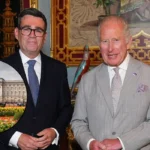
As detailed by CNN’s live coverage of the transition, Burnham became the UK’s seventh prime minister in a decade after formally meeting King Charles III at Buckingham Palace, where the monarch invited him to form a government. Reporting from London for LBC, journalist Danielle De Wolfe described how Sir Keir Starmer first met the King on Monday morning to tender his resignation before Burnham was separately received at the Palace and asked to form the new administration.
Why Did David Lammy Leave the UK Government?
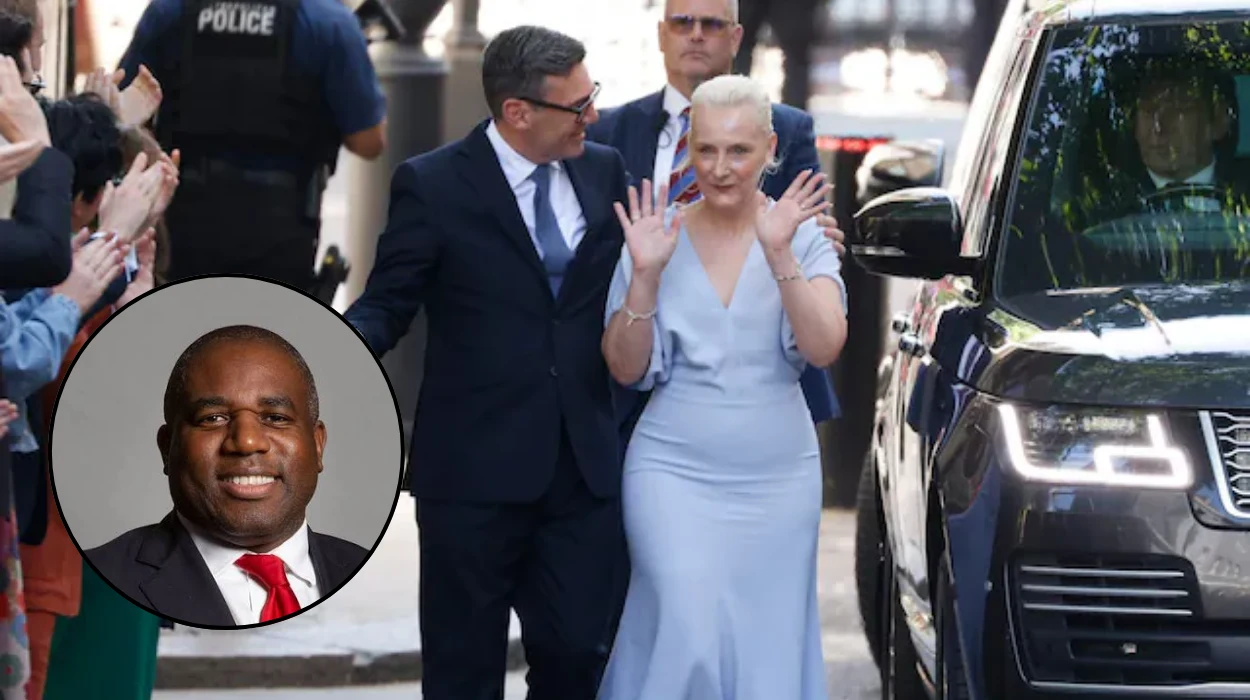
David Lammy’s departure was among the most closely watched developments of the reshuffle, given his prominence as Deputy Prime Minister. According to LBC’s live blog, Lammy confirmed he was no longer in the Cabinet, stating in a post on X that he would “support this Labour Government from the backbenches.”
Lammy had risen to the deputy premiership in September 2025, when he was appointed following Angela Rayner’s resignation over a tax scandal. As reported by Al Jazeera at the time, Rayner stepped down after breaching the ministerial code by underpaying stamp duty on a property, triggering a reshuffle in which Lammy — then Foreign Secretary — was elevated to Deputy Prime Minister while also taking on the justice brief. The BBC’s coverage of that earlier reshuffle noted that around half of Starmer’s Cabinet changed roles at the time, with Yvette Cooper moving to the Foreign Office and Shabana Mahmood becoming Home Secretary.
With Burnham now forming his own government, Lammy’s tenure at the top of Cabinet came to an end. As the LBC live blog reported, Lammy was grouped alongside Rachel Reeves and Steve Reed as being “among the first high-profile Cabinet ministers to be shown the door” by the new prime minister.
What Did David Lammy Say About His Departure?
Lammy addressed his exit in a lengthy statement, extracts of which were published by Guido Fawkes’ Order-Order website. As reported on that site, Lammy said:
“It has been the greatest privilege of my life, coming from humble beginnings in Tottenham, to serve in government as Foreign Secretary, Justice Secretary and Britain’s first Black Deputy Prime Minister.”
He went on to describe his record in office, according to the same report, saying he had helped
“rebuild Britain’s relationships with our European allies after the catastrophic Brexit years, stood steadfastly with Ukraine in its darkest hours, championed a new partnership of equals with the Global South and was proud to play a leading role in Britain’s recognition of the State of Palestine.”
He added that he had worked “to secure the Special Relationship with the United States in a new era” and deepened partnerships “with the Gulf and India to deliver trade, growth and security for the British people.”
On the manner of his exit, Lammy’s statement — as carried by LBC — struck a conciliatory tone. He said he “would have been proud to continue serving in Cabinet,” but acknowledged that “a new Prime Minister is entitled to build his own team,” wishing Burnham and the incoming Cabinet “every success.” He said he would continue to represent Tottenham and would
“support this Labour government from the backbenches and do everything I can to help defeat Reform again at the next general election.”
Why Was Peter Kyle Sacked as Business Secretary?
Peter Kyle, the MP for Hove and Portslade who had served as Business Secretary since September 2025, was removed from Cabinet as Burnham began reshaping his top team. According to LBC’s live coverage, Kyle — described as a “close ally” of Sir Keir Starmer — was sacked, becoming
“the third cabinet minister to be dismissed in the reshuffle as the new prime minister creates his own top team.”
Kyle’s ministerial career had spanned several senior briefs under Starmer, including Secretary of State for Science, Innovation and Technology between July 2024 and September 2025, before he moved to the business and trade portfolio. His removal, alongside that of Lammy, has been widely read as a signal of Burnham’s intent to distance his government from figures closely associated with his predecessor.
Which Other Ministers Left the Cabinet in the Reshuffle?
Several other senior figures departed alongside Lammy and Kyle. LBC’s live updates reported that Steve Reed, the Housing Secretary, revealed he was “no longer Housing Secretary,” writing in a letter that he was “disappointed to be leaving Government now” after Burnham entered Downing Street. Reed, described in the same report as “seen as an arch-loyalist to Sir Keir Starmer,” was named as the first Cabinet minister to go.
Rachel Reeves was also listed among the senior ministers shown the door in the early hours of Burnham’s premiership, according to the same LBC coverage, though the outlet’s reporting on her specific departure statement was still developing at the time of writing.
Lord Timpson’s Resignation
Ahead of the wider Cabinet reshuffle, prisons minister Lord James Timpson resigned from government. As reported by Ella Bennett of LBC, Lord Timpson said he was “retiring from government” and would return to running his family business, the Timpson Group, which is known for advocating the employment of former inmates. He had been appointed to the role in July 2024, according to the same report, becoming the first minister to resign ahead of Burnham’s reshuffle.
Speculation Over the Chancellor’s Role
LBC also reported that Shabana Mahmood had been “tipped to be the next chancellor,” although the outlet noted that left-wing Labour MPs were said to be opposed to the prospect. This suggests further significant Cabinet appointments were expected to follow Burnham’s initial round of dismissals.
What Did Andy Burnham Say in His First Speech as Prime Minister?
Burnham delivered his first address as prime minister from outside 10 Downing Street, notably without notes or a lectern. As reported by Asher McShane of LBC, Burnham told the gathered crowd:
“I know people at home are fed up with politics. I hear you, and I want to be honest with you, we have not been good enough and we need to be better. We will be.”
He went on to describe the moment in historic terms. According to Ella Bennett’s report for LBC, Burnham said:
“I am acutely conscious that I am the sixth person in the last ten years to walk up this street, the seventh prime minister since 2016, making this a moment for reflection and new resolution.”
He added that “Britain needs to show the world that we can regain our stability once again,” framing his task as making politics “work better.”
On his immediate priorities, Burnham told the crowd, as quoted by LBC:
“We will help people to live well, building a more preventative state, investing in people’s success rather than paying for failure. And that work starts now. I will soon go through that door behind me and issue my first instruction: to end rough sleeping in our country.”
What Are Andy Burnham’s Key Policy Pledges?
Burnham used his opening remarks to set out a broad policy agenda. According to LBC’s live blog, he pledged “a return to public ownership” alongside a “10-year plan for Britain,” which he said would be announced later this year. He also indicated he would set out cost-of-living measures “as early as tomorrow,” including a promise to build more council homes.
Describing his approach to the long-term plan, Burnham said, as reported by LBC:
“I’m not saying that means I’m setting out to say I’m going to be here for 10 years. It’s more that we’re not in the right place structurally.”
He said he wanted to give people “breathing room” against the rising cost of living and called for “reflection and resolution” across the country.
Ahead of his formal appointment, Burnham visited the homelessness charity The Passage in Victoria, London, an organisation for which the Prince of Wales serves as royal patron. According to LBC reporting attributed to Ella Bennett, Burnham described the early morning visit as “the best place to start” ahead of his premiership, saying he wanted to see “the lives that are being turned around.”
Separately, US business network CNBC reported that the British economy has struggled for momentum, with UK GDP projected to grow by just 0.8% in 2026, following growth of 1.3% and 1% in 2025 and 2024 respectively. The same report noted that high energy costs have been highlighted as a key issue, with independent estimates collated by the UK Parliament suggesting new drilling could raise domestic oil production considerably.
How Did World Leaders React to Andy Burnham’s Appointment?
International reaction to Burnham’s appointment came swiftly. According to CNN’s live coverage, Ukrainian President Volodymyr Zelenskyy congratulated Burnham on becoming prime minister. Burnham responded by naming Zelenskyy among the first leaders he intended to contact. As reported by Ella Bennett of LBC, Burnham told broadcasters:
“Those will be my first calls, and I’ll be making very clear later today to President Zelenskyy that there is no change. I will be with him 100% as Keir Starmer has been, and Keir has done really quite an incredible job.”
Burnham added, in the same LBC report:
“I’ve worked with Ukrainian mayors over the last few years. I’ve built a network of support for Ukrainian mayors, I take all of that experience into my new role and President Zelenskyy will be left in no doubt whatsoever that Britain’s support is steadfast. It is resolute. It will be there for him and I will be there for him personally too.”
US President Donald Trump also weighed in on the change of leadership. According to CNN’s reporting, Trump had said in June that he “barely” knew Burnham, describing him only as “the mayor of a town” and adding:
“I hear he’s extremely liberal. Extremely.”
However, as reported by CNBC, Trump later praised Burnham in a post on Truth Social, saying:
“The People of Aberdeen, in Scotland, are dancing in the streets because the new Prime Minister, Andy Burnham, has stated that he will be opening up, all the way, the invaluable North Sea Oil!”
The same CNBC report noted Trump had separately described Britain as a “Poverty Stricken Disaster,” contrasted with what he suggested it could become.
Explore More about Politics:
Rachel Reeves exits UK government after Burnham becomes prime minister
Andy Burnham to Scrap UK Digital ID Scheme
What Challenges Does Andy Burnham Face as Prime Minister?
Burnham inherits a difficult political and economic backdrop. As reported by the Associated Press via PBS News, he faces
“many of the same problems as his predecessor, including a sluggish economy, a cost-of-living squeeze fuelled by wars in Ukraine and the Middle East and overstretched public services.”
The same report observed that his promises of “a new, less divisive politics” echo pledges Starmer made when he took office in 2024.
Political opposition has also emerged swiftly. According to LBC’s live blog, Reform UK leader Nigel Farage posted on X pointing to Burnham’s pledge to bring forward “the biggest changes in the last 40 years,” arguing this “should not be allowed without a mandate.” The report noted that Burnham became prime minister without a general election and without formal opposition within the Labour Party, following Starmer’s resignation as party leader.
What Happens Next in the UK Cabinet Reshuffle?
With Lord Timpson’s resignation, Lammy’s exit, and the dismissals of Steve Reed and Peter Kyle already confirmed, further Cabinet appointments were expected throughout the day. LBC reported that all eyes would be on who Burnham selects for the remainder of his top team, with Shabana Mahmood tipped for the Chancellorship, albeit amid resistance from some left-wing Labour MPs.
Burnham is expected to continue announcing ministerial appointments in the coming days as he consolidates his government. His first full Cabinet meeting, along with further detail on his promised cost-of-living measures, was anticipated shortly after his opening address, according to LBC’s ongoing coverage of what it described as “a huge day in British politics.”