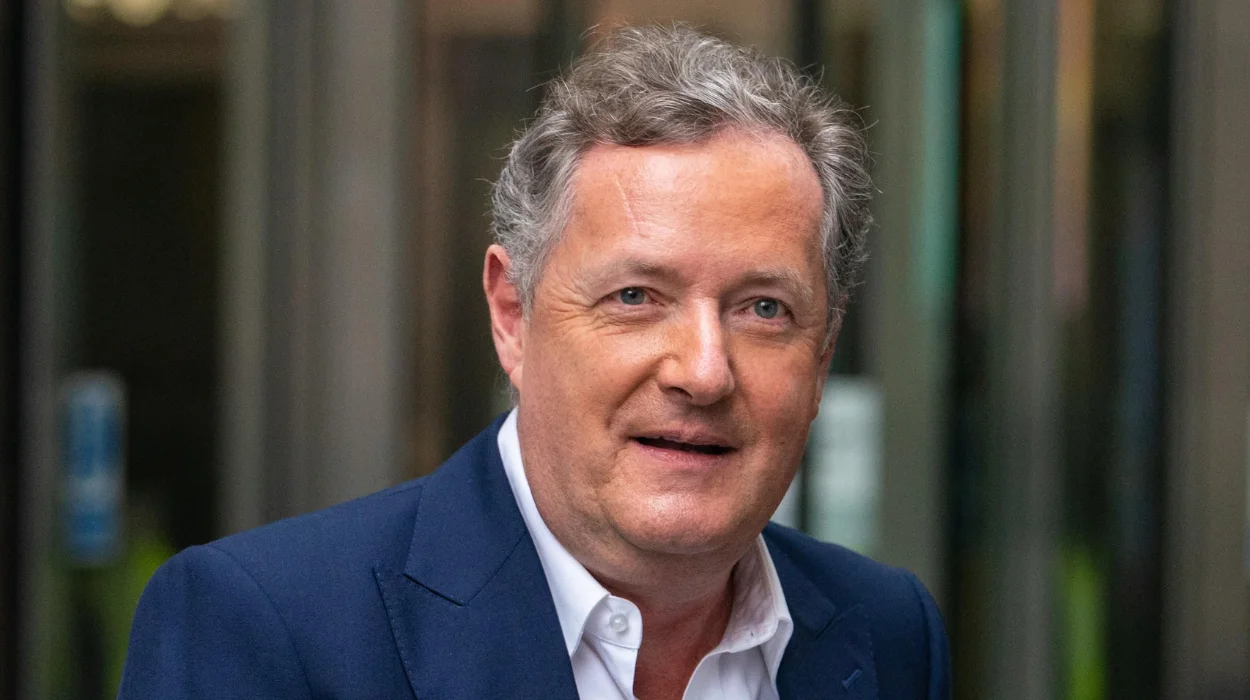
Piers Morgan is a British broadcaster, journalist, and television presenter known for confrontational interviews and public statements on politics, royalty, and culture. His career spans newspaper editing, American television, British breakfast news, and independent digital broadcasting. Morgan’s public comments regularly generate national and international debate, drawing both large audiences and formal regulatory complaints.
- Who Is Piers Morgan?
- What Recent Comments Has Piers Morgan Made That Sparked Debate?
- Why Did Piers Morgan Leave Good Morning Britain?
- What Is Piers Morgan Uncensored?
- How Has Piers Morgan’s Media Career Evolved Over Three Decades?
- What Techniques Define Piers Morgan’s Interviewing Style?
- What Impact Do Piers Morgan’s Comments Have on Public Discourse?
- What Is the Future of Piers Morgan’s Media Career?
Who Is Piers Morgan?
Piers Morgan, born Piers Stefan Pughe-Morgan on March 30, 1965, in Guildford, England, is a journalist, television host, and former newspaper editor. He built his career across print media, American cable news, British breakfast television, and independent streaming platforms, becoming one of the United Kingdom’s most recognized media personalities.
Morgan entered journalism in the late 1980s, working for The Sun before moving into editorial roles. He became editor of the News of the World in 1994, at 28 years old, making him one of the youngest newspaper editors in Fleet Street history. In 1995, he took over as editor of the Daily Mirror, a position he held until 2004. His departure from the Mirror followed the publication of photographs, later confirmed as fake, purporting to show British soldiers abusing Iraqi prisoners.
What Is Piers Morgan’s Professional Background?
Morgan’s career divides into four distinct phases: newspaper editing (1994–2004), television talent judging (2004–2010), American cable news hosting (2011–2014), and British breakfast television and independent broadcasting (2015–present). Each phase involved a shift in platform but consistent use of direct, opinion-driven commentary.
After leaving print journalism, Morgan became a judge on Britain’s Got Talent in 2007 and America’s Got Talent, roles that introduced him to a broader entertainment audience. In 2011, CNN hired him to host Piers Morgan Tonight, replacing longtime anchor Larry King. The show ran until 2014, when CNN cancelled it due to declining ratings. Morgan later described American audiences as resistant to his direct interviewing style during that period.
What Recent Comments Has Piers Morgan Made That Sparked Debate?
Piers Morgan’s interview with commentator Nick Fuentes, broadcast in mid-July 2026 on his Uncensored platform, generated significant public debate. The conversation covered gender, race, immigration, and historical extremism, with Morgan directly challenging Fuentes on inflammatory prior statements.
During the exchange, Morgan pressed Fuentes on earlier remarks Fuentes had made praising Adolf Hitler, asking him to clarify and justify the comment on camera. Fuentes responded by mocking the question rather than retracting the statement. The interview also addressed Fuentes’s views on gender roles, religious authority, and immigration policy, with Morgan pushing back on claims about the exclusion of women from religious leadership positions. The interview format follows Morgan’s established pattern of hosting ideologically controversial guests and using direct questioning to expose contradictions in their positions.
What Happened During Piers Morgan’s Interview With Nick Fuentes?
The interview functioned as an extended cross-examination rather than a conventional conversation. Morgan repeatedly returned to specific past quotes attributed to Fuentes, asking him to either defend or disown them on record. This confrontational format has become a defining feature of Morgan’s post-television broadcasting career, where he positions himself as a neutral interrogator rather than an ideological ally of his guests.
The segment drew millions of views across video platforms within days of release, illustrating how debate-style interviews with controversial figures generate substantial digital engagement independent of traditional broadcast ratings.
Why Did Piers Morgan Leave Good Morning Britain?
Piers Morgan left Good Morning Britain on March 9, 2021, after Ofcom received more than 41,000 complaints regarding his comments doubting Meghan Markle’s statements about her mental health. He had co-hosted the ITV breakfast programme since 2015 and departed following a live on-air dispute with colleague Alex Beresford.
The controversy began after Meghan Markle and Prince Harry’s televised interview with Oprah Winfrey, in which Markle described experiencing suicidal thoughts during her time as a working royal. On the following morning’s broadcast, Morgan stated on air that he did not believe her account. Co-presenter Alex Beresford challenged Morgan’s position during the live broadcast, describing his treatment of Markle as unfair. Morgan left the studio mid-segment and did not return to the show.
How Many Complaints Did Ofcom Receive?
Ofcom, the UK’s broadcasting regulator, recorded more than 54,000 complaints related to the broadcast, making it the most complained-about episode in the regulator’s history at that time. Meghan Markle herself filed a formal complaint with ITV regarding the segment. Within hours of the Beresford exchange, ITV confirmed that Morgan would not continue as a Good Morning Britain presenter.
What Did Ofcom Conclude About Morgan’s Comments?
Ofcom concluded its investigation and ruled that Morgan’s comments did not breach broadcasting standards, describing the decision as finely balanced. The regulator acknowledged the remarks were potentially harmful and offensive to viewers but noted that the strong on-air challenge from Beresford provided important context, and that broadcasters retain latitude for controversial opinions expressed as part of legitimate public debate. Ofcom did direct ITV to exercise greater care around future content discussing mental health and suicide.
Morgan returned to Good Morning Britain as a guest on March 3, 2025, nearly four years after his departure, marking his first appearance on the programme since the walkout. He noted publicly that 1,453 days had passed since his exit.
What Is Piers Morgan Uncensored?
Piers Morgan Uncensored is an interview and debate program launched under TalkTV in 2022, later moved to YouTube and independent streaming distribution in 2024. The format features long-form interviews, multi-guest debate panels, and confrontational discussion segments covering politics, celebrity culture, and international affairs.
The show moved away from traditional linear broadcast television toward a digital-first model, reflecting a broader shift in how opinion-driven journalism reaches audiences. Segments are distributed as short-form clips across video platforms alongside full-length episodes, a strategy that maximizes reach beyond traditional television ratings measurement. Guests on the program have included political figures, activists, economists, and controversial commentators, chosen specifically to generate ideological friction on camera.
How Has Piers Morgan’s Media Career Evolved Over Three Decades?
Piers Morgan’s career has progressed through print journalism, entertainment television judging, American cable news, British breakfast broadcasting, and independent digital media over roughly 35 years. Each transition followed a period of public controversy, reflecting a consistent pattern in which conflict has coincided with career repositioning rather than career decline.
| Period | Role | Platform | Key Event |
|---|---|---|---|
| 1994–1995 | Editor | News of the World | Youngest Fleet Street editor at the time, aged 28 |
| 1995–2004 | Editor | Daily Mirror | Departed after publication of fabricated Iraq abuse photographs |
| 2007–2010 | Judge | Britain’s Got Talent / America’s Got Talent | Transitioned into entertainment broadcasting |
| 2011–2014 | Host | CNN, Piers Morgan Tonight | Show cancelled after ratings decline |
| 2015–2021 | Co-host | ITV, Good Morning Britain | Exited after Meghan Markle comments controversy |
| 2022–present | Host | TalkTV / Uncensored (YouTube) | Shifted to independent digital broadcasting |
This timeline shows a career built on sustained media visibility despite, and in some cases because of, recurring controversy. Each role change coincided with a shift toward platforms offering Morgan greater editorial control over content and format.
What Techniques Define Piers Morgan’s Interviewing Style?
Piers Morgan’s interviewing style relies on direct confrontation, repeated follow-up questioning, and public challenges to a guest’s prior statements. He frequently interrupts guests, cites specific past quotes, and presses for on-camera clarification rather than allowing evasive answers to stand unchallenged.
This approach distinguishes his format from conventional news interviews, which typically prioritize neutral, open-ended questioning. Morgan’s method positions him as an active participant in the debate rather than a passive moderator, a structure that increases on-screen tension and audience engagement. Media analysts have noted that this format performs strongly in short-form digital clips, where confrontational moments generate higher completion rates and shares than measured, balanced exchanges.
What Impact Do Piers Morgan’s Comments Have on Public Discourse?
Piers Morgan’s public comments influence UK media discourse by setting talking points across television, print, and social platforms, often triggering regulatory scrutiny and public complaint processes. His statements on royal family matters, immigration, and gender politics have repeatedly become national news stories independent of the platforms on which they originally aired.
The scale of public reaction to his commentary is measurable through formal channels. The 2021 Good Morning Britain episode generated over 54,000 Ofcom complaints, a figure that remains among the highest recorded for a single UK broadcast. This level of engagement demonstrates how one presenter’s on-air commentary can generate sustained institutional and public response, extending well beyond the original broadcast audience through news coverage and social media redistribution.
Morgan’s comments also generate debate about the boundaries of acceptable broadcast speech. Ofcom’s 2021 ruling establishing that his remarks were offensive but not in breach of broadcasting rules created a regulatory reference point for how UK broadcasters balance freedom of expression against harm and offence standards in subsequent cases involving controversial on-air commentary.
Explore More about Entertainment:
Eric Clapton Sandringham Cancellation: Full Details
Sam Neill: Career, Films, and Legacy
What Is the Future of Piers Morgan’s Media Career?
Piers Morgan’s career trajectory points toward continued growth in independent digital broadcasting, with reduced reliance on traditional linear television networks. His move from ITV and CNN to TalkTV and then to YouTube-based distribution reflects a broader industry shift toward creator-controlled media platforms.
Independent distribution allows Morgan to select guests, set interview formats, and publish content without network editorial constraints. This model has proven commercially viable through advertising, platform revenue sharing, and audience subscription structures common to digital broadcasting. Given the sustained public interest generated by high-profile interviews, including the July 2026 Nick Fuentes conversation, Morgan’s independent platform is positioned to remain a significant source of debate-driven media content, continuing the pattern of controversy-linked visibility that has defined his career since the 1990s.