Key Points
- U.S. Georgia state security authorities have raised alert levels ahead of the England v Argentina 2026 North America World Cup semifinal, scheduled for 16 July at Atlanta Stadium.
- Officials fear friction between England and Argentina supporters, a rivalry sharpened by memories of the 1982 Falklands (Malvinas) War.
- Atlanta police have confirmed additional personnel and resources will be deployed across the stadium, entertainment districts and other high-traffic areas.
- England have reached a World Cup semifinal for the first time in 60 years, since they hosted and won the tournament in 1966.
- The England-Argentina football rivalry stretches back to the 1966 quarterfinal, the “Hand of God” match in 1986, and the diplomatic fallout of the Falklands War.
- The 1982 conflict over the Falklands Islands claimed the lives of 649 Argentine military personnel, 255 British military personnel and three civilians.
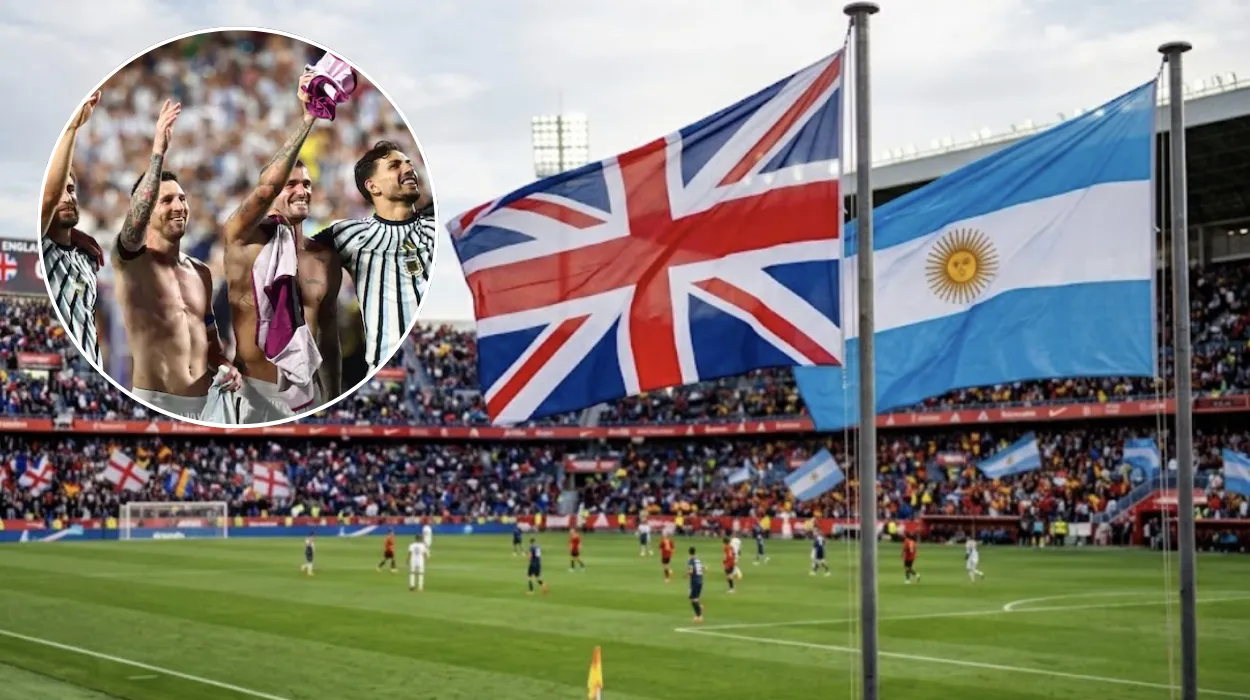
- Argentina’s players were filmed referencing England, Diego Maradona and Lionel Messi following their round-of-16 win over Egypt.
- Argentina are chasing a second successive World Cup title after winning in Qatar in 2022, while England are bidding for their first final appearance in six decades.
- More than 100 people were arrested in the United Kingdom before and after England’s quarterfinal fixture against Norway.
- Argentina are aiming to defend their crown, while England seek a first World Cup final since 1966, raising the stakes for both camps ahead of Wednesday’s match.
Atlanta (Britain Today News) July 14, 2026 – U.S. Georgia state security authorities have placed the city on heightened alert ahead of the England v Argentina semifinal of the 2026 North America World Cup, due to be played at Atlanta Stadium on 16 July. The precautions follow long-standing concerns that clashes could break out between the two sets of supporters, with tensions rooted both in footballing history and in the legacy of the 1982 Falklands War, in which Argentina was defeated by the United Kingdom.
- Key Points
- Why Have Authorities Raised Security Levels Ahead Of The Match?
- What Is Driving The Rivalry Between England And Argentina?
- What Role Could Crowd Management And Fan Segregation Play On Matchday?
- Why Does This Match Matter So Much For Both Teams?
- What Measures Have Atlanta Police Put In Place At The Stadium?
- What Has The Reaction Been From Fans And Officials So Far?
- What Happens Next Ahead Of Kick-Off On 16 July?
Why Have Authorities Raised Security Levels Ahead Of The Match?
Atlanta police have moved to reassure the public that the city is prepared for what is expected to be one of the most closely watched fixtures of the tournament. In a statement, the force said:
“We are enhancing public safety and security measures across the city. Additional personnel and resources have already been deployed and will continue to be strategically positioned at the stadium, entertainment districts, and other high-traffic areas to ensure everyone has a safe and enjoyable experience.”
The statement makes clear that the additional deployment is not confined to the stadium perimeter alone. Entertainment districts across the city, where thousands of travelling fans are expected to gather before and after kick-off, will also see a stronger police presence, as will other areas of the city that typically draw large crowds during major sporting events.
What Is Driving The Rivalry Between England And Argentina?
The tension between the two nations on the football pitch is not new, and it stretches back further than most rivalries in the modern game. The origins can be traced 60 years to the 1966 World Cup quarterfinal, when England beat Argentina 1-0 on home soil. That match proved deeply controversial from the opening whistle, with the Argentine captain sent off midway through the first half and refusing to leave the pitch for several minutes, delaying play and inflaming tempers on both sides. At full time, England manager Alf Ramsey ordered his players not to exchange shirts with their opponents, a gesture normally regarded as a mark of sporting respect, and he publicly described the Argentine players as “animals.” The remark caused outrage in Argentina and was not forgotten. In the aftermath of the match, Argentine players reportedly entered the England team’s dressing room, urinated in the players’ luggage and left the scene before they could be identified, an episode that has since become part of the folklore surrounding the fixture.
The needle between the two footballing nations was pulled tighter two decades later. At the 1986 World Cup in Mexico, Argentina eliminated England in the quarterfinals through the infamous “Hand of God” incident, in which Diego Maradona punched the ball into the net past the England goalkeeper, a goal that stood despite widespread belief among players and observers that it should have been disallowed for handball. Maradona later added to the sense of triumph by scoring what is widely regarded as one of the greatest individual goals in World Cup history in the same match, cementing the fixture’s place as one of the most talked-about in the tournament’s history and giving Argentine supporters a moment of footballing revenge that has been celebrated in the country ever since.
How Did The Falklands War Deepen The Divide?
Football rivalry aside, the relationship between England and Argentina carries the weight of a real and costly conflict. In 1982, the two countries fought a 74-day war over sovereignty of the Falkland Islands, known in Argentina as the Malvinas. British forces were dispatched to retake the islands after Argentina’s military junta ordered an invasion, and the resulting conflict left 649 Argentine military personnel, 255 British military personnel and three civilians dead. Argentina lost that war, and the scars it left have periodically resurfaced whenever the two nations meet on the football pitch, most notably during the 1986 quarterfinal, which took place only four years after the fighting had ended. Sovereignty over the islands remains disputed between London and Buenos Aires to this day, with both governments maintaining competing claims, and the issue continues to colour public sentiment in both countries whenever England and Argentina are drawn against one another in major sporting competitions.
What Role Could Crowd Management And Fan Segregation Play On Matchday?
Organisers in Atlanta are expected to lean heavily on standard World Cup protocols for high-risk fixtures, which typically include strict segregation of rival supporters both inside and outside the stadium, controlled entry points for each side’s ticket holders, and designated fan zones kept at a distance from one another in the city centre. Although neither FIFA nor Atlanta’s organising committee has released a detailed public breakdown of matchday logistics, the scale of the police deployment confirmed so far suggests that crowd separation will be treated as a priority from the moment supporters begin arriving in the city, rather than only once they reach the stadium gates.
Did Argentina’s Players Reference England During Their Round Of 16 Win?
Sensitivities around the fixture were further heightened after Argentina’s players were filmed referencing England, Diego Maradona and Lionel Messi in the wake of their round-of-16 victory over Egypt. The images, which circulated widely after the match, were seen by many as a signal of how much significance the Argentine squad and its supporters are attaching to a potential meeting with England in this year’s tournament, given the layered history between the two nations both on and off the pitch.
Why Does This Match Matter So Much For Both Teams?
Beyond the historical and political undertones, the footballing stakes of Wednesday’s semifinal are considerable. Argentina are looking to win back-to-back World Cup titles, having lifted the trophy in Qatar in 2022. A win over England would take them one step closer to cementing their status as the dominant force in world football over the past four years.
For England, the occasion carries a different but equally powerful weight. The Three Lions have not reached a World Cup final since they won the tournament as hosts in 1966. Reaching Wednesday’s semifinal already represents their best run in the competition in six decades, and a victory over Argentina would send them into a final for the first time since that triumphant campaign. With both sides fighting for outcomes of historic significance, officials and analysts alike have warned that the emotional intensity surrounding the match could spill over into confrontations among either players or supporters.
What Measures Have Atlanta Police Put In Place At The Stadium?
According to the police statement, additional personnel have already begun to be deployed in and around Atlanta Stadium in the days leading up to the match. Officers will be strategically positioned at stadium entry points, in the surrounding entertainment districts, and in other areas of the city that are expected to see heavy footfall from travelling supporters. The stated aim, as outlined by the Atlanta police, is to allow fans
“to ensure everyone has a safe and enjoyable experience,”
while ensuring officers are able to respond swiftly should any incidents of disorder occur.
Has There Been A History Of Arrests Around England’s Matches?
Trouble involving sections of England’s travelling support has not been confined to Atlanta. In the United Kingdom, incidents have reportedly occurred on the days that the England national team play, whether the matches take place at home or abroad. Ahead of and following England’s quarterfinal match against Norway, authorities confirmed that more than 100 people were arrested across the country. The scale of those arrests underlines the level of concern among British police forces over the potential for disorder connected to England’s World Cup campaign, and it forms part of the wider context that has informed the additional security measures now being rolled out in Atlanta.
Explore More about Sports:
Jordan Spieth Returns to Royal Birkdale for Open Championship
British Heavyweight Johnny Fisher Joins Zuffa, Set for Copper Box Headline
What Has The Reaction Been From Fans And Officials So Far?
While the majority of England and Argentina supporters travelling to Atlanta are expected to follow the match without incident, the combination of a fiercely contested footballing rivalry and a still-unresolved geopolitical dispute has left security officials unwilling to take any chances. Atlanta police have indicated that their approach will be proactive rather than reactive, with officers already visible in the city ahead of matchday rather than waiting for problems to develop once fans begin arriving in large numbers.
What Happens Next Ahead Of Kick-Off On 16 July?
With the semifinal now just days away, attention in Atlanta will increasingly turn to crowd management as thousands of England and Argentina supporters converge on the city. Police have signalled that resources will remain “strategically positioned” for the duration of the build-up to the match, through kick-off, and in the hours afterwards, when previous experience elsewhere has shown that flashpoints are just as likely to occur as supporters disperse from the stadium and surrounding entertainment districts.
For both England and Argentina, the football itself will ultimately decide who reaches the World Cup final. But the events of the coming days in Atlanta will also be watched closely as a test of how effectively organisers and law enforcement can manage one of the most historically loaded fixtures in the sport, at a moment when both nations have never had more riding on the outcome.