Key Points
- Sainsbury’s is extending its Facewatch facial recognition system to 150 additional supermarkets before Christmas.
- The technology is already operating in 55 branches and is reported to have a 99.88% accuracy rate.
- A trial reportedly stopped nine in ten repeat offenders from re-entering stores.
- Every alert generated by the system is checked by a trained member of staff before any shopper is approached.
- The expansion follows a February incident in which shopper Warren Rajah was wrongly identified and escorted from a South London store.
- Facewatch said no alerts were linked to Rajah, and Sainsbury’s apologised, attributing the error to human mistake.
- Other retailers including Budgens, Sports Direct, B&M and Home Bargains also use the Facewatch system.
- Shoplifting offences in England and Wales have quadrupled since the pandemic, reaching almost 500,000 last year.
- Sainsbury’s posted a 2.7% rise in quarterly retail sales to £9.15 billion for the 16 weeks to 20 June 2026.
- Argos sales dipped 0.5%, though the catalogue chain remains under review for a possible sale.
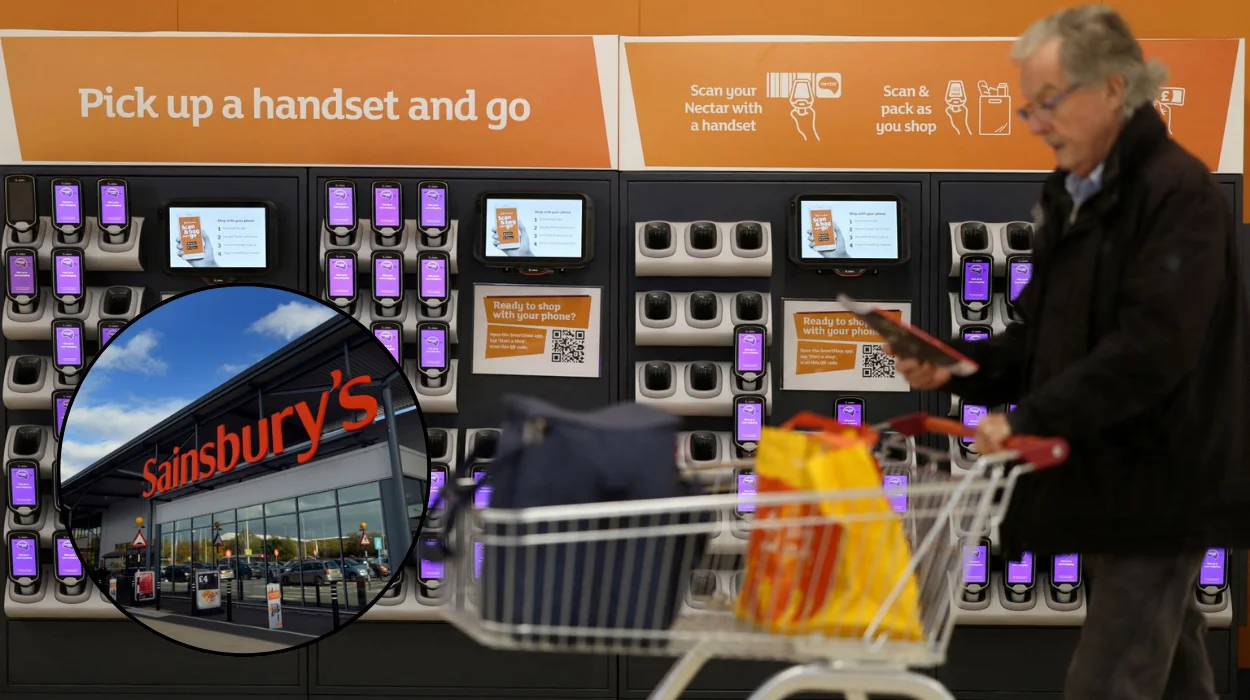
United Kingdom (Britain Today News) June 30, 2026 – Sainsbury’s is to install facial recognition cameras in 150 further supermarkets across the UK before Christmas, after the supermarket said a trial of the technology had stopped nine in ten repeat offenders from returning to stores where they had previously caused trouble.
- Key Points
- What Is Sainsbury’s Rolling Out And Where?
- How Does The Facewatch Technology Actually Work?
- Why Did Sainsbury’s Decide To Expand The System Now?
- What Happened In The Warren Rajah Incident?
- What Were Sainsbury’s Latest Quarterly Sales Figures?
- What Is Sainsbury’s Profit Outlook For The Year?
- What Happens Next For Sainsbury’s Facial Recognition Rollout?
What Is Sainsbury’s Rolling Out And Where?
The expansion will see the artificial intelligence-powered surveillance system extended well beyond the 55 branches where it currently operates, bringing the total number of participating stores to more than 200 once the rollout is complete. Sainsbury’s said the technology has delivered a 99.88% accuracy rate during its operation so far, a figure the retailer has presented as evidence that the system can be trusted to flag genuine repeat offenders rather than misidentify innocent shoppers.
Crucially, the supermarket has stressed that the system does not act alone. Every alert generated by the cameras is reviewed by a trained member of staff before any customer is approached, a safeguard designed to reduce the risk of wrongful confrontations as the technology spreads to a much larger portion of the chain’s estate.
How Does The Facewatch Technology Actually Work?
The system has been supplied by Facewatch, a company that describes itself as
“the UK’s leading facial recognition company providing a cloud-based facial recognition security system to safeguard businesses against crime.”
In practice, the technology relies on retailers themselves to identify problem individuals. Store staff upload reports of bad behaviour, such as shoplifting or violent conduct, after which moderators at Facewatch review the relevant CCTV footage and tag the individual concerned within the system’s database. Once a person has been flagged, the technology is designed to send an instant alert to staff at any participating store the moment that individual walks through the door, regardless of which branch first reported them. This shared, cross-store database is central to how Facewatch markets its product to retailers grappling with repeat offenders who move between branches.
Why Did Sainsbury’s Decide To Expand The System Now?
Retailers across Britain have been under mounting pressure from rising levels of theft and abuse directed at staff. Sainsbury’s, in announcing its original partnership with Facewatch, said:
“Sadly, despite all this and more, incidents of abuse, aggression and theft are rising. Our colleagues have told us they’re worried.”
That statement reflects a broader pattern across the retail sector. Shoplifting offences have quadrupled since the pandemic, with England and Wales recording almost 500,000 such offences last year, a record high. Retail industry figures have repeatedly warned that those committing the offences have grown more brazen, more organised and, in many cases, more aggressive towards shop workers attempting to intervene.
Against that backdrop, Sainsbury’s clearly views the expansion of facial recognition technology as a practical response to colleagues’ concerns, even as the move raises fresh questions about privacy and the balance between security and customer trust.
What Happened In The Warren Rajah Incident?
The rapid expansion comes despite an embarrassing episode in February, when shopper Warren Rajah was wrongly identified by the system and escorted out of a Sainsbury’s branch in South London without explanation.
Rajah described the experience as “Orwellian,” a remark that captured the unease many privacy campaigners have expressed about the spread of facial recognition technology in everyday public spaces such as supermarkets.
Facewatch responded by stating there were “no incidents or alerts” linked to Rajah, indicating the system itself had not flagged him as a person of interest. Sainsbury’s subsequently apologised to the shopper, attributing the wrongful removal to human error rather than a fault with the underlying technology.
Which Other Retailers Use Facewatch?
Sainsbury’s is far from the only major retailer to have adopted the Facewatch system. Budgens, Sports Direct, B&M and Home Bargains have all installed the technology in their own stores, suggesting facial recognition is becoming an increasingly common tool across British retail as chains seek new ways to tackle theft and protect staff.
The growing list of retail names using the system also means the shared database of flagged individuals potentially spans a wide range of store types and locations, increasing the practical reach of any single alert generated within the network.
What Were Sainsbury’s Latest Quarterly Sales Figures?
The facial recognition expansion was announced alongside Sainsbury’s latest trading update, which showed Britain’s second-biggest supermarket posting a 2.7% rise in quarterly retail sales to £9.15 billion for the 16 weeks to 20 June 2026. Grocery sales rose 3.6% over the same period, while online grocery sales surged by 12.5%.
Chief executive Simon Roberts said more shoppers are choosing Sainsbury’s for their main weekly shop, pointing to the strength of the grocery performance as a sign that the retailer’s broader strategy is resonating with customers.
Has Sales Growth Slowed At Sainsbury’s?
Despite the positive headline figures, sales growth has slowed when compared with the same period last year. Roberts acknowledged that wider economic pressures were weighing on the outlook, warning that the ongoing Middle East conflict was casting a shadow over both consumer confidence and food prices. He said the impact of that conflict “remains uncertain,” a note of caution that tempered an otherwise upbeat set of results.
Explore More about Technology:
UK Emerges as AI Leader While Confidence Levels Trail, Survey Shows
UK Regulators Push Apple to Open App Payments and Compete with Apple Pay Rivals
What Is Sainsbury’s Profit Outlook For The Year?
Despite the slower growth and the uncertainty flagged by Roberts, Sainsbury’s said it still expects full-year underlying operating profit of between £975 million and £1.075 billion, indicating the retailer remains broadly confident in its financial trajectory even as it navigates a more difficult macroeconomic backdrop.
How Is Argos Performing Within The Group?
Argos emerged as a weaker spot within the latest results, with sales at the catalogue chain dipping by 0.5%. However, the figures were not uniformly negative, with Argos recording volume growth of 2.2% over the period, suggesting that while overall sales value fell, the number of items sold actually increased.
What Is The Future Of Argos Under Sainsbury’s Ownership?
It is understood that Sainsbury’s is still accepting bids for Argos as the group continues to push ahead with a transformation plan for the brand. The ongoing sale process means the catalogue chain’s long-term position within the wider Sainsbury’s group remains unresolved, even as the supermarket presses on with efforts to reshape the format.
What Happens Next For Sainsbury’s Facial Recognition Rollout?
With the rollout set to bring the number of facial-recognition-equipped stores to more than 200 before Christmas, Sainsbury’s appears committed to scaling up the technology despite the privacy concerns raised by the Rajah incident. The retailer’s continued emphasis on human verification of every alert suggests an attempt to balance the drive to curb theft and protect staff with the need to avoid further wrongful identifications as the system reaches a much wider customer base.
Whether the expanded rollout succeeds in reducing repeat offending without further incidents of mistaken identity is likely to be closely watched, both by rival retailers considering similar technology and by privacy campaigners concerned about the normalisation of facial recognition in everyday shopping environments.