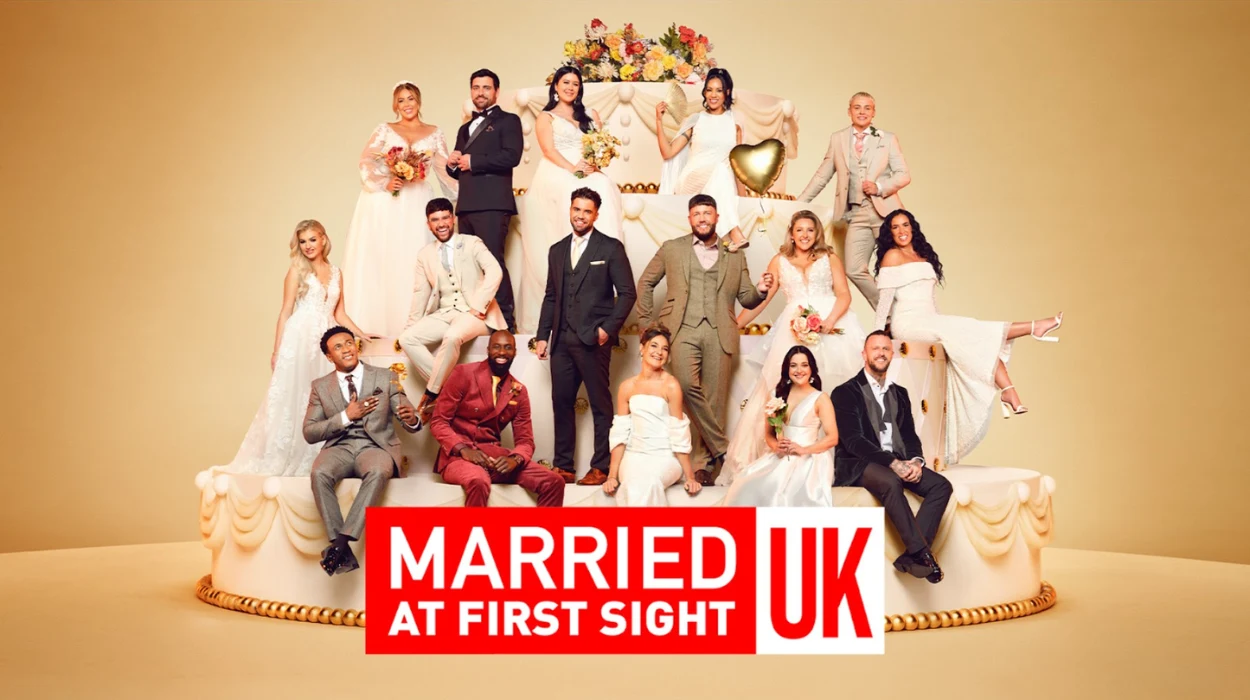
Married at First Sight UK is a British reality television experiment where strangers marry for the first time upon meeting, guided by relationship experts, with the 2024 series featuring six couples and the 2025 series producing four couples who renewed their vows at the final ceremony. The show has sparked intense drama across multiple seasons, triggered a UK government inquiry into rape allegations from two women assaulted during filming in 2026, and maintains one of the lowest success rates in reality TV history with most couples separating within months.
- What Is Married at First Sight UK and How Does the Experiment Work?
- Which Couples From Married at First Sight UK Are Still Together?
- What Major Drama Has Occurred Across Married at First Sight UK Seasons?
- Why Did the UK Government Call for an Inquiry Into Married at First Sight UK?
- How Do Expert Matchmakers Select and Match Couples for the Show?
- What Happens During the Final Decision Ceremony and After the Experiment Ends?
- What Is the Success Rate of Married at First Sight UK Compared to Other Reality Dating Shows?
- How Has Married at First Sight UK Influenced British Reality TV and Public Discourse on Relationships?
- What Should Potential Participants Know Before Applying for Married at First Sight UK?
What Is Married at First Sight UK and How Does the Experiment Work?
Married at First Sight UK is a documentary-style reality TV series where vetted strangers legally marry upon their first meeting, live together for approximately six weeks, and decide at the final ceremony whether to stay married or divorce. The experiment matches couples using psychological assessments conducted by relationship experts before they exchange vows at a legal ceremony they attend without seeing each other beforehand.
The format follows a structured mechanism across multiple episodes. Two couples are matched and married in Episode 1, two more in Episode 2, with additional couples married in Episodes 4 and 5. The final two couples marry in Episode 5. Each couple receives a honeymoon destination ranging from Koh Samui, Thailand to Montego Bay, Jamaica, Barbados, Mexico, and Trentino. During the six-week cohabitation period, couples attend expert-led therapy sessions, confrontational group dinners, and challenges designed to test compatibility. The final decision ceremony requires each participant to choose between staying married to their partner or walking away as single.
The British version differs from the Australian original by using a legal marriage rather than a symbolic commitment ceremony. This legal framework means divorces require formal legal proceedings after the experiment ends. The production commissions multiple thirty-six episode versions following successful seasons, with the sixth, seventh, and eighth series generating enough viewership to commission another version starting 16 September 2024.
Which Couples From Married at First Sight UK Are Still Together?
Four couples from Married at First Sight UK 2025 chose to renew their vows at the reunion episodes airing November 13–14, 2025: Rebecca and Bailey, Davide Keye, John and Abigail, and Leisha and Reiss. These four pairs committed to long-term relationships including long-distance arrangements, while all other couples from that series separated either during the experiment or at the final ceremony.
Rebecca and Bailey ultimately chose to renew their vows and commit to a long-distance relationship. At the reunion, they arrived hand in hand, still united, though they no longer follow each other on Instagram, raising questions about their current status. Davide Keye and John and Abigail continued following each other on social media post-reunion, indicating strong bonds. Leisha and Reiss also opted to recommit during the final ceremony.
The 2024 series produced no lasting marriages. Nathan Campbell and Lacey Martin chose “Yes” at the final decision but separated after the experiment ended. Ross McCarthy and Sacha Jones also chose “Yes” initially but separated after the experiment. Adam Nightingale and Tayah chose “No” and separated. Kieran Chapman and Kristina Goodsell broke up before the final decision. Caspar Todd and Emma Barnes, Eve Reid and Charlie Curtis all separated before reaching the final ceremony.
Historical data across five earlier seasons shows average initial compatibility scores ranging from 6.8 to 7.5 out of 10. Marriage durations before dissolution averaged between 4 to 8 months. Primary reasons for dissolution include communication breakdown, differing expectations, lack of emotional intimacy, incompatible lifestyles, unrealistic expectations, lack of mutual support, growing apart, and incompatible long-term goals.
What Major Drama Has Occurred Across Married at First Sight UK Seasons?
Married at First Sight UK has generated intense drama through relationship conflicts, betrayals, emotional breakdowns, and as of May 2026, serious criminal allegations including rape and sexual assault reported by two women to the BBC. The show’s drama encompasses interpersonal conflicts between couples, expert interventions that fail to resolve issues, and participant behavior that escalates tensions during therapy sessions and group dinners.
The 2025 series proved eventful with multiple couples experiencing rapid relationship changes and deep differences that became television focal points. Sarah and Jamie from the 2018 season gained significant attention for their story despite mixed reactions to that series. The 2019 season featured a couple experiencing rapid changes and another navigating deep differences, generating high viewership and substantial buzz. The 2020 season saw a few couples face difficult times with mixed reactions from audiences.
The 2021 season highlighted couples facing communication challenges alongside another couple showing a strong bond, with viewers praising the show’s candid approach and portrayal of various couples’ experiences. This season emphasized honest communication and shared values as critical relationship factors. Each subsequent season maintained dramatic tension through the fundamental premise: strangers making life-altering legal commitments without prior knowledge of their partner’s personality, habits, or compatibility.
Participant selection involves psychological screening, yet dramatic conflicts remain inevitable. The format intentionally creates high-stress situations by placing couples in unfamiliar living arrangements, isolating them from support networks during honeymoons, and forcing confrontations through expert-led therapy. Group dinners bring all couples together, creating opportunities for conflict escalation when multiple relationship problems surface simultaneously.
Why Did the UK Government Call for an Inquiry Into Married at First Sight UK?
On Tuesday, May 19, 2026, the UK government urged for an inquiry after two women told the BBC they were raped during the filming of Married at First Sight UK, reigniting debate about reality TV regulation and participant safety. The accusations led to calls for a U.K.-wide investigation into the production’s duty of care and safeguarding protocols.
Two brides from Married at First Sight UK reported to the BBC that they were sexually assaulted during filming by their on-screen husbands. These allegations emerged publicly on May 18, 2026, through YouTube coverage and BBC reporting. The accusations have reignited a debate in the United Kingdom about the ethics of reality television production, participant screening processes, and whether existing regulations adequately protect participants from harm.
The inquiry call focuses on production companies’ responsibility to screen participants for history of violence, implement adequate safeguarding measures during filming, provide psychological support throughout and after the experiment, and ensure legal marriages do not become vehicles for exploitation. Current regulations permit legal marriages between participants who meet minutes before exchanging vows, with minimal pre-screening beyond psychological compatibility assessments focused on relationship readiness rather than criminal history or violence risk.
This incident represents the most serious safety failure in the show’s British history. Previous seasons featured emotional drama and relationship breakdowns, but criminal allegations of sexual assault and rape elevate the concerns to legal and regulatory domains. The government’s intervention signals potential policy changes affecting not only Married at First Sight UK but the broader reality TV industry in the United Kingdom.
How Do Expert Matchmakers Select and Match Couples for the Show?
Relationship experts use psychological assessments, compatibility questionnaires, and in-depth interviews to match participants based on shared values, life goals, communication styles, and personality traits before the legal marriage ceremony. The matching process involves multiple experts evaluating each participant’s psychological profile, relationship history, attachment style, and stated preferences for an ideal partner.
The expert team includes relationship psychologists, marriage counselors, and behavioral scientists who analyze hundreds of data points per participant. These data points include personality test results, attachment style assessments, values inventories, lifestyle preferences, deal-breakers, and long-term relationship goals. The matching algorithm prioritizes complementary traits over identical characteristics, believing that partners with different strengths can balance each other effectively.
Participants undergo weeks of vetting before production begins. This vetting includes background checks, psychological evaluations, medical screenings, and multiple interview rounds. The production team assesses participants’ emotional stability, communication skills, commitment levels, and readiness for a legal marriage with a stranger. Despite this screening, dramatic conflicts and relationship failures remain common, suggesting that psychological compatibility alone cannot predict relationship success in high-pressure experimental conditions.
The matching process faces inherent limitations. Experts cannot predict how two people will interact under stress, how conflicts will escalate, or whether physical attraction will develop after the initial meeting. The six-week experiment timeframe compresses years of relationship development into approximately 42 days, creating artificial pressure that may not reflect real-world relationship trajectories. Compatibility scores averaging between 6.8 and 7.5 out of 10 across five seasons indicate that experts achieve moderate success but cannot guarantee matching effectiveness.
What Happens During the Final Decision Ceremony and After the Experiment Ends?
At the final decision ceremony, each participant independently chooses whether to stay married to their partner or walk away as single, with couples either renewing their vows and committing to continue the relationship or separating immediately. The ceremony occurs after six weeks of cohabitation, therapy sessions, and expert evaluations, representing the experiment’s culminating moment of truth.
Couples who choose “Yes” at the final decision may still separate after the experiment ends. Nathan Campbell and Lacey Martin from the 2024 series chose “Yes” but separated after the experiment concluded. Ross McCarthy and Sacha Jones also chose “Yes” initially but separated after the experiment. This pattern demonstrates that the final decision reflects commitment at one moment in time rather than guaranteed long-term relationship success.
Couples who choose “No” separate immediately and do not pursue ongoing relationships. Adam Nightingale and Tayah from 2024 chose “No” and separated. Kieran Chapman and Kristina Goodsell broke up before reaching the final decision entirely. Caspar Todd and Emma Barnes, Eve Reid and Charlie Curtis also separated before the final ceremony.
Post-experiment outcomes vary significantly. Some couples maintain contact as friends, others cut all communication, and a small minority pursue long-term relationships. The four 2025 couples who renewed their vows at the November 2025 reunion included those committing to long-distance relationships. Social media following patterns serve as indicators of ongoing connection, with couples continuing to follow each other on Instagram suggesting stronger post-experiment bonds.
Divorce proceedings become necessary for couples who chose “Yes” but later separate, as the British version involves legal marriage rather than symbolic commitment. This legal requirement adds complexity and financial cost to relationship dissolution that does not exist in versions using symbolic ceremonies.
What Is the Success Rate of Married at First Sight UK Compared to Other Reality Dating Shows?
Married at First Sight UK maintains one of the lowest success rates in reality TV history, with most couples separating within months and only four couples from the 2025 series remaining together as of November 2025. Historical data shows average marriage durations before dissolution ranging from 4 to 8 months across five seasons, with primary dissolution reasons including communication breakdown, incompatible lifestyles, and growing apart.
Comparative analysis across five seasons reveals consistent patterns. Season 1 showed an average initial compatibility score of 7.2 with marriages lasting 5 months before dissolution due to communication breakdown and differing expectations. Season 2 averaged 6.8 compatibility with 6-month durations caused by lack of emotional intimacy and incompatible lifestyles. Season 3 achieved the highest compatibility score at 7.5 with 8-month durations, though dissolution still occurred due to strong initial attraction but communication struggles. Season 4 dropped to 6.9 compatibility with only 4-month durations from unrealistic expectations and lack of mutual support. Season 5 averaged 7.1 compatibility with 7-month durations from growing apart and incompatible long-term goals.
The 2024 series produced zero lasting marriages despite two couples choosing “Yes” at the final decision. The 2025 series achieved better outcomes with four of approximately eight couples (assuming standard format) remaining together after the reunion, representing approximately 50% short-term success at the reunion point. However, long-term success beyond the reunion remains uncertain, and previous patterns suggest most will separate within 12 months.
Compared to other reality dating shows, Married at First Sight UK’s legal marriage framework creates higher stakes and more permanent consequences than shows using symbolic commitments or no formal arrangement. This higher stakes environment may attract participants more willing to take relationship risks but also increases the emotional and legal complexity of failures.
Explore More about Entertainment:
Eurovision Final Live Updates, Scores, and Grand Winner News
Alan Rothwell: Biography, Age, Career, Movies & Facts 2026
How Has Married at First Sight UK Influenced British Reality TV and Public Discourse on Relationships?
Married at First Sight UK has fundamentally shaped British reality TV by popularizing the legal marriage experiment format, generating sustained viewership across eight series, and triggering national conversations about relationship ethics, participant safety, and regulatory oversight. The show’s success led to multiple thirty-six episode commissions following the sixth, seventh, and eighth series, with production continuing into 2024 and beyond.
The format’s influence extends beyond viewership numbers. The show has sparked public debate about premarital compatibility assessment, the role of expert matchmaking in modern relationships, and whether psychological screening can predict relationship success. The May 2026 rape allegations and subsequent government inquiry call have elevated discourse to include participant safety, duty of care obligations, and whether reality TV production standards require regulatory reform.
Viewership patterns show high engagement during controversial seasons. The 2019 season generated high viewership and substantial buzz around couples experiencing rapid changes and deep differences. The 2021 season earned viewer praise for its candid approach and portrayal of various couples’ experiences, highlighting honest communication and shared values. The 2025 series proved eventful with multiple dramatic moments that sustained audience interest through the reunion episodes in November 2025.
The show’s cultural impact includes normalizing discussions about relationship compatibility, attachment styles, and communication patterns in mainstream media. Expert commentary from psychologists and marriage counselors featured on the program has educated audiences about relationship dynamics, even as the experiment itself demonstrates the limitations of expert matching under experimental conditions. The legal marriage framework has also prompted discussions about marriage laws, divorce procedures, and the seriousness of legal commitment in contemporary British society.
What Should Potential Participants Know Before Applying for Married at First Sight UK?
Potential participants must understand they will enter a legally binding marriage with a stranger upon first meeting, live together for six weeks under intense psychological scrutiny, face public broadcast of their most vulnerable moments, and accept high probability of relationship failure with potential emotional trauma. The application process involves extensive vetting including psychological assessments, background checks, medical screenings, and multiple interview rounds assessing emotional stability and commitment readiness.
Participants should recognize the experiment’s inherent risks. The six-week cohabitation period isolates them from support networks, creates artificial pressure through expert-led therapy and confrontational group dinners, and forces relationship decisions under production-controlled conditions. The legal marriage framework means divorce requires formal legal proceedings with associated costs, regardless of whether the final decision was “Yes” or “No.”
The 2026 sexual assault allegations demonstrate that even with screening, participants face genuine safety risks. Two women reported rape during filming to the BBC, leading to government inquiry calls. This history indicates that psychological screening focused on relationship compatibility does not adequately screen for violence risk or criminal behavior. Potential participants should weigh entertainment value and relationship experimentation against serious personal safety concerns.
Success probability remains low based on historical data. Only four couples from 2025 remained together at the November reunion, and previous seasons show most couples separating within 4–8 months. The average compatibility score of 6.8–7.5 out of 10 indicates moderate matching success but does not guarantee relationship sustainability. Potential participants should enter the experiment with realistic expectations about high failure rates and prepare emotionally for potential relationship breakdown, public scrutiny, and legal divorce proceedings if they choose “Yes” but later separate.