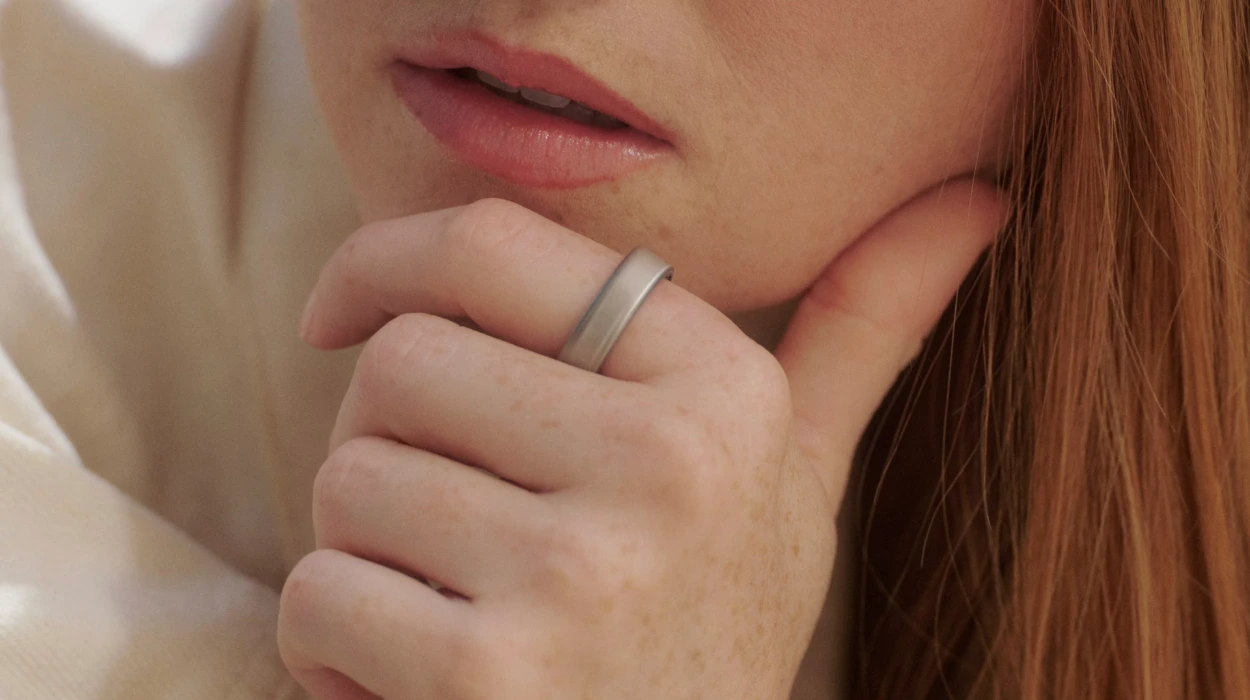
The Oura Ring 5 is the world’s smallest smart ring, offering 40% smaller dimensions, upgraded sensors, and new health-tracking software including blood pressure signals and live activity tracking. Before buying, understand its five core features: ultra-compact titanium design, reengineered sensor accuracy, 6–9 day battery life, Health Radar biometric monitoring, and integrated live activity and care features.
- Why is the Oura Ring 5 smaller than previous models and does that affect comfort?
- How large is the Oura Ring 5 compared to earlier generations?
- What materials and finishes are used in the Oura Ring 5 design?
- Does the smaller size change sizing options and fit?
- How accurate are the sensors in the Oura Ring 5 and what biometrics does it track?
- Which sensors are inside the Oura Ring 5 and how do they work?
- What health metrics does the Oura Ring 5 measure?
- How does the Oura Ring 5 improve accuracy over earlier models?
- How long does the Oura Ring 5 battery last and how is it charged?
- What factors affect Oura Ring 5 battery life?
- How does the Oura Ring 5 charging system work?
- What is Health Radar and how does it use Oura Ring 5 data?
- How do Blood Pressure Signals work on the Oura Ring 5?
- What does Nighttime Breathing analysis provide?
- How does Health Radar integrate with other health data?
- What new activity tracking and care features come with the Oura Ring 5?
- How does live activity tracking work on the Oura Ring 5?
- What are GLP-1 insights and who are they for?
- How does on-demand care work with the Oura Ring 5?
- What is the Brain Health Study and who can join?
- How does the Oura Ring 5 compare to earlier Oura rings?
- How does it compare to rival smart rings?
- Who should consider the Oura Ring 5 and who should skip it?
Why is the Oura Ring 5 smaller than previous models and does that affect comfort?
The Oura Ring 5 is 40% smaller than the Oura Ring 4, with a width of 6.09 mm and thickness of 2.28 mm, making it feel like a regular ring while keeping full health-tracking capabilities. This size reduction was achieved by redesigning mechanical, electrical, optical, and battery architectures, not by removing features.
How large is the Oura Ring 5 compared to earlier generations?
The Oura Ring 5 measures 6.09 mm in width and 2.28 mm in thickness, compared to roughly 8 mm width and 3.2 mm thickness on the Oura Ring 4. Its weight starts around 2 grams, making it significantly lighter than many competing smart rings and traditional metal rings. This miniaturization targets users who previously found smart rings too bulky or noticeable.
What materials and finishes are used in the Oura Ring 5 design?
The Oura Ring 5 is made from scratch-resistant titanium with an IP68 rating for dust and water resistance up to 100 meters (328 feet). It is available in six finishes: Gold (reimagined with a truer gold tone), Deep Rose (copper-like), Brushed Silver, Stealth, Black, and Silver. The Black and Silver finishes retail at $399, while Gold, Deep Rose, Brushed Silver, and Stealth cost $499.
Does the smaller size change sizing options and fit?
The Oura Ring 5 is available in sizes 6 to 13, a narrower range than the Oura Ring 4, which spanned sizes 4 to 15. Users should follow Oura’s sizing kit guidance to select the correct size, as fit affects sensor contact and tracking accuracy. The ring can be worn on the index, middle, or ring finger, and its low-profile design supports daily activities including sports, swimming, and sleep.
How accurate are the sensors in the Oura Ring 5 and what biometrics does it track?
The Oura Ring 5 uses redesigned sensor domes with stronger LEDs and 12 signal pathways to improve accuracy across finger sizes and skin tones, tracking more than 50 health metrics including heart rate, HRV, SpO₂, temperature, respiration, and sleep stages. Its optical sensors deliver a pulse signal up to 100 times stronger than typical wrist-based wearables, which improves data consistency especially at night and during workouts.
Which sensors are inside the Oura Ring 5 and how do they work?
The Oura Ring 5 includes red and infrared LEDs for blood oxygen (SpO₂) measurement, green and infrared LEDs for continuous heart rate and heart rate variability (HRV), temperature sensors for nightly temperature trends, and a 3D accelerometer for activity detection. The new low-profile sensor domes improve skin contact, while stronger LEDs and optimized signal pathways reduce noise and improve signal quality.
What health metrics does the Oura Ring 5 measure?
The device tracks more than 50 biometric and wellness metrics, including:
- Heart rate and heart rate variability (HRV)
- Blood oxygen saturation (SpO₂)
- Body temperature trends
- Respiratory rate and breathing patterns
- Sleep staging (light, deep, REM)
- Readiness and recovery scores
- Activity detection and energy expenditure
- Stress indicators and menstrual-cycle signals.
These metrics feed into Oura’s scoring system and long-term trend insights within the Oura app.
How does the Oura Ring 5 improve accuracy over earlier models?
Oura rebuilt the sensing architecture specifically for the Ring 5, adding more powerful LEDs, better optical pathways, and improved mechanical design to stabilize sensor-skin contact. The result is higher consistency across a broader range of finger sizes and skin tones, with particular improvements in nighttime heart rate and workout tracking accuracy. These changes support more reliable readiness, sleep, and activity scores over time.
How long does the Oura Ring 5 battery last and how is it charged?
The Oura Ring 5 provides 6–9 days of battery life on a single charge, depending on usage, and charges fully in 20–80 minutes via a magnetic charging dock. This is an improvement over the Oura Ring 4’s 5–8 day range, achieved through a chemical and mechanical battery redesign plus optimized firmware.
What factors affect Oura Ring 5 battery life?
Battery life depends on continuous sensing intensity, app sync frequency, and use of advanced features like live activity tracking. Typical usage yields 6–9 days, while heavy use of real-time workout tracking or frequent syncing may reduce this toward the lower end. Oura’s firmware monitors power consumption and adapts sampling rates to maintain a week-plus of usage under normal conditions.
How does the Oura Ring 5 charging system work?
The Oura Ring 5 uses a proprietary magnetic charging dock that aligns with contacts on the inner ring surface. A full charge takes between 20 and 80 minutes depending on battery level and charger conditions. Users can also purchase an optional Oura Ring 5 Charging Case made from recycled aluminum, which stores multiple charges and supports wireless charging, extending total usage to up to one month before needing to plug the case in.
Is battery performance expected to degrade over time?
Oura redesigned the battery system for improved efficiency, durability, and longevity, with specialized firmware to manage charging cycles and power usage. Like all lithium-based batteries, capacity will gradually decrease over years of use, but the structural and software optimizations aim to maintain usable multi-day battery life through the device’s lifecycle.
What is Health Radar and how does it use Oura Ring 5 data?
Health Radar is a new Oura software layer that continuously monitors key biometric signals in the background to surface patterns and alerts, including Blood Pressure Signals and Nighttime Breathing trends. It uses multi-day and multi-week data from the Oura Ring 5 to detect shifts that may indicate cardiovascular strain or breathing issues, moving beyond single-night snapshots to predictive health insights.
How do Blood Pressure Signals work on the Oura Ring 5?
Blood Pressure Signals track patterns in cardiovascular behavior during sleep when blood pressure is most stable and typically at its lowest. Oura does not provide direct blood pressure numbers but detects deviations from expected nighttime dipping patterns, which can signal potential cardiovascular risk. Users can also manually log blood pressure readings from external cuffs into the Oura app to enrich these insights.
What does Nighttime Breathing analysis provide?
Nighttime Breathing gives a 30-day rolling view of sleep-related breathing patterns and disturbances, expanding on earlier nightly breathing regularity metrics. The system identifies trends such as irregular breathing episodes, changes in respiratory rate, and correlations with sleep stages or readiness scores. This longer-term view helps users and clinicians spot potential issues like sleep-disordered breathing that might not appear in single-night data.
How does Health Radar integrate with other health data?
Members in the U.S. can import diagnosed conditions, medications, lab results, and allergies into the Oura app to create a fuller health picture compatible with Health Radar insights. This contextual data allows the system to tailor alerts and recommendations based on known conditions and medication effects. Oura states it uses a privacy-first approach to store and process these records.
What new activity tracking and care features come with the Oura Ring 5?
The Oura Ring 5 introduces live activity tracking, improved automatic activity detection, GLP-1 insights, and on-demand care via a partnership with Counsel Health, all accessible through the Oura app. These features allow users to see real-time workout metrics, track medication journeys, and consult licensed physicians within the app, in addition to traditional sleep and readiness tracking.
How does live activity tracking work on the Oura Ring 5?
Live activity tracking lets users start a workout session and view key metrics such as pace, distance, and heart rate in real time on their phone during activities like running and cycling. The system also supports connecting third-party heart-rate monitors to improve workout accuracy and display heart rate data alongside ring-derived metrics. Automatic Activity Detection has been refined to better capture low-motion activities like Pilates and yoga.
What are GLP-1 insights and who are they for?
GLP-1 insights are designed for users managing weight with GLP-1 medications such as Ozempic and Wegovy. The app provides a longitudinal view of the medication journey, tracking weight changes, body metrics, and side effects over time alongside biometric data from the ring. This helps users and clinicians understand how medication, lifestyle, and recovery interact.
How does on-demand care work with the Oura Ring 5?
Oura partners with Counsel Health, an on-demand platform combining AI technology with licensed physicians, to offer medical guidance directly in the Oura app. Members in the U.S. can ask health questions, receive personalized medical advice, and connect with licensed physicians. Access to this service requires an additional fee on top of the standard $5.99 monthly Oura membership subscription, though exact pricing was not disclosed at launch.
What is the Brain Health Study and who can join?
Oura is launching a Brain Health Study that matches short in-app cognitive tasks with long-term physiological trends collected by the ring. Eligible members can enroll to explore how daily choices, recovery, and biometric patterns relate to mental sharpness and long-term brain health. This is an early research initiative and not a diagnostic tool, but it represents Oura’s first major step into brain health monitoring.
Is the Oura Ring 5 worth buying compared to other smart rings and wearables?
The Oura Ring 5 is worth buying if you want the smallest, most accurate smart ring currently available with advanced biometric monitoring, long battery life, and predictive health features like Health Radar. It is especially strong for users who prioritize discreet design, sleep and recovery tracking, and long-term health trend analysis over smart notifications or built-in GPS.
How does the Oura Ring 5 compare to earlier Oura rings?
The Oura Ring 5 improves on the Oura Ring 4 with a 40% smaller form factor, better sensor accuracy, longer battery life (6–9 days vs 5–8 days), and new software features like Health Radar, live activity tracking, and GLP-1 insights. The launch price is $399 for Black and Silver, higher than the Ring 4’s original $349 starting price, but matched by expanded capabilities and a more wearable design.
Explore More about Technology:
James Webb Space Telescope Stunning New Universe Images
Apple Store Guide: Prices, Trade-In, Repairs & Support Today
How does it compare to rival smart rings?
Competitors like RingConn and Ultrahuman offer subscription-free models, but the Oura Ring 5 compensates with more advanced sensing, a larger ecosystem, and features like Blood Pressure Signals and on-demand medical care via Counsel Health. The Oura app’s long-term trend analysis, readiness and sleep scoring, and research-backed algorithms remain a key differentiator for users focused on health optimization rather than just activity counting.
Who should consider the Oura Ring 5 and who should skip it?
The Oura Ring 5 suits individuals who want continuous, passive health tracking with minimal device presence, including athletes, shift workers, people monitoring sleep or recovery, and those interested in cardiovascular and metabolic health trends. It is less suitable for users who want smartwatch features like notifications, GPS, or contactless payments, or those unwilling to pay a monthly membership fee for access to advanced insights and care features.
The Oura Ring 5 combines a significantly smaller, more comfortable design with stronger sensors, longer battery life, and a new software layer focused on predictive health insights. Its five core features—compact titanium build, advanced sensor accuracy, multi-day battery, Health Radar biometric monitoring, and integrated live activity and care tools—make it a leading option for users seeking discreet, data-rich health tracking in ring form.