Key Points
- Hollywood actor Shia LaBeouf formally entered a guilty plea to three misdemeanor counts of simple battery in a New Orleans court.
- The charges stem from a violent physical altercation on 17 February during the city’s annual Mardi Gras celebrations outside the Royal Street Inn & R Bar.
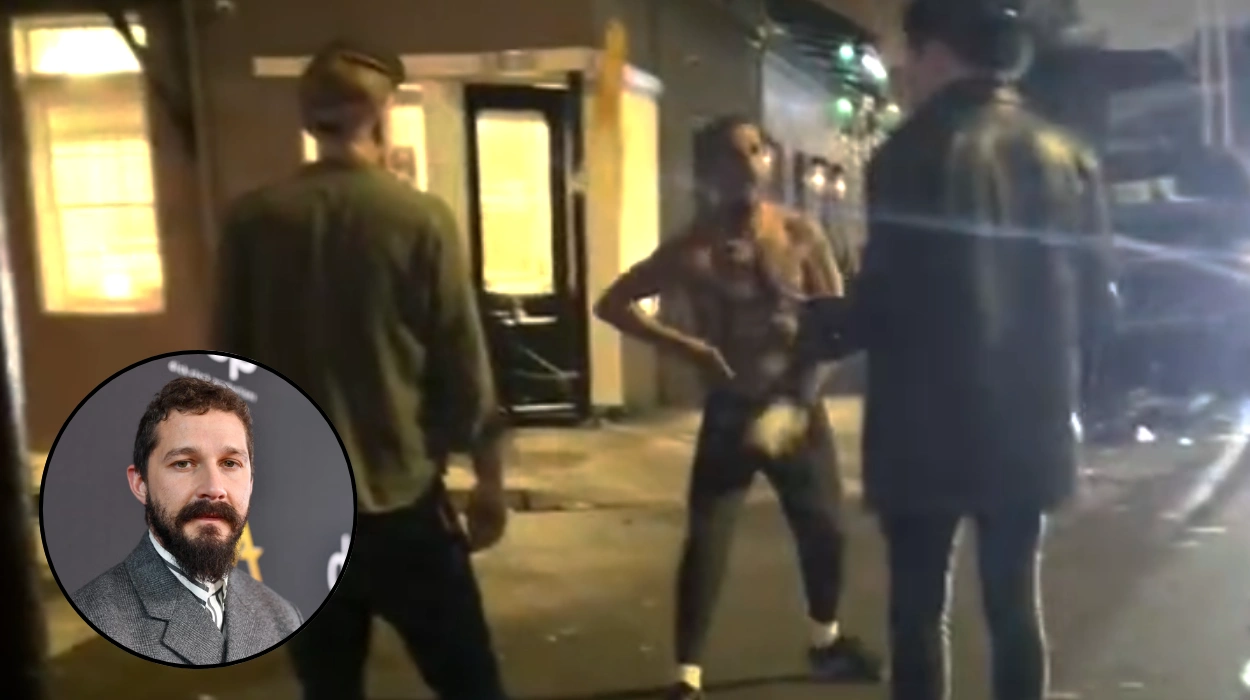
- Mobile phone video footage captured a shirtless LaBeouf forcefully shoving one individual to the ground and striking another directly in the face.
- Local entertainer Jeffrey Klein, known professionally as Jeffrey Damnit, identified himself as one of the primary victims targeted by the actor.
- Official police reports and eyewitness testimony reveal that LaBeouf directed severe homophobic slurs at patrons and staff before being physically restrained.
- The court sentenced the 39-year-old Transformers star to two years of active probation alongside mandatory alcohol rehabilitation, anger management, and sensitivity training.
- Defense counsel argued the incident was inflated due to LaBeouf’s celebrity status, asserting that the brawl amounted to nothing more than a minor barroom tussle.
- This conviction adds to a long series of legal infractions for the actor, including previous arrests in New York, Georgia, and California, alongside ongoing civil litigation.
New Orleans (Britain Today News) June 3, 2026 – Hollywood actor Shia LaBeouf has officially pleaded guilty to three misdemeanor counts of simple battery following his arrest after a violent physical altercation outside a local tavern during the annual Mardi Gras festivities. Appearing before a judge in the Orleans Parish Criminal District Court, the 39-year-old film star resolved the criminal case that emerged from a chaotic, alcohol-fueled brawl that took place in the early hours of the morning in the historic Marigny neighborhood. The court ordered the actor to serve two years of supervised probation and mandated immediate enrollment in comprehensive rehabilitation programs.
- Key Points
- What Happened During The New Orleans Mardi Gras Altercation?
- Who Is Jeffrey Damnit And How Was He Involved?
- What Slurs Did Shia LaBeouf Use During The Fight?
- How Did Bystanders And Police Subdue The Actor?
- What Arguments Did Shia LaBeouf’s Defense Attorney Present?
- Why Was Shia LaBeouf Arrested A Second Time In New Orleans?
- What Is Shia LaBeouf’s General History Of Legal Troubles?
- What Major Civil Lawsuits Still Focus On Shia LaBeouf?
- How Does This Conviction Impact His Entertainment Career?
- What Public Health Support Services Are Available For Substance Abuse?
The criminal prosecution followed an intense investigation by the New Orleans Police Department into an incident that occurred at approximately 12:45 am outside the Royal Street Inn & R Bar. Sworn statements submitted to the court indicated that an intoxicated and shirtless LaBeouf became highly aggressive inside the premises, prompting bar staff to demand his departure. The situation escalated rapidly on the pavement outside when LaBeouf began striking patrons and employees. Cellphone recordings captured by bystanders showed the actor physically dominating multiple individuals, with one victim sustaining significant facial injuries, including a suspected dislocated nose.
As part of the negotiated plea agreement, LaBeouf must complete strict judicial requirements to avoid active carceral time. In addition to the multi-year probationary period, the court ordered the actor to complete intensive substance abuse treatment, formal anger management classes, and specialised sensitivity training. The sensitivity training component was specifically requested by prosecutors following verified allegations from victims and law enforcement officials that the actor repeatedly shouted highly offensive anti-gay slurs throughout the physical assault and during his subsequent processing by emergency services.
What Happened During The New Orleans Mardi Gras Altercation?
The legal resolution brings an end to the intense public scrutiny surrounding the events of 17 February, which took place during the height of the traditional Fat Tuesday revelry. According to the initial police incident reports compiled by responding officers, the confrontation began inside the R Bar, a popular establishment located just outside the French Quarter. Law enforcement documentation reveals that LaBeouf had been drinking heavily throughout the night and his behaviour grew increasingly erratic, provocative, and hostile toward other customers as the evening progressed.
According to the official investigation notes, the bar manager attempted to defuse the situation by physically escorting LaBeouf out of the building after he began insulting people. Rather than leaving the area, the actor turned on the establishment’s leadership and surrounding patrons. Outside on Royal Street, the conflict turned physical. Witnesses described the actor stripping off his shirt and challenging bystanders to physical combat, creating an unsafe environment on a night when the surrounding streets were crowded with holiday celebrants.
Bystanders quickly pulled out mobile devices to record the unfolding chaos. The circulating video evidence depicts a highly animated, shirtless LaBeouf aggressively engaging with a group of men. In the footage, the actor can be seen using his body weight to shove one man violently onto the hard pavement before turning his attention to another individual. The video documents LaBeouf delivering a swift, closed-fist punch directly to the second man’s face, an action that police documents later noted caused immediate swelling and severe nasal trauma.
Who Is Jeffrey Damnit And How Was He Involved?
A central figure in the prosecution’s case was Jeffrey Klein, a prominent local New Orleans entertainer who performs under the stage name Jeffrey Damnit. Klein was identified by name in the initial police report as one of the primary victims of LaBeouf’s unprovoked physical aggression. Klein, who was visiting the area and actively participating in the festive nightlife, was present at the R Bar when LaBeouf’s behavior deteriorated, and he ultimately found himself directly in the line of fire.
In detailed public statements provided to the media following the incident, Klein described the terrifying nature of the encounter and the sheer unpredictability of the actor’s actions. Klein noted that he had been wearing cosmetic makeup, including mascara, eyeshadow, and lipstick, as part of his holiday attire, which he believes made him a specific target for the actor’s rage. Klein explained that LaBeouf initially blindsided him inside the establishment before the violence moved out into the public street.
Klein stated that:
“He hit me, he connected a few times with punches, he pushed me a few times. LaBeouf just got nuts trying to start fights and telling me and others that he would beat us up.”
Klein further explained that the actor had initiated the contact by aggressively shoving him from behind while inside the bar, setting off a chain of events that culminated in a chaotic street brawl.
What Slurs Did Shia LaBeouf Use During The Fight?
Beyond the physical injuries inflicted on the victims, the case gained widespread notoriety due to the highly offensive language LaBeouf utilized during the altercation. According to sworn court documents and police files, the actor used his platform and physical presence to hurl deep-seated homophobic slurs at the individuals he was attacking. Victims reported that the verbal assault was continuous and appeared directly tied to their physical presentation during the Mardi Gras events.
The preliminary police report noted that LaBeouf repeatedly called Klein and another victim, a 34-year-old man named Reed, highly derogatory anti-gay slurs during the physical encounter. The report explicitly highlighted that the actor’s verbal tirade did not stop when he was subdued by the crowd, nor did it cease when professional emergency personnel arrived at the scene to provide medical evaluations.
Furthermore, Klein provided cellphone footage that documented the actor’s behavior while he was inside an emergency vehicle. As reported by Ramon Antonio Vargas of The Guardian, the captured video showed LaBeouf being examined by first responders in the back of a vehicle, where he looked directly at the camera, glared at Klein, and distinctly mouthed a homophobic slur. The official police report verified that the actor continued to use this language throughout his transport and formal booking process at the local precinct.
How Did Bystanders And Police Subdue The Actor?
The physical altercation outside the Royal Street Inn & R Bar only ceased when a group of resilient bystanders took direct action to prevent LaBeouf from inflicting further physical harm on the public. According to the compiled New Orleans police files, several patrons noticed that the actor was entirely out of control and refused to leave the vicinity despite multiple pleas from bar employees and victims who explicitly stated they had no desire to engage in a physical fight.
Realizing that the actor posed an immediate threat, Klein and several other men moved in to physically restrain him. The group managed to wrestle the shirtless actor to the ground, using their collective weight to pin his arms and torso to the pavement. Witnesses stated that LaBeouf fought back wildly against the restraint, continuing to shout threats and insults at those holding him down until flashing police cruisers arrived at the Marigny location.
When New Orleans police officers arrived at the scene around 12:45 am, they found LaBeouf pinned to the ground by the public. Officers immediately took custody of the actor, who was heavily intoxicated and uncooperative. Due to minor abrasions sustained during the scuffle and his extreme state of inebriation, police initially transported LaBeouf to a local medical facility for a formal evaluation. Once doctors officially discharged him, he was driven to the Orleans Parish Prison and booked on multiple counts of simple battery.
What Arguments Did Shia LaBeouf’s Defense Attorney Present?
Throughout the legal proceedings, LaBeouf’s defense team, led by prominent New Orleans defense attorney Sarah Chervinsky, sought to downplay the severity of the charges. The defense consistently maintained that the entire incident had been blown out of proportion by both the media and the local authorities due to LaBeouf’s high-profile status as a global movie star. Chervinsky argued that the confrontation was typical of the rowdy behavior often seen during Mardi Gras.
During an early pivotal court hearing in late February, Chervinsky addressed the court directly regarding the nature of the arrest and the environment in which it occurred. Chervinsky told the presiding judge:
“Frankly, being drunk on Mardi Gras is not a crime.”
The defense attorney used this framing to argue against the imposition of excessively harsh bail conditions and restrictive travel bans on her client.
Following the formal guilty plea on Wednesday, Chervinsky issued an updated statement to clarify her client’s position and express his desire to put the legal matter behind him. Chervinsky stated that the thorough investigation established that the actor’s arrest stemmed from:
“Nothing more than a minor bar tussle.”
She explicitly denied that her client’s actions during the early morning hours were driven by any form of deep-seated bias or hate, despite the documented homophobic language contained within the state’s evidence.
Why Was Shia LaBeouf Arrested A Second Time In New Orleans?
One of the most unusual developments in the criminal case occurred in late February, when a secondary arrest warrant was officially issued for LaBeouf while he was already out on bail. The issuance of the new warrant created significant confusion among the public and the media, leading to intense speculation regarding whether the actor had been involved in an entirely separate criminal incident while visiting Louisiana.
However, court records soon clarified that the secondary arrest was directly tied back to the initial Mardi Gras brawl at the R Bar. Investigators reviewing the case file and interviewing witnesses determined that a third individual had been struck by LaBeouf during the February 17 melee. This third victim had filed a formal complaint with the police department, prompting prosecutors to secure an additional independent misdemeanor warrant for simple battery.
When LaBeouf and his legal counsel became aware that New Orleans police had issued a new arrest warrant, the actor chose to voluntarily surrender himself to the Orleans Parish jail to face processing. Commenting on the double incarceration, Chervinsky expressed deep frustration with the system. Chervinsky stated that:
“No regular person would be required to post over $100,000 in bonds, and be jailed two separate times for one misdemeanor incident. Just as he does not deserve preferential treatment, Mr. LaBeouf also does not deserve to be treated more harshly by the police and courts just because he is a public figure.”
What Is Shia LaBeouf’s General History Of Legal Troubles?
The guilty plea in New Orleans is far from an isolated incident in the turbulent life of Shia LaBeouf. Over the last decade, the actor has accumulated a extensive criminal record spanning multiple states, with many of his arrests sharing common themes of heavy alcohol consumption, public outbursts, and unprovoked physical aggression against members of the public or law enforcement officers.
In 2017, LaBeouf drew national headlines when he was arrested in New York City on suspicion of misdemeanor assault. The incident occurred during a prolonged, politically charged art livestream project he was hosting outside a museum, where he became involved in a physical altercation with a passerby. Later that same year, while on location in Savannah, Georgia, filming the independent movie The Peanut Butter Falcon, LaBeouf was arrested again by local authorities.
The Georgia arrest involved charges of public drunkenness, disorderly conduct, and obstruction of justice. Dashcam footage from that specific arrest showed the actor unleashing a racially charged, profanity-laced tirade against the booking officers, an incident for which he later issued a public apology. He was ultimately sentenced to probation and ordered to undergo anger management. Furthermore, in 2020, Los Angeles prosecutors filed misdemeanor charges of battery and petty theft against the actor following a physical confrontation with a man named Tyler Murphy.
Explore More about Entertainment:
Marvel Coffee Brand Revealed by Russo Brothers at SXSW London Event
Dea Lawrence Brings ‘Power of Women’ to London—and Says There’s Never Been a Better Moment for British Entertainment
What Major Civil Lawsuits Still Focus On Shia LaBeouf?
In addition to his recurring entanglements with criminal prosecutors, LaBeouf has faced severe professional and financial jeopardy through high-stakes civil litigation in the American court system. The most prominent of these civil matters involves a highly publicized lawsuit filed against him by his former romantic partner, the acclaimed English singer and actor FKA Twigs, whose legal name is Tahliah Barnett.
Barnett filed the civil action in late 2020, accusing LaBeouf of relentless physical, emotional, and psychological abuse during their year-long relationship. The lawsuit detailed horrifying allegations, including claims that the actor knowingly infected her with a sexual health condition, locked her inside rooms, and explicitly threatened to crash a speeding vehicle unless she professed her love for him. The legal battle raged in the courts for years, causing immense damage to LaBeouf’s career.
The civil case, which was scheduled to go to trial multiple times. According to official court filings and media reports, the protracted legal battle finally reached a quiet resolution when both parties agreed to a formal settlement. The settlement concluded the specific civil dispute, allowing both individuals to avoid a public trial, though the allegations continue to shadow the actor’s public profile.
How Does This Conviction Impact His Entertainment Career?
Shia LaBeouf’s transition from a beloved Hollywood child star to a deeply controversial figure has been one of the most stark transformations in modern entertainment history. He first achieved widespread critical acclaim and commercial popularity as a youth starring in the hit Disney Channel television series Even Stevens. His natural charisma and acting ability quickly propelled him into big-budget adult roles.
By the mid-2000s, LaBeouf had established himself as one of Hollywood’s most bankable leading men, anchoring director Michael Bay’s multi-billion-dollar Transformers cinematic franchise and starring alongside Harrison Ford in Steven Spielberg’s 2008 adventure blockbuster Indiana Jones and the Crystal Skull. However, his mounting legal crises, unpredictable public performance art pieces, and reputational damage eventually alienated major Hollywood film studios, forcing him out of mainstream studio productions.
In recent years, LaBeouf has attempted to reinvent himself by focusing almost exclusively on independent films, experimental art, and deep character pieces. He also made public statements regarding his conversion to Catholicism after embedding with Franciscan friars to prepare for a film role. Following his guilty plea in the New Orleans case, his legal team indicated that he hopes to transition back to creative endeavors. His defense attorney noted that the actor is now focused on his family and looks forward to working on new creative projects free from legal distractions.
What Public Health Support Services Are Available For Substance Abuse?
The judge’s strict mandate requiring Shia LaBeouf to enroll in alcohol rehabilitation highlights a broader societal focus on addressing the underlying issues of substance dependency that frequently fuel public disorder and violent crime. Legal professionals and public health experts consistently emphasize that criminal sentencing involving mandatory treatment yields significantly better long-term rehabilitation outcomes than pure incarceration for non-violent misdemeanor offenses.
In the United States, individuals struggling with chronic alcohol addiction, anger management issues, or substance-induced behavioral crises are encouraged to seek help through established national resources. Organizations such as the Substance Abuse and Mental Health Services Administration (SAMHSA) provide free, confidential, and comprehensive support networks for individuals and families facing addiction.
| Organization / Resource | Service Provided | Accessibility |
| SAMHSA National Helpline | Confidential treatment referral and information | 24/7 / Free of Charge |
| Alcoholics Anonymous (AA) | Peer-led support groups and recovery programs | International Chapters |
| National Council on Alcoholism | Public advocacy, education, and local resources | Nationwide Network |
Medical experts note that early intervention, structured therapy, and dedicated support systems are vital components in successfully breaking the cycle of addiction and preventing future legal escalations.