Key Points
- Police this week arrested 15 individuals in a series of operations against rackets of drug traffickers in Greater Manchester.
- Ten suspects, aged between 20 and 56, were arrested by Greater Manchester Police (GMP) when it carried out 12 warrants as part of Operation Adela on Wednesday 19 August 2026.
- Detectives say the gang shipped between 200kg of Class A drugs to Plymouth, Glasgow, Gloucester, Swansea and London, which could be worth £ 15 million.
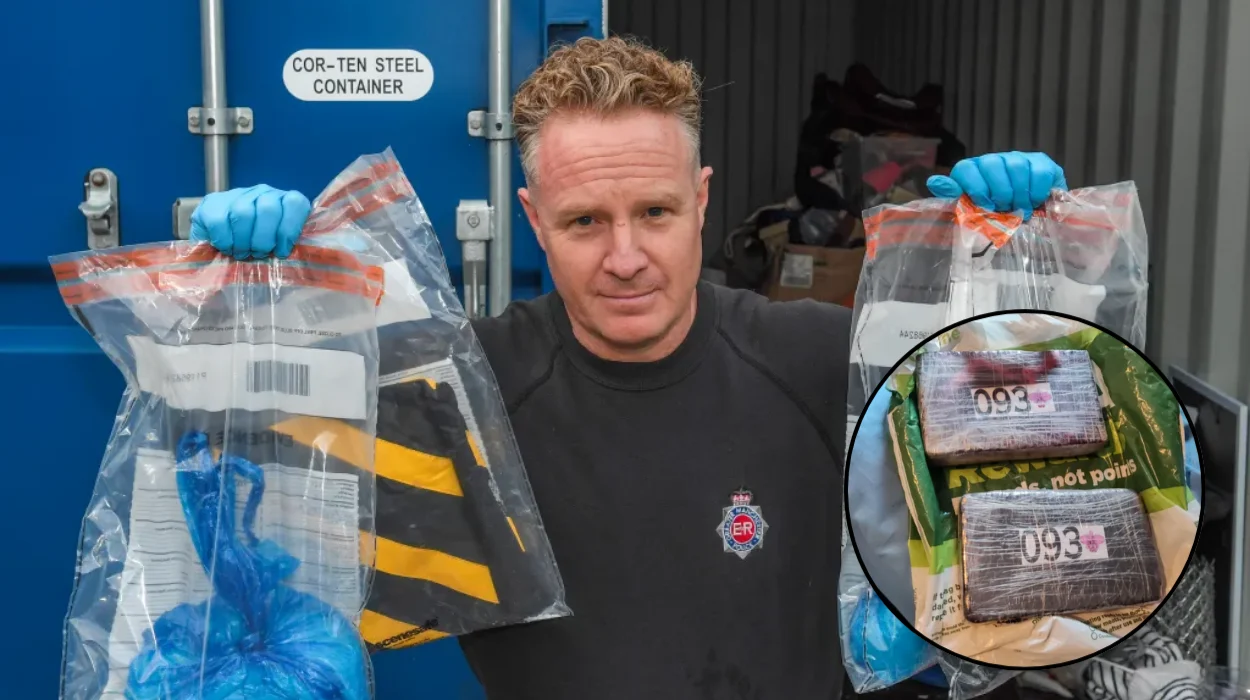
- During the broader investigation, 36kg of drugs were recovered, which included cocaine, heroin, ketamine, cannabis and other class C drugs.
- In a storage unit near a primary school, four kilograms of cocaine were discovered among some children’s clothing and toys.
- A cash-counting machine and £2,000 in £50 notes were also found in a safe inside the same storage unit.
- Five men and one woman have been charged with conspiracy to supply Class A drugs; another man charged with possession with intent to supply; and another man charged with conspiracy to launder money and to be a member of an organised crime group.
- On Thursday 20 August 2026, six men were arrested as part of another, separate, operation dubbed Operation Thundercrest, which took place after raids on four flats in Swinton, Salford.
- Salford Police have suspected that it could be a drugs ring involving so-called “cuckooing” and modern slavery, and that the homes of vulnerable residents have been bullied by drug dealers.
- There have been no charges yet in connection with the raids, which occurred in council-run temporary housing for homeless people in Salford.
- Nationally, cocaine seizures are up 13 per cent from a year ago, heroin seizures are up 33 per cent and crack seizures are up 106 per cent.
- Greater Manchester Police state that the investigation is ongoing and that more people are likely to be arrested.
Manchester (Britain Today News) August 22, 2026 — Fifteen people have been arrested across Greater Manchester this week after police dismantled two separate drug-trafficking operations, one of which is suspected of funnelling up to £ 15 million worth of Class A drugs across England, Scotland and Wales. Greater Manchester Police (GMP) confirmed that officers executed 12 warrants at dawn on Wednesday as part of Operation Adela, arresting nine people aged between 20 and 56, before a follow-up operation on Thursday, codenamed Operation Thundercrest, saw a further six men detained in Salford. Detectives say both crackdowns form part of the force’s ongoing campaign against organised crime groups supplying heroin, cocaine, crack cocaine and ketamine to communities across the North West and beyond.
- Key Points
- What happened in the Greater Manchester drugs raids?
- How many people were arrested and what have they been charged with?
- What is Operation Adela and how big was the alleged £15m drugs ring?
- Where were the drugs and cash hidden?
- What happened during the Operation Thundercrest raids in Salford?
- What is “cuckooing” and why are officers concerned about modern slavery?
- What have Greater Manchester Police said about the crackdown?
- How do these seizures compare with the UK’s wider drugs problem?
- What is it like to live with addiction, according to those affected?
- What happens next in the investigation?
What happened in the Greater Manchester drugs raids?
Greater Manchester Police said the operations were carried out in tightly coordinated early-morning strikes, with officers forcing entry to a series of residential addresses shortly after 6 am. Warrants were executed simultaneously at multiple locations to prevent suspects from communicating with one another or destroying evidence. GMP said the two operations, though run separately, both targeted networks it believes have been supplying Class A drugs into communities across Greater Manchester and further afield for a sustained period.
How many people were arrested and what have they been charged with?
Nine people — eight men and one woman — were arrested on Wednesday during Operation Adela on suspicion of conspiracy to supply Class A drugs. GMP subsequently confirmed that five men and one woman have been charged with conspiracy to supply Class A drugs, namely cocaine and heroin. A further man was charged with possession with intent to supply Class A drugs, while another was charged with conspiracy to launder money and participating in the activities of an organised crime group. A day later, six men were arrested in the separate Salford operation on suspicion of offences including possession with intent to supply, possession of an offensive weapon and burglary, though GMP has confirmed no charges have yet been brought in relation to those arrests.
What is Operation Adela and how big was the alleged £15m drugs ring?
Operation Adela is understood to have run for close to a year as detectives built a case against what GMP describes as a well-established organised crime group. Investigators believe the network was responsible for trafficking approximately 200kg of drugs, with an estimated street value of £ 15 million, couriering supplies to Plymouth, Glasgow, Gloucester, Swansea and London as well as addresses across Greater Manchester. One suspected courier working for the network was arrested at the weekend before the main raids, having allegedly been intercepted with two kilograms of cocaine en route to Gloucester — the same quantity later recovered from one of the residential addresses raided on Wednesday.
Where were the drugs and cash hidden?
Among the addresses searched was a house where officers recovered two kilograms of cocaine, according to GMP. Detectives also searched a storage unit a short distance from a primary school, where four further kilograms of cocaine were found concealed among children’s clothing and toys. Inside a safe in the same unit, officers discovered £2,000 in bundles of £50 notes alongside a cash-counting machine. Police dog Bruce was deployed to search the remainder of the shipping container to ensure no further drugs remained hidden.
What happened during the Operation Thundercrest raids in Salford?
At 5.40 am on Thursday, officers targeted four flats in a newly built block in Swinton, Salford, sawing through at least one front door before forcing entry. GMP said one suspect attempted to escape through a first-floor bathroom window before being detained by waiting officers outside. The force said the four flats were suspected of being linked to a single drugs line flooding the area with crack cocaine and heroin. Notably, each flat came fitted with an electric vehicle charging point, yet officers found not a single car parked outside any of the addresses.
What is “cuckooing” and why are officers concerned about modern slavery?
Cuckooing describes a tactic in which drug dealers use violence, manipulation or the supply of drugs to take control of a vulnerable person’s home, often without that person’s full consent, to use the property to store or deal drugs. GMP said it was investigating possible cuckooing and modern slavery in connection with the Salford operation, noting that the flats raided were council-run temporary accommodation intended for people who had previously been homeless. Officers also linked the suspected drugs line to wider criminality in the area, including the theft of motor vehicles and burglaries, with property believed to be linked to a recent local burglary recovered during the Thursday raids.
What have Greater Manchester Police said about the crackdown?
Detective Sergeant Richard McCorry, who led Operation Adela, said the network dismantled on Wednesday was
“a very well-embedded and sophisticated organised crime group”
that had likely been operating for several years. He confirmed detectives were planning further arrests to apprehend remaining members of the gang still believed to be in Manchester, and warned that the investigation was far from over. Detective Sergeant Rob O’Brien, also involved in the Adela investigation, pointed to the cash and counting equipment recovered from the storage unit, observing that
“Drugs is a cash-rich business”
those involved typically want to move money and product quickly rather than linger at a property. Neighbourhood Chief Inspector Lee Gridley, who oversees GMP’s Salford district, said the force was still assessing the scale of criminality connected to the men arrested on Thursday, noting that drug supply
“bring[s] with them all kinds of criminality”.
including vehicle theft and burglary. He said GMP took the exploitation of vulnerable people seriously and would examine the Salford case closely, adding that a drugs line had been disrupted and that further such lines remained under investigation.
How do these seizures compare with the UK’s wider drugs problem?
The Manchester arrests come against a backdrop of rising drug seizures nationally. Government figures show cocaine seizures across the UK are up 13 per cent year-on-year, with powder cocaine accounting for roughly 60 per cent of all drugs seized. Between March 2024 and March 2025, police and Border Force officers recovered more than 18 tonnes of cocaine nationwide. Heroin seizures have also increased sharply, up 33 per cent since 2024, with 589kg recovered compared with 441kg in the previous comparable period. Crack cocaine seizures have more than doubled, rising 106 per cent from 40kg to 81kg year-on-year, according to the same figures.
Explore More about Crime:
Feltham Murder Probe: Woman’s Remains Found in London Woodland
Greater Manchester Police Raid Bolton Drug Gang Hideouts
What is it like to live with addiction, according to those affected?
Behind the statistics, campaigners say organised crime groups frequently exploit addiction to coerce vulnerable people into criminality. Tony, a lived-experience ambassador for the addiction recovery charity Forward Trust, described the grip that addiction had once held over his own life, saying:
“I was consumed by my addiction.”
He explained that the common perception of drugs such as crack cocaine as enjoyable was mistaken, describing a punishing cycle in which users would take crack to get high, then heroin to come down, without ever feeling settled or content. Tony said he had first used drugs at the age of 11 and progressed to heroin and crack by 15, spending years cycling between addiction, homelessness and prison, during which he lost custody of his children and damaged most of his personal relationships. He estimated he had spent around 15 years of his life in prison as a direct consequence of his addiction, and said he was now approaching five years drug-free.
What happens next in the investigation?
Greater Manchester Police have indicated that both operations remain live, with detectives continuing to build evidence and identify further suspects.
Will more arrests follow?
GMP confirmed that Operation Adela’s investigation team is planning additional arrests to bring in remaining members of the network believed to still be operating in Manchester. Detective Sergeant McCorry directly addressed those individuals, warning that officers were “watching” and that the operation was not yet concluded. Chief Inspector Gridley issued a similar message in relation to the Salford investigation, telling those involved in organised crime locally that GMP would continue monitoring the area and pursuing anyone found to be exploiting vulnerable residents or supplying drugs in the community.