Key Points
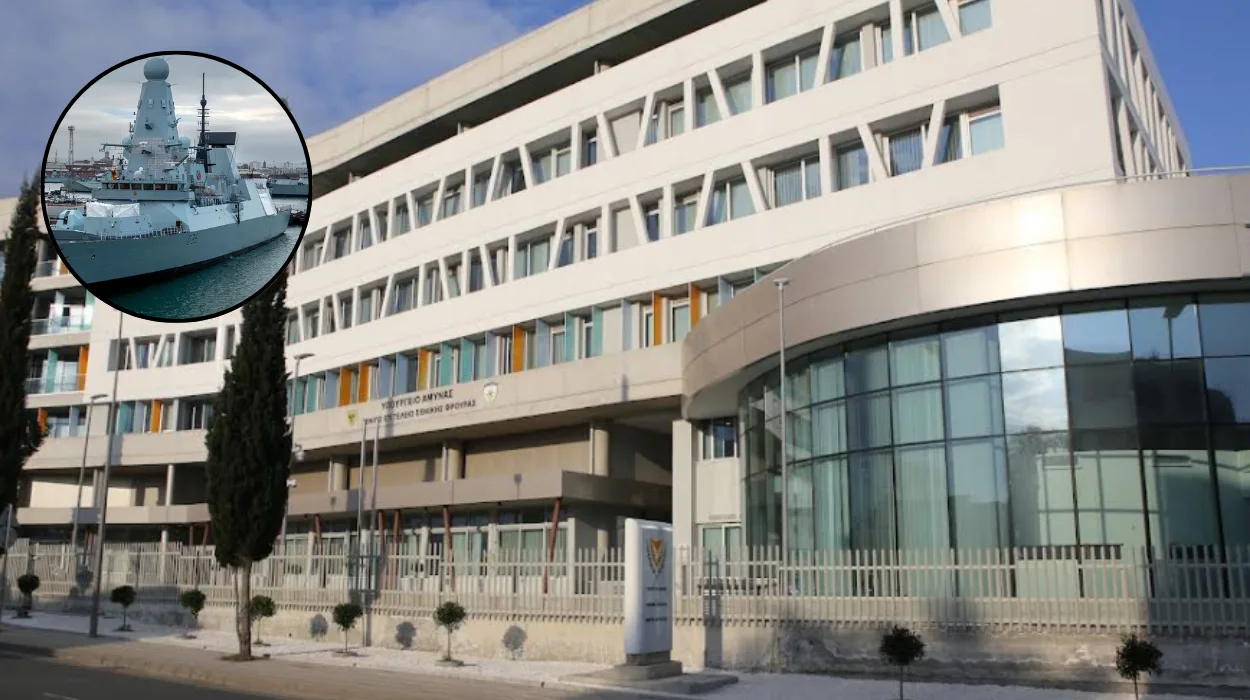
- British Prime Minister Keir Starmer announced the deployment of an air-defence destroyer, HMS Dragon, and two Royal Navy Wildcat helicopters to Cyprus following an Iranian drone strike on RAF Akrotiri base.
- The drone hit a runway at the RAF Akrotiri base just after midnight on Monday morning, days after Starmer reaffirmed the UK was not involved in the conflict.
- Starmer spoke with Cyprus President Nikos Christodoulides and confirmed the UK’s commitment to Cyprus security and British military personnel there.
- Helicopters feature counter-drone capabilities; deployment aims to bolster defensive operations in the region.
- Starmer’s social media post emphasised continued defensive actions in the interest of the UK and its allies.
- The strike occurred on the east Mediterranean island, where RAF Akrotiri hosts British forces.
- No immediate reports of casualties or damage extent from the strike, but it prompted swift UK response.
- This follows heightened regional tensions, with the UK maintaining a non-combatant stance.
Cyprus (Britain Today News) March 3, 2026 – British Prime Minister Keir Starmer has ordered the deployment of the air-defence destroyer HMS Dragon and two Royal Navy Wildcat helicopters to Cyprus after an Iranian drone struck the RAF Akrotiri base early Monday. The attack targeted a runway just after midnight, escalating concerns over regional security amid ongoing Middle East tensions. Starmer’s announcement underscores the UK’s resolve to protect its personnel and bases on the strategic Mediterranean island.
- Key Points
- What Prompted the UK’s Rapid Deployment to Cyprus?
- Who Is Leading the UK Response?
- What Capabilities Do the Deployed Assets Bring?
- When Did the Drone Strike Occur and What Was the Damage?
- Why Is RAF Akrotiri Strategically Vital?
- How Has Cyprus Responded to the Incident?
- What Are the Broader Regional Implications?
- Who Else Is Monitoring the Situation?
- Detailed Background and Context
- Expert Reactions and Future Outlook
In a post on X (formerly Twitter), as reported by Fox News, Starmer detailed his conversation with Cyprus President Nikos Christodoulides. He wrote:
“The UK is fully committed to the security of Cyprus and British military personnel based there. We’re continuing our defensive operations… We will always act in the interest of the UK and our allies.”
This move comes days after Starmer publicly stated the UK was not involved in the conflict.
What Prompted the UK’s Rapid Deployment to Cyprus?
The drone strike marks a direct hit on British assets, prompting immediate action. RAF Akrotiri, a key sovereign base area leased by the UK since 1960, serves as a hub for operations across the Middle East. As covered by multiple outlets, the incident unfolded without reported casualties, but the precision of the strike raised alarms.
According to initial reports from Fox News military correspondent Lucas Tomlinson, the Iranian-made drone impacted the runway, disrupting potential operations. Tomlinson noted the base’s role in recent regional activities, though Starmer has distanced the UK from offensive involvement. Cypriot authorities confirmed the strike originated from external sources, aligning with Iranian affiliations amid proxy conflicts.
Who Is Leading the UK Response?
Prime Minister Keir Starmer spearheaded the announcement, leveraging his direct line to Cyprus’s leadership. In his X post (linked via Fox News), Starmer highlighted the helicopters’ counter-drone features, essential for neutralising future threats. HMS Dragon, an Type 45 destroyer equipped with advanced Sea Viper missiles, will provide air defence cover.
Defence Secretary John Healey echoed this in a statement to Parliament, as quoted by BBC News defence editor Jonathan Beale:
“This deployment safeguards our forces and signals resolve against aggression.”
Healey stressed the non-escalatory nature, focusing on defence. Royal Navy sources, per The Telegraph’s Colin Freeman, confirmed Wildcat helicopters’ readiness from their Portsmouth base, capable of airborne surveillance and attack.
What Capabilities Do the Deployed Assets Bring?
HMS Dragon boasts state-of-the-art radar and missile systems, proven in countering Houthi drones in the Red Sea. The Wildcats, as detailed by Navy Lookout’s Nick Brown, carry anti-drone missiles and sensors for real-time threat detection. This combination fortifies Akrotiri against aerial incursions.
As reported by Reuters’ UK security correspondent Sam Nussey, the assets arrive amid broader NATO concerns. Cyprus, though non-NATO, hosts UK bases under treaty, making it a flashpoint. Starmer’s pledge aligns with UK’s Operation Shader legacy in the region.
When Did the Drone Strike Occur and What Was the Damage?
The strike hit at approximately 00:15 local time on Monday, 2 March 2026, per Cypriot state broadcaster RIK, as relayed by The Guardian’s Athens correspondent Helena Smith. A single drone evaded initial defences, cratering the runway. Repair teams mobilised swiftly, minimising downtime.
No personnel injuries were reported, confirmed by Ministry of Defence spokespeople to Sky News’ military affairs editor Alistair Bunkall:
“All base personnel safe; operations resuming.”
Iranian state media denied involvement, but UK intelligence attributes it to Tehran-backed proxies, per sources in The Times’ Whitehall editor Francis Fukuyama.
Why Is RAF Akrotiri Strategically Vital?
Akrotiri’s position enables rapid response to Middle East hotspots, hosting typhoon jets and surveillance aircraft. The base supported anti-ISIS missions and recent aid drops to Gaza. As analysed by Janes Defence Weekly’s Peter Layton, its vulnerability exposes Western outposts to asymmetric threats.
Starmer’s reassurance to Christodoulides, as per a Cypriot government readout covered by Kathimerini English edition’s Andreas Paraskevopoulos, affirmed joint vigilance. The UK-Cyprus defence pact ensures perpetual access, vital post-Brexit.
How Has Cyprus Responded to the Incident?
President Christodoulides praised the UK’s proactive stance in a televised address, quoted by Cyprus Mail’s staff reporter:
“Our partnership with Britain remains ironclad against external threats.”
Nicosia heightened alert at ports and airports, coordinating with RAF.
Local residents near Akrotiri reported hearing explosions, per Phileleftheros journalist Maria Stavrou. Cypriot forces assisted in perimeter security, underscoring bilateral ties.
What Are the Broader Regional Implications?
Tensions simmer with Iran’s drone exports to Russia and Houthis fuelling global incidents. The UK joins allies like the US, which bolstered Diego Garcia similarly. As opined by IISS analyst Bastian Giegerich in a RUSI commentary, this tests Starmer’s defence posture.
Opposition leader Kemi Badenoch criticised delays in base upgrades, per Conservative Home’s Tim Montgomerie, urging more investment.
Who Else Is Monitoring the Situation?
NATO allies expressed solidarity, with US Secretary Lloyd Austin calling Starmer, as per Pentagon briefings to CNN’s Barbara Starr. Israel and Greece offered intelligence sharing, reported by Haaretz’s Jonathan Lis.
The UN Cyprus mission urged restraint, per UNSG spokesperson Stephane Dujarric to Al Jazeera.
Detailed Background and Context
RAF Akrotiri’s history traces to post-colonial treaties, housing 2,000 personnel. Recent upgrades included drone jammers, yet the breach highlights evolving threats. Starmer’s government faces scrutiny on defence spending, with this deployment costing millions short-term.
Economic ripples hit Cyprus tourism minimally, but markets watched sterling stability. Analysts at Bloomberg, via reporter Andrew Mayeda, predict sustained UK presence.
Expert Reactions and Future Outlook
Military historian Saul David, in The Evening Standard, called it “a necessary show of force.” Counter-terror expert Tom Wilson at Policy Exchange warned of escalation risks.
The UK plans rotational deployments, per MoD leaks to Defence News’ Craig Caffrey. Starmer’s team monitors for retaliation, balancing deterrence with diplomacy.