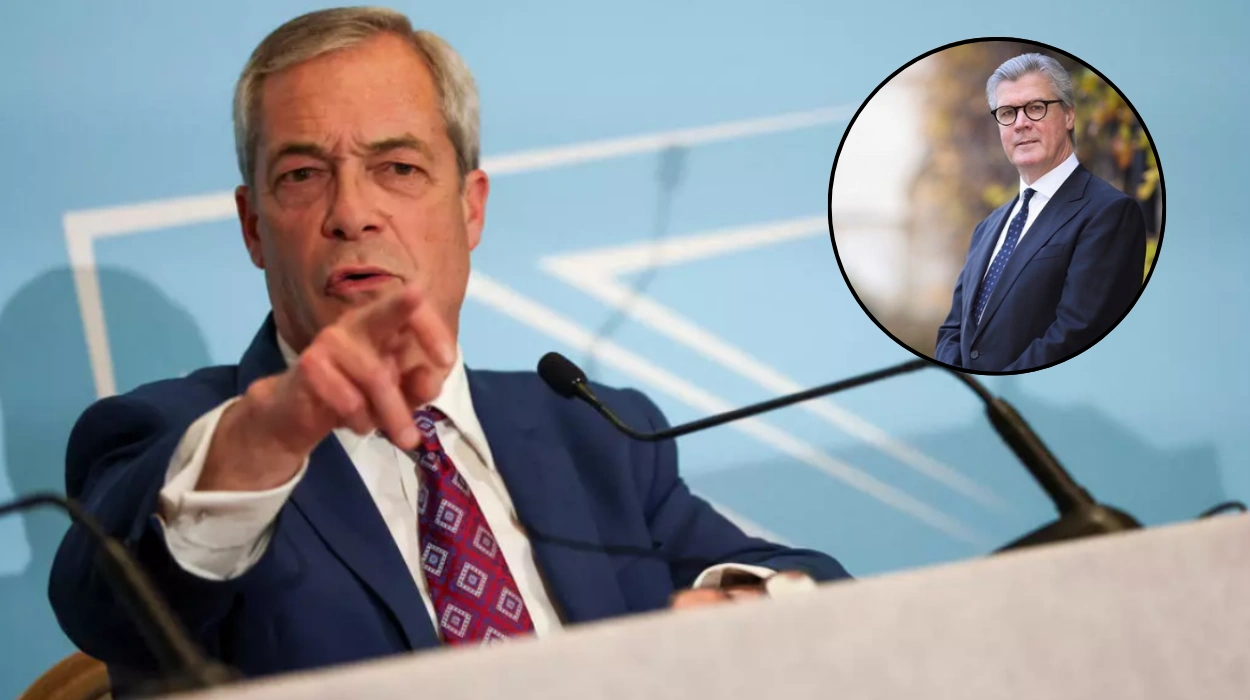
Key Points
- Nigel Farage has been accused of describing Scotland as a “department” during a row over the firing of Reform UK’s housing spokesman, Simon Dudley.
- Dudley was removed after saying the Grenfell Tower fire was a “tragedy” but that “everyone dies in the end”.
- Farage said Dudley’s comments were “deeply inappropriate” and confirmed he was “no longer there”.
- When pressed on whether Dudley could be expelled from the party, Farage said people could be expelled for saying things that were “inappropriate and wrong”.
- Farage said Reform was “not a one man band” and said he had “devolved power to Scotland, to Wales, to four big positions”.
- Scottish Green candidate Patrick Harvie criticised the remark, saying it showed contempt for people outside Farage’s “far-right circle”.
- SNP candidate Pauline Stafford said Scotland was “not a department” but a country.
- Farage has also previously argued that the Barnett Formula should be looked at again, saying it is “somewhat out of date”.
- He has said he now believes the Scottish Parliament is here to stay after previously wanting to scrap devolution.
Scotland (Britain Today News) April 3, 2026 – Nigel Farage has been accused of belittling Scotland after remarks made in the middle of a growing row over Reform UK’s response to offensive comments about the Grenfell Tower tragedy.
The Reform UK leader was asked about the firing of his housing spokesman, Simon Dudley, after Dudley sparked anger by describing the Grenfell fire as a “tragedy” while adding that “everyone dies in the end”. Farage said Dudley’s comments were “deeply inappropriate” and confirmed that he was “no longer there”, but the row widened when he was pressed on the scale of his authority inside Reform and the place of Scotland within the party’s structure.
As reported by the original coverage, Farage responded to questions by saying:
“I’m not the boss of everything anymore. It’s not a one man band. I’ve devolved power to Scotland, to Wales, to four big positions, and they’re running their departments.”
That wording triggered immediate criticism from opponents, who seized on the implication that Scotland had been reduced to a “department” rather than treated as a nation with its own political identity.
What happened over the Grenfell row?
The controversy began after Simon Dudley, who had been serving as Reform UK’s housing spokesman, was dismissed following backlash over comments he made about the Grenfell Tower fire. He described the disaster as a “tragedy”, but said that “everyone dies in the end”, prompting widespread anger and accusations that he had spoken in a callous and dehumanising way.
Farage was then asked whether the remarks had been offensive. He replied:
“Yes. He was appointed two weeks ago, he’s made these comments, he’s no longer there.”
In the same exchange, he was pushed on whether Dudley remained a member of the party, and he suggested people could be expelled for saying things that were “inappropriate and wrong”.
The response from Reform UK came after mounting criticism from campaigners and political opponents, with Grenfell-linked groups describing the comments as unacceptable and deeply hurtful. Reporting on the fallout noted that the fire claimed 72 lives in 2017 and remains one of the most sensitive and painful disasters in recent British political memory.
Why did Scotland become part of the argument?
The Scotland angle emerged when Farage tried to explain how Reform UK is now organised. He said he had devolved power to Scotland and Wales and to “four big positions”, which he said were effectively running their own departments. Critics interpreted that phrasing as evidence of disdain for Scotland, especially because the term “department” was used in a way that appeared to flatten Scotland’s constitutional status into an internal party unit.
That led to a sharp political reaction from Scottish opponents. Patrick Harvie, the Scottish Green candidate for Glasgow, said Farage’s description of Scotland as a “department” was “really no surprise” from what he called a British nationalist with contempt for people outside his own circle. He also linked the remark to a wider pattern of racism, homophobia, climate denial and pro-Putin statements from Reform candidates, arguing that many voters in Scotland were rejecting the
“hate, division, grievance and false promises”
associated with the party.
Pauline Stafford, the SNP candidate for Bathgate, said Farage had “let the cat out of the bag” and that he and his allies “couldn’t care less about Scotland”. She said:
“Scotland is not a ‘department’, it is a country”,
adding that only an SNP majority would help Scotland move towards independence.
What has Farage said before about Scotland?
Farage has previously made comments about Scotland’s funding and constitutional setup that have also drawn criticism. In 2025, he backed a rethink of the Barnett Formula, which determines Scotland’s public spending allocation from Westminster, saying it was “somewhat out of date” and should be looked at again.
He argued at the time that he would like to see a Scottish Government able to raise more of its own revenue and said a stronger Scottish economy, particularly one boosted by oil and gas, would be important. Farage has also previously wanted to scrap devolution, although more recent remarks suggest he now accepts that the Scottish Parliament is here to stay.
Those earlier comments matter because they provide context for why the latest “department” remark has been so politically sensitive. For critics, it fits a longer pattern of trying to diminish Scotland’s place in the UK’s constitutional debate, while for Reform supporters it may be framed as a reference to internal party organisation rather than national status.
How have opponents reacted?
Opposition figures in Scotland quickly used the episode to attack Reform UK’s credibility and tone. Harvie’s criticism focused on both the wording Farage used and the wider context of Dudley’s Grenfell remarks, arguing that Reform had repeatedly leaned on divisive politics. Stafford’s response was more direct, presenting the remark as proof that Farage and Reform did not value Scotland as a nation.
The line of attack is politically significant because Reform UK has been trying to build support in Scotland while also presenting itself as a challenger to the established parties. Remarks that appear dismissive of Scotland risk reinforcing one of the strongest objections from rivals: that Reform’s leadership sees Scotland through a centralised, Westminster-focused lens rather than as a distinct political community.
What does this mean for Reform UK?
The immediate damage is reputational. Farage was already trying to contain anger over Dudley’s Grenfell remarks, but the Scotland wording created a second headline and gave opponents an opening to argue that Reform is insensitive, careless and dismissive in how it speaks about national identity.
The episode also highlights the tension between Reform’s claims that it has devolved internal power and the party’s highly centralised public image around Farage himself. He said Reform is “not a one man band” and referred to devolved responsibilities in Scotland and Wales, but the fact that his language became the story suggests the party still remains heavily dependent on his personal style and judgments.
Why does the wording matter so much?
In Scottish politics, language is rarely neutral. A comment that may be intended as an organisational shorthand can quickly be interpreted as a constitutional slight, especially when it comes from a figure as polarising as Farage. That is why the word “department” has drawn so much attention: it can sound administrative in a party sense, but politically it can also sound belittling when applied to Scotland.
The row also comes at a time when Reform is trying to sharpen its message on devolution, public spending and national government structures. Farage’s past remarks about the Barnett Formula, alongside his more recent talk of devolving power inside the party, give opponents enough material to argue that Reform’s position on Scotland is inconsistent or opportunistic.
What happens next?
The key question now is whether Reform UK can move past the Grenfell controversy without further damaging its standing in Scotland. The party’s opponents will almost certainly continue to cite the “department” remark as evidence that Farage does not take Scotland seriously, while Reform may try to insist the wording was about internal party delegation rather than national status.
But with Grenfell still a raw and emotionally charged issue, and with Scottish rivals ready to weaponise any perceived slight, the row is unlikely to disappear quickly. Farage’s attempt to present Reform as a broad, devolved operation has instead handed critics a new line of attack, one that combines sensitivity over Grenfell with long-running arguments about how he views Scotland.