Key Points
- British Prime Minister Andy Burnham called on FIFA President Gianni Infantino to resign over a reported plan to sell stakes in the World Cup to private investors.
- Burnham described the proposal as “outrageous” during a visit to Sheffield.
- He said the fact the idea was even raised showed Infantino was “the wrong man to lead the organisation.”
- According to a report cited in the news, Infantino has held talks on selling stakes in the World Cup to private investors.
- The reported plan is linked to investors close to Donald Trump’s administration, according to the information provided.
- UEFA said it would boycott the World Cup over the proposal.
- CONCACAF and the Asian Football Confederation also rejected the idea.
- Carlos Cordeiro, one of Infantino’s senior advisers, resigned in protest.
- Cordeiro called the plan “a bad deal for football.”
- FIFA’s governance, transparency, and future direction are now under intense scrutiny.
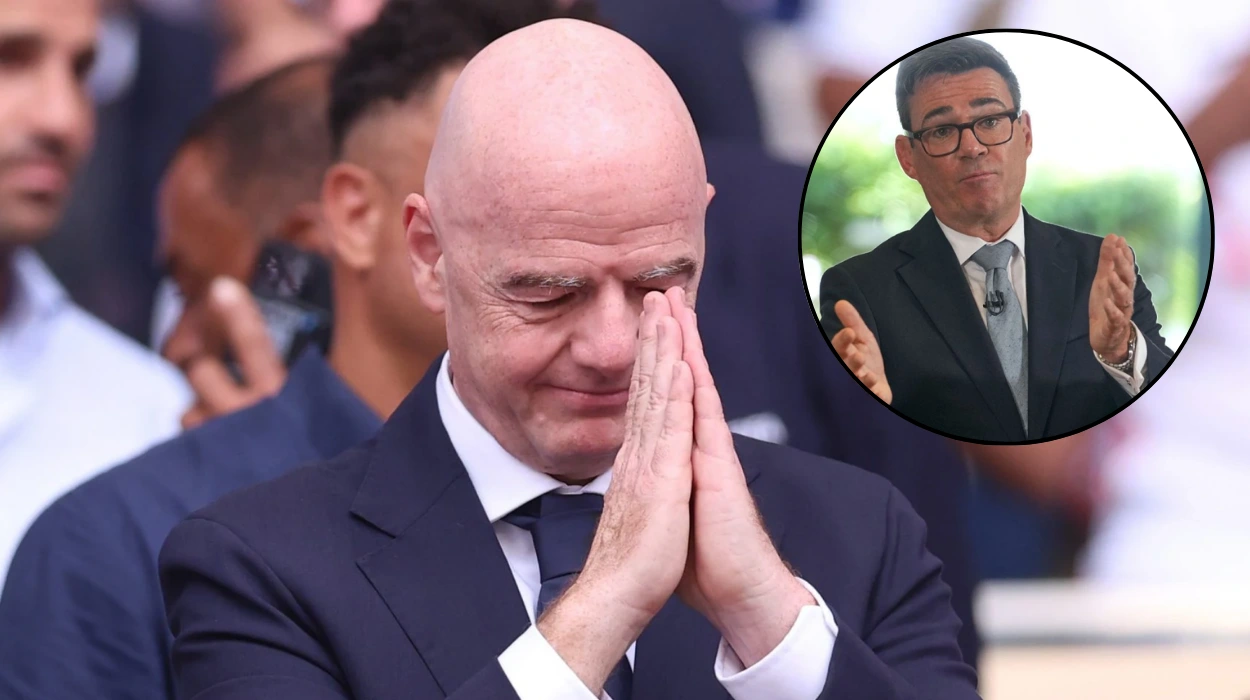
Sheffield (Britain Today News) July 31, 2026 – British Prime Minister Andy Burnham has called on FIFA President Gianni Infantino to resign after a reported plan to sell stakes in the World Cup to private investors triggered a major backlash across world football. Burnham, speaking during a visit to Sheffield, condemned the proposal as “outrageous” and said the fact it had reached the point of discussion was proof, in his view, that Infantino was not the right person to lead the organisation.
- Key Points
- What did Andy Burnham say about the proposal?
- Why is the World Cup stake sale causing concern?
- What exactly is FIFA being accused of planning?
- Why did Carlos Cordeiro resign?
- What did Carlos Cordeiro say in his resignation statement?
- What questions has the proposal raised?
- What does this mean for FIFA’s global support?
- Why is the proposal being seen as a leadership test?
- What are the risks for member associations?
- What happens next in FIFA?
- Why is the reaction so strong?
- What should readers watch for now?
What did Andy Burnham say about the proposal?
As reported in the news briefing, Burnham did not soften his criticism when asked about the reported investment plan.
“The idea that it could even be brought forward, in my view, shows that the FIFA (president) is the wrong man to lead the organisation,”
He said. He later reacted with surprise after being told Infantino was allegedly pressing ahead despite opposition, replying:
“Oh wow. Have they actually done that? Oh wow.”
Why is the World Cup stake sale causing concern?
The reported plan centres on the sale of stakes in the World Cup to private investors, a move that has raised alarm among football’s governing bodies. Critics argue that the sport’s biggest tournament should not be treated as a financial asset to be partially monetised through outside investment, especially when the long-term implications for governance and competitive balance remain unclear.
As reported by the source material, the issue has quickly become not just a business debate but a question of leadership, legitimacy and trust inside FIFA. The proposal has also triggered wider fears that football’s most valuable global competition could be shaped more by financial engineering than sporting priorities.
What exactly is FIFA being accused of planning?
According to the information provided, Infantino has held talks on selling stakes in the World Cup to private investors. The report says the discussions involved investors close to Donald Trump’s administration, adding a political dimension to an already controversial commercial idea.
The same material indicates that the move could have a “devastating” impact on football, with critics seeing it as a step that would expose the tournament to outside commercial pressure. The proposal is being framed by opponents as a fundamental shift in how the sports flagship event is financed and controlled.
Why did Carlos Cordeiro resign?
Carlos Cordeiro, one of Infantino’s senior advisers, resigned on Thursday over what he called “a bad deal for football.” His departure has intensified the pressure on FIFA because it came from within the president’s own circle rather than from outside critics alone.
Cordeiro’s resignation is significant because it signals that resistance to the proposal is not limited to rival confederations. It suggests internal unease about both the substance of the plan and the way it is being pushed through.
What did Carlos Cordeiro say in his resignation statement?
Cordeiro’s message was blunt.
“Let me be clear: I had no involvement in this proposal, and I oppose it unequivocally,”
He said. He added:
“It is a bad deal for FIFA’s Member Associations, a bad deal for football, and a bad deal for the long-term future of the game.”
He also challenged the logic of the plan, asking why FIFA would seek private money when it already has major financial resources.
“Football has been central to my life, and after more than 35 years in banking, I understand both the value of this asset and the consequences of giving part of it away,”
He said in the version of the statement cited in the news coverage.
What questions has the proposal raised?
Cordeiro’s remarks highlighted the central concerns around transparency, governance and value. He asked:
“Why this deal? Why now? What oversight exists? Who benefits? Was there a competitive process? What governance will be in place? What will investors ultimately gain, and at what cost to football?”
Those questions reflect the core unease surrounding the reported proposal. Critics are not only disputing whether the plan is wise; they are also questioning whether it has been properly explained, properly scrutinised, and properly justified to FIFA’s member associations.
How have football bodies reacted?
UEFA said Thursday it would boycott the World Cup over the proposal, an unusually hard-line response that shows how seriously European football leaders are treating the issue. The source material also says CONCACAF, which represents North and Central America and the Caribbean, rejected the idea.
The Asian Football Confederation also rejected the proposal. Together, these reactions show that opposition is not isolated to one region, but has spread across multiple football power bases.
What does this mean for FIFA’s global support?
The growing backlash places Infantino under direct pressure from several of football’s most influential stakeholders. When major confederations reject a proposal of this scale, the dispute becomes about more than finance; it becomes a test of FIFA’s authority and the president’s ability to maintain consensus.
The reported boycott threat from UEFA is especially serious because it raises the possibility of a fractured international football landscape. If large parts of the football world refuse to cooperate with FIFA over this issue, the fallout could extend well beyond boardroom politics.
Why is the proposal being seen as a leadership test?
Burnham’s demand for Infantino’s resignation turns the story into a leadership crisis as much as a governance dispute. His view, as quoted in the provided material, is that simply bringing forward such an idea demonstrates a failure of judgement at the top of the organisation.
That criticism has been reinforced by Cordeiro’s resignation. When a senior adviser leaves in protest while confederations line up against the same idea, the question becomes whether the FIFA president can still claim broad confidence within the sport.
How serious is the financial angle?
The source material says the reported proposal involves private investment in the World Cup and references outside investors close to Trump’s circle. For supporters of the plan, such a structure would likely be presented as a way to raise substantial capital and broaden FIFA’s commercial reach.
But opponents see the same move very differently. They argue that the World Cup is not a conventional asset to be partially sold off, and that short-term money should not outweigh football’s long-term interests.
What are the risks for member associations?
Cordeiro made member associations central to his criticism, saying the plan was “a bad deal for FIFA’s Member Associations.” That is important because FIFA’s national associations are the formal owners of the organisation’s direction and are meant to benefit from its resources.
If those associations feel pressured into approving a controversial plan without full clarity, the legitimacy of the process could be damaged. The concern, according to the quoted remarks, is that the decision is being rushed and that associations may be asked to vote without enough time to assess the consequences.
How does this affect the future of football?
At the heart of the dispute is a broader argument about what football is for. Cordeiro said FIFA’s responsibility is “not to maximise commercial returns at any cost” but “to protect and strengthen football for future generations.”
That line captures the wider anxiety around the proposal. Critics fear that once a permanent stake is sold in the World Cup, future decisions may be shaped less by sporting values and more by investor expectations.
What happens next in FIFA?
The report says FIFA is moving ahead with the plan despite the opposition, and that member associations face pressure to decide. The consultation process remains central to the next stage, but the level of resistance suggests that the road ahead will be politically difficult.
The question now is whether FIFA can persuade enough stakeholders that the proposal is workable and fair. If not, the backlash could force a rethink, further weaken confidence in the president, or deepen the split between FIFA and some of its most powerful confederations.
Could this become a wider football crisis?
Yes. The conflict now stretches across leadership, money, governance and trust, which makes it much bigger than a routine policy disagreement. When a sitting FIFA president faces open calls to resign, a high-profile adviser quits, and multiple confederations reject the plan, the issue begins to resemble a full-scale institutional crisis.
For now, the story is defined by mounting pressure on Infantino and growing scepticism about the proposal. What happens next will depend on whether FIFA can defend the plan convincingly, or whether the opposition forces it to retreat.
Explore More about Sports:
Max Verstappen Regrets Red Bull F1 Exits Amid Staff Exodus
St Mirren’s McLeish Faces Disciplinary Hearing Over Referee Remarks
Why is the reaction so strong?
The reaction is strong because the World Cup is football’s most valuable and symbolic event. Any suggestion that a private stake could be sold touches nerves about ownership, access and the commercial direction of the sport.
That is why Burnham’s language, the confederations’ rejection, and Cordeiro’s resignation all matter. Together, they show that the proposal has crossed from being an internal financial idea into a public controversy about football’s future.
What should readers watch for now?
The key things to watch are whether FIFA formally advances the proposal, how member associations respond, and whether opposition hardens into a sustained bloc. Another important question is whether more senior figures inside football will follow Cordeiro and speak out publicly.
The next phase will likely determine whether this remains a fierce but contained dispute or develops into a lasting leadership challenge for Infantino.