Key Points
- Five men have pleaded guilty to smuggling cocaine worth £34m into Eastbourne Marina aboard a fishing vessel.
- The defendants entered their guilty pleas at Hove Crown Court on 20 July.
- The Crown Prosecution Service (CPS) confirmed all five admitted conspiring to fraudulently evade a prohibition on the importation of a Class A drug.
- The men have been named as Alan John Colquhoun, 49, William Donohoe, 38, Ian Smith, 49, Jacob Cronin, 31, and Daniel Ruffell, 35.
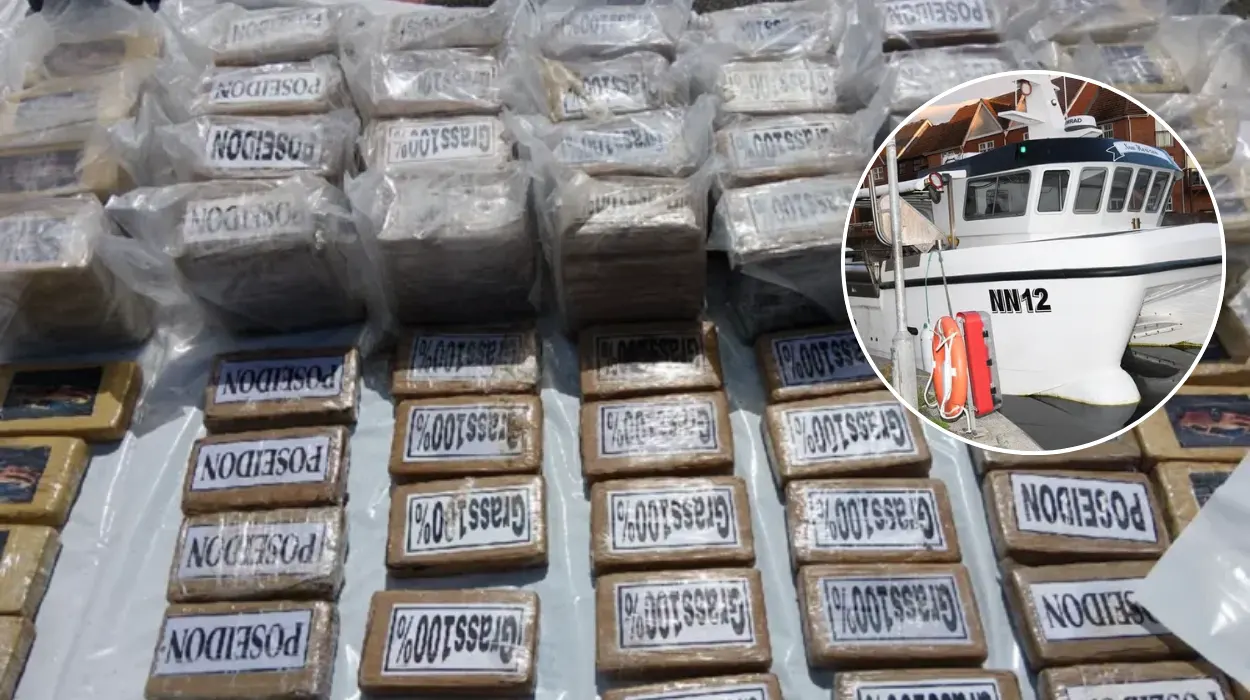
- The drugs were transported on the New Horizon fishing vessel after being collected in the English Channel.
- The National Crime Agency (NCA) recovered 425kg of cocaine at Sovereign Harbour on Monday, 8 June.
- All five defendants have been remanded into custody.
- Sentencing has been scheduled for 23 October.
- The operation involved a multi-agency effort including the Joint Maritime Security Centre, Sussex Police and Police Scotland.
- NCA Senior Investigating Officer Carl Barrass said the seizure represents a significant blow to the organised crime group involved.
Sussex (Britain Today News) July 21, 2026 – Five men have admitted their involvement in one of the largest cocaine smuggling operations to be intercepted along the south coast of England this year, after appearing before Hove Crown Court to enter guilty pleas over the importation of Class A drugs worth tens of millions of pounds.
- Key Points
- Who Are the Men Who Pleaded Guilty to the Cocaine Smuggling Charges?
- What Charge Did the Defendants Plead Guilty To?
- When and Where Did the Court Hearing Take Place?
- When Will the Five Men Be Sentenced?
- How Was the Cocaine Smuggled into Eastbourne Marina?
- When and Where Was the Cocaine Recovered by Investigators?
- How Much Cocaine Was Seized and What Is Its Estimated Value?
- Which Agencies Were Involved in the Investigation?
- What Has the National Crime Agency Said About the Seizure?
- What Happens Next in the Case?
- Why Does This Case Matter for UK Drug Enforcement Efforts?
Who Are the Men Who Pleaded Guilty to the Cocaine Smuggling Charges?
The five defendants have been formally identified as Alan John Colquhoun, 49, of Oberon, Alloa, in Clackmannanshire; William Donohoe, 38, of Sycamore Drive, Craigneuk, Airdrie; Ian Smith, 49, of New College Close, Eastbourne; Jacob Cronin, 31, of Elgar Way, Eastbourne; and Daniel Ruffell, 35, of Humber Way, Slough, Berkshire. The geographical spread of the defendants’ addresses, ranging from Scotland to Berkshire and Sussex, points to the wide-reaching network allegedly involved in orchestrating the importation.
All five men appeared at Hove Crown Court on 20 July, where they each entered guilty pleas to a single charge relating to the conspiracy. The Crown Prosecution Service confirmed that all five defendants admitted conspiring to fraudulently evade a prohibition on the importation of a Class A drug, an offence that carries the possibility of a lengthy custodial sentence given the scale of the operation.
What Charge Did the Defendants Plead Guilty To?
Each of the five men pleaded guilty to conspiracy to fraudulently evade a prohibition on the importation of a Class A drug. This is a serious offence under UK law, reflecting not merely the possession or supply of illegal narcotics but the coordinated planning and logistical execution required to bring such a substantial quantity of cocaine into the country undetected.
The Crown Prosecution Service confirmed the guilty pleas in a statement following the Hove Crown Court hearing, noting that the case would now proceed to sentencing. The scale of the seizure, involving hundreds of kilograms of cocaine, places this case among the more significant drug importation prosecutions to pass through the English court system in recent months.
When and Where Did the Court Hearing Take Place?
The hearing took place at Hove Crown Court on 20 July, where all five men entered their pleas before the court. Hove Crown Court, which regularly deals with serious criminal matters across the Sussex region, has become the venue for what is expected to be a closely watched sentencing hearing later this year.
Following the hearing, all five defendants were remanded into custody, meaning they will remain detained pending their sentencing rather than being granted bail. This reflects both the seriousness of the offence to which they pleaded guilty and the substantial flight risk that such significant criminal cases can present to the courts.
When Will the Five Men Be Sentenced?
According to the Crown Prosecution Service, sentencing for all five defendants has been scheduled for 23 October. This date will mark the conclusion of a case that began with a covert drugs investigation earlier in the summer and has since progressed rapidly through the guilty pleas entered at Hove Crown Court.
The sentencing hearing in October is expected to determine the custodial terms each man will face, with the courts likely to take into account the substantial quantity and value of the cocaine involved, as well as each individual’s specific role within the smuggling conspiracy.
How Was the Cocaine Smuggled into Eastbourne Marina?
The National Crime Agency confirmed that the cocaine, worth more than £30m, was brought into Eastbourne Marina aboard the New Horizon fishing vessel. According to the agency, the drugs had been collected in the English Channel before the vessel made its way into the marina, suggesting a mid-sea transfer operation typical of large-scale international drug trafficking routes.
The use of a fishing vessel to conceal the importation of narcotics is a method that has been employed in previous smuggling operations along the UK coastline, as such boats can appear to be engaged in legitimate maritime activity while concealing significant quantities of contraband within their hulls or cargo holds.
When and Where Was the Cocaine Recovered by Investigators?
The drugs were recovered during a targeted investigation at Sovereign Harbour, within Eastbourne Marina, on Monday, 8 June. This date marks the pivotal moment in the operation when law enforcement officers intercepted the vessel and uncovered the substantial haul of narcotics that had been transported across the Channel.
Sovereign Harbour, a well-known marina complex on the East Sussex coast, has not previously been associated with drug trafficking operations of this scale, making the discovery a significant moment for local and national law enforcement agencies monitoring illicit maritime activity in the region.
How Much Cocaine Was Seized and What Is Its Estimated Value?
A spokesperson for the National Crime Agency confirmed that officers seized 425kg of the Class A drug during the operation. The agency stated that this quantity of cocaine carries a street value of £34m, underlining the scale of the smuggling attempt and the significant financial interests at stake for the organised crime group allegedly behind the importation.
The sheer volume of narcotics involved, 425kg, represents one of the more substantial single seizures recorded at a UK marina in recent years, reflecting both the ambition of the smuggling operation and the scale of resources that must have been deployed by those responsible for orchestrating it.
Which Agencies Were Involved in the Investigation?
The National Crime Agency led the investigation but confirmed it was assisted by several other bodies, including the Joint Maritime Security Centre, Sussex Police and Police Scotland. This multi-agency cooperation illustrates the cross-border and cross-jurisdictional nature of the investigation, particularly given that two of the five defendants reside in Scotland.
The involvement of the Joint Maritime Security Centre, which specialises in monitoring and coordinating responses to threats within UK waters, points to the maritime intelligence-gathering that likely underpinned the successful interception of the New Horizon vessel before or shortly after its arrival at Sovereign Harbour.
What Has the National Crime Agency Said About the Seizure?
Carl Barrass, the NCA’s senior investigating officer overseeing the case, issued a statement addressing the significance of the operation’s outcome. He said:
“The recovery of this quantity of cocaine represents a significant loss to the organised crime group behind its importation and will impact its ability to continue operating.”
His comments reflect a broader strategy employed by UK law enforcement agencies, which increasingly frame individual drug seizures not merely as isolated victories but as part of a sustained campaign to disrupt the financial and operational capacity of organised crime networks operating across national and international boundaries.
Explore More about Crime:
UK Court Jails Young Hackers Over London Transport Cyberattack
South London Burglars Jailed for Stealing £1m Weight-Loss Drugs
What Happens Next in the Case?
With all five men now remanded into custody following their guilty pleas, attention turns to the sentencing hearing scheduled for 23 October at Hove Crown Court. The court will need to consider the individual circumstances and roles of each defendant, Alan John Colquhoun, William Donohoe, Ian Smith, Jacob Cronin and Daniel Ruffell, in determining appropriate custodial sentences.
Given the scale of the seizure and the value of the drugs involved, the case is likely to attract continued scrutiny from both the media and the public as the October sentencing date approaches. The Crown Prosecution Service is expected to provide further updates on proceedings as the case moves towards its conclusion.
Why Does This Case Matter for UK Drug Enforcement Efforts?
This case highlights the ongoing challenges faced by UK law enforcement agencies in intercepting large-scale drug trafficking operations that exploit the country’s extensive coastline and maritime infrastructure. The use of fishing vessels and marina facilities such as Eastbourne’s Sovereign Harbour as points of entry for narcotics underscores the vulnerabilities that exist within Britain’s ports and harbours.
The successful collaboration between the National Crime Agency, the Joint Maritime Security Centre, Sussex Police and Police Scotland in this case may also serve as a template for future operations targeting similar smuggling routes, particularly those involving the English Channel as a transit point for drugs collected from vessels operating further out at sea.