Key Points
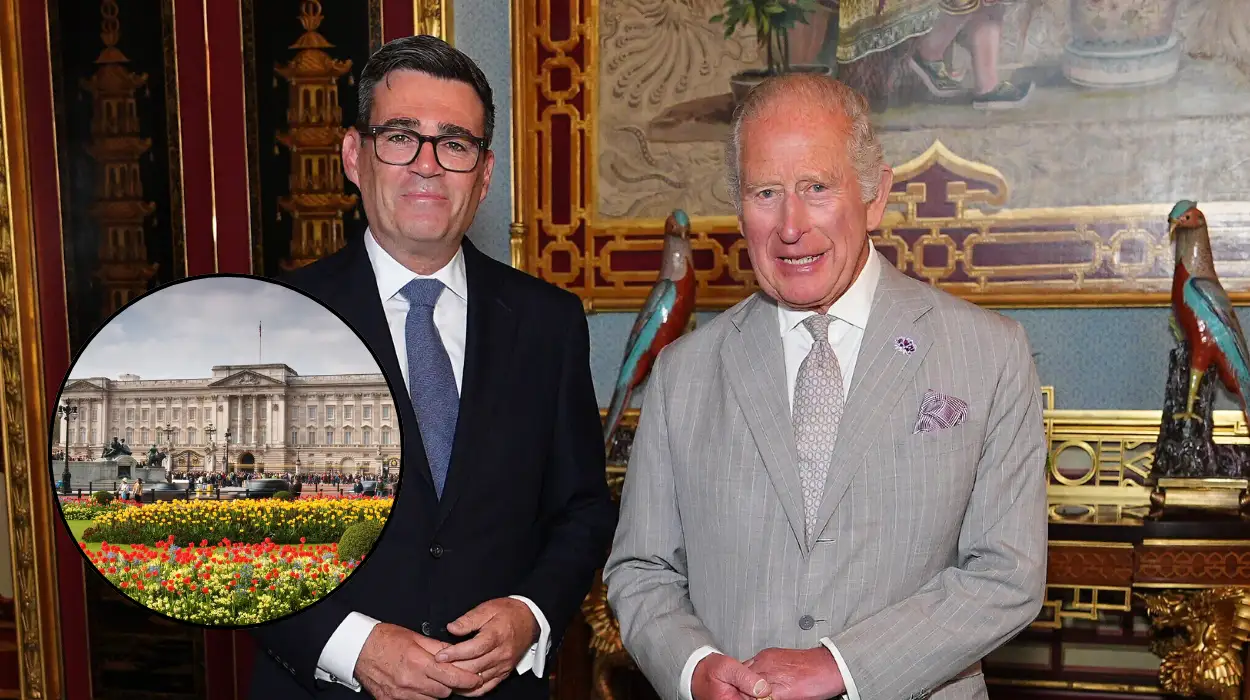
- Andy Burnham has been confirmed as the United Kingdom’s new prime minister after meeting King Charles III at Buckingham Palace.
- He becomes the UK’s seventh prime minister in a decade, succeeding Keir Starmer, who resigned last month.
- Burnham pledged to end Britain’s cycle of political instability and promised “the biggest changes” in four decades.
- He is expected to announce measures this week aimed at easing the cost-of-living crisis.
- A 10-year plan for the country is due to follow later in 2026.
- Burnham said Ukrainian President Volodymyr Zelenskyy will be among the first foreign leaders he speaks to.
- He is also expected to hold an early call with US President Donald Trump.
- Shabana Mahmood is reported to be under consideration to replace Rachel Reeves as chancellor.
- Nigel Farage and his Reform UK party have questioned Burnham’s mandate for sweeping reform.
- Burnham, nicknamed the “King of the North”, was previously mayor of Greater Manchester.
London (Britain Today News) July 20, 2026 – Andy Burnham has set out his vision for Britain after being confirmed as the country’s new prime minister, pledging to end the political instability that has defined the past decade of British governance.
- Key Points
- Who is Andy Burnham and how did he rise to become prime minister?
- What did Burnham say in his first speech as prime minister?
- Why did Keir Starmer resign as prime minister?
- What changes has Burnham promised for Britain?
- How does Burnham plan to tackle the cost-of-living crisis?
- What is Burnham’s approach to Ukraine and foreign policy?
- How is Burnham expected to handle relations with Donald Trump?
- Who might replace Rachel Reeves as chancellor?
- How has Nigel Farage and Reform UK responded to Burnham’s appointment?
- What challenges does Burnham face as Britain’s seventh prime minister in a decade?
Burnham’s appointment was confirmed on Monday after he travelled to Buckingham Palace to meet King Charles III, who formally invited him to form a government. In doing so, Burnham became the United Kingdom’s seventh prime minister in a decade, taking over from Keir Starmer, whose own tenure ended after roughly two years amid continued gains for populist political movements.
Speaking outside 10 Downing Street shortly after his appointment, Burnham told the country that Britain needed to demonstrate it could restore stability to its politics.
“We have not been good enough, and we need to be better,”
he said, addressing supporters and journalists gathered outside his new official residence.
Who is Andy Burnham and how did he rise to become prime minister?
Burnham is the Member of Parliament for Makerfield and previously served two terms as mayor of Greater Manchester, a role in which he built a reputation as a champion of working-class and northern English communities. That reputation earned him the nickname “King of the North” among supporters and commentators alike.
Educated at the University of Cambridge, where he studied English literature, Burnham has often spoken about the cultural gulf he experienced moving from the north of England to one of the country’s most prestigious universities. He is married to Marie-France van Heel, whom he met during his time at Cambridge.
Burnham returned to Westminster politics via a special parliamentary election earlier this year, a move widely seen as positioning him for a leadership bid. He was confirmed as leader of the Labour Party after Starmer’s resignation, running unopposed to take on the role.
What did Burnham say in his first speech as prime minister?
In his address to the nation, Burnham struck a notably different tone from his predecessors, choosing to speak without a lectern or teleprompter. He said he was “fed up” with the country’s revolving door of leadership and described the moment as an opportunity for “reflection and new resolution” in British politics.
“We will make this moment a circuit-breaker for Britain, bringing forward the biggest changes in the last 40 years. A new political model and a new economic model,”
Burnham declared.
He added that Britain needed to “show the world that we can regain our stability once again,” a message aimed both at domestic audiences weary of political turnover and at international observers watching the UK’s continued leadership churn since the 2016 referendum on European Union membership.
Why did Keir Starmer resign as prime minister?
Starmer’s departure came roughly two years after he led the Labour Party to a landslide general election victory, a result that many had expected to usher in a period of relative political calm. Instead, his government faced sustained pressure, including continued gains by populist and hard-right forces such as Reform UK.
On leaving office, Starmer described his time as prime minister as “the privilege of my life” and said Burnham had his “full support” going forward. Burnham did not directly reference Starmer’s tenure in his own remarks, choosing instead to focus on the changes he intends to make.
What changes has Burnham promised for Britain?
Burnham has promised what he has described as the most significant political and economic overhaul in four decades. He has been critical of the trend, dating back several decades, of centralising political power while privatising economic power, and has suggested his government will look to reverse aspects of that approach.
He has also promised to give Britons “some breathing space” in the near term, indicating that specific measures to address everyday financial pressures would be announced within days of taking office.
How does Burnham plan to tackle the cost-of-living crisis?
Among the most immediate commitments made by the new prime minister is a pledge to unveil measures this week specifically targeted at the cost-of-living crisis that has weighed on household budgets across the country. Details of these measures have not yet been made public, but Burnham indicated they would come rapidly, underscoring the urgency he wants to attach to his early days in office.
Beyond the short-term measures, Burnham said a more comprehensive 10-year plan for the country would be published later in 2026, suggesting his government intends to pair immediate relief with longer-term structural reform.
What has Burnham said about social care and public services?
Burnham has previously signalled that fixing social care policy will be among the “big things” his government intends to address, alongside broader questions about the state of Britain’s public services and the National Health Service.
What is Burnham’s approach to Ukraine and foreign policy?
On foreign affairs, Burnham confirmed that Ukrainian President Volodymyr Zelenskyy would be among the first foreign leaders he speaks with after taking office, aiming to reassure Kyiv that British backing will continue uninterrupted.
“I will be with him [Zelenskyy] 100 percent, as Keir Starmer has been, and Keir has done quite an incredible job in not just backing Ukraine but being there in a personal way,”
Burnham said.
“And I will be absolutely there for him in the same way.”
The comments suggest continuity in the UK’s support for Ukraine despite the change in Downing Street, with Burnham keen to stress that his premiership will not mark a shift away from the position adopted under Starmer.
How is Burnham expected to handle relations with Donald Trump?
Burnham is also expected to hold an early call with US President Donald Trump, continuing the tradition of new British prime ministers quickly establishing contact with Washington. The nature of that relationship will be closely watched, given Burnham’s past public criticism of Trump, including remarks he made in his capacity as Greater Manchester mayor questioning whether a visit by the US president would align with the values of the region.
Trump, for his part, has previously commented on plans reportedly associated with Burnham’s incoming government, including proposals to fast-track oil and gas exploration in the North Sea, suggesting the two leaders may find common ground on energy policy even amid broader political differences.
Who might replace Rachel Reeves as chancellor?
One of the most closely watched decisions facing Burnham is the make-up of his senior cabinet, expected to be announced shortly. Particular attention is focused on who will take over as chancellor from Rachel Reeves, who held the role under Starmer.
Home Secretary Shabana Mahmood has emerged as a name under consideration for the role, a choice that would be seen by financial markets as a signal of continuity in fiscal policy, given her association with a more centrist approach compared with other senior Labour figures such as Ed Miliband.
Explore More about Politics:
David Lammy Exits Government as Andy Burnham Becomes UK Prime Minister
Rachel Reeves exits UK government after Burnham becomes prime minister
How has Nigel Farage and Reform UK responded to Burnham’s appointment?
Nigel Farage, leader of the hard-right Reform UK party, was quick to challenge the scale of the mandate Burnham claims for his proposed reforms. Farage argued that Burnham could not be permitted to pursue what he called the “biggest changes in politics for 40 years” without securing a fresh mandate from voters.
The Labour Party has positioned Burnham as its strongest available candidate to counter the continued rise of Reform UK, which has been topping opinion polls in recent months. Burnham’s working-class credentials and northern political base are widely seen within Labour as assets in that contest.
What challenges does Burnham face as Britain’s seventh prime minister in a decade?
Burnham inherits a country grappling with a persistent cost-of-living crisis, strain on the National Health Service, and unresolved debates over immigration and Britain’s relationship with Europe. His premiership marks the seventh change of UK prime minister in just over ten years, and the fifth in the past four years alone, underlining the scale of the political turbulence he has pledged to bring to an end.
Analysts have also pointed to the reaction of financial markets as an early test of confidence in the new government. Mike Bell, head of market strategy at RBC BlueBay Asset Management, said investors would be reassured by the prospect of Shabana Mahmood taking the Treasury brief rather than a more left-leaning figure, though he cautioned that market sentiment could shift depending on the substance of Burnham’s forthcoming announcements.
Under the UK’s parliamentary system, Burnham becomes prime minister without a general election having been called, following the internal Labour Party process that saw him elected unopposed as party leader after Starmer’s resignation. While some previous prime ministers who took office this way have gone on to call early elections to seek their own mandate, there is no constitutional requirement for Burnham to do so, and he has not yet indicated his intentions on that front.
For now, Burnham’s immediate priorities remain clear: stabilising the government, delivering rapid relief on living costs, and reassuring both domestic and international audiences that his premiership will mark a genuine break from the pattern of short-lived leadership that has characterised British politics since 2016.