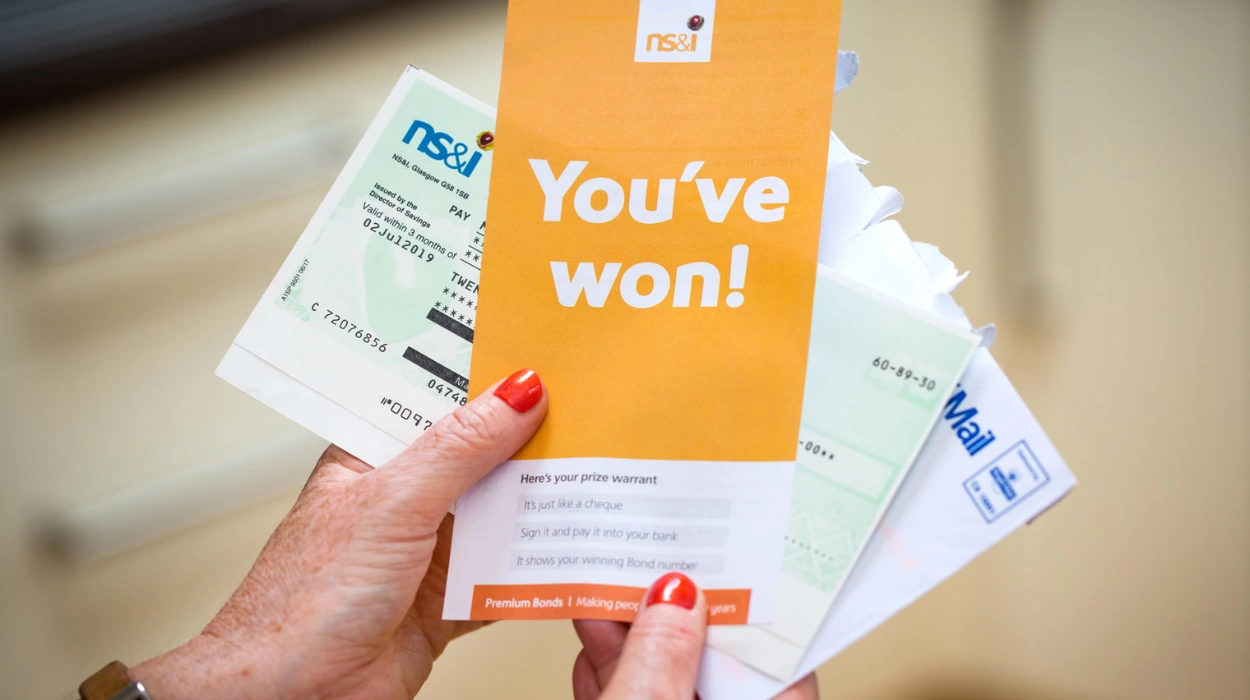
Premium Bonds UK are a government-backed savings product from National Savings and Investments (NS&I) that replaces guaranteed interest with a monthly prize draw. They suit savers who want capital security, tax-free prizes, and a chance-based return rather than predictable growth.
- What are Premium Bonds UK?
- How do Premium Bonds work?
- What are the main benefits?
- What are the risks?
- What are the prize chances?
- How do prize fund rates affect returns?
- Who should use Premium Bonds?
- How do Premium Bonds compare with savings accounts?
- What is the history of Premium Bonds?
- How should savers use Premium Bonds wisely?
- Why do Premium Bonds still matter?
What are Premium Bonds UK?
Premium Bonds UK are savings certificates issued by NS&I. Each £1 bond enters monthly prize draws instead of earning interest, and every prize winner receives tax-free cash prizes ranging from £25 to £1 million.
Premium Bonds were introduced in 1956 by the UK government as a national savings product designed to encourage household saving. NS&I, the government-backed savings provider, now manages the scheme and uses a random number system called ERNIE to select winners each month.
Each bond costs £1, the minimum purchase is £25, and the maximum holding is £50,000 per person. Anyone aged 16 or over with a UK bank account can buy them, and parents or guardians can buy them for children.
How do Premium Bonds work?
Premium Bonds work by converting your money into numbered bond entries for a monthly prize draw. The prize fund is shared across winners, so your return depends on how many bonds you hold and whether your numbers are selected.
NS&I issues prizes every month, and each bond number has an equal chance of being drawn. The smallest prize is £25, and the largest prize is £1 million. The scheme does not pay interest in the normal way, and no investor receives a guaranteed annual return.
The prize fund rate sets the overall level of prizes distributed across all holders. In the sources available here, this rate is described as 3.3% in April 2026, while earlier references show 3.7% and 3.8% in prior periods. The changing figure matters because it reflects the average amount paid out across all bonds, not a promised personal return.
What are the main benefits?
The main benefits are capital security, tax-free prizes, government backing, and the chance to win large sums without losing the original deposit. Premium Bonds also avoid income tax and capital gains tax on winnings.
The first benefit is safety. NS&I is backed by the UK government, so Premium Bonds are treated as a very low-risk savings product. The full amount invested remains available for withdrawal, subject to the bond rules and processing time.
The second benefit is tax treatment. Prize winnings are free from UK Income Tax and Capital Gains Tax, so holders keep the full prize amount. That feature matters for savers who have used their Personal Savings Allowance or who hold taxable cash balances.
The third benefit is the jackpot structure. A holder can win £25, £50, £100, or much larger prizes, with the top prize at £1 million. For some savers, the possibility of a large tax-free win is more attractive than a fixed rate of interest.
What are the risks?
The main risks are uncertain returns, inflation loss, no guaranteed income, and the chance of winning nothing in a month or for long periods. Premium Bonds protect capital, but they do not protect purchasing power.
Premium Bonds do not pay a fixed return. A saver can hold the maximum £50,000 and still receive no prize in a given month. The return therefore depends on chance rather than compounding interest.
Inflation is the biggest economic risk. If prize wins do not keep pace with rising prices, the real value of the money falls over time. That matters for long-term savers who need dependable growth rather than occasional prizes.
There is also concentration risk in the holding limit. Because the maximum holding is £50,000, anyone with more cash to place in low-risk savings needs other accounts or assets to store the remainder. That makes Premium Bonds only one part of a broader cash strategy.
What are the prize chances?
The published odds of any £1 bond winning any prize are about 1 in 23,000 to 1 in 24,000, depending on the current draw period cited. That means most individual bonds do not win in a single month.
NS&I’s odds change when the prize fund changes. One 2026 source states the odds rise to 1 in 23,000 per £1 bond, while earlier material reports 1 in 24,000. Both figures describe the same basic reality: winnings are rare on an individual bond basis.
The distribution of prizes also matters. Prize tiers start at £25, then rise through larger amounts, with only a tiny number of top prizes issued. Most winners receive small prizes rather than headline-making sums.
A simple way to understand the odds is this: more bonds increase the number of entries, not the certainty of winning. A saver with £100 has 100 entries, while a saver with £50,000 has 50,000 entries, but every draw remains random.
How do prize fund rates affect returns?
The prize fund rate sets the average payout across all bonds, but it does not guarantee any single saver that rate. It describes the system-wide average, not a personal annual yield.
One source states an annual prize fund rate of 3.3% in 2026, while earlier references cite 3.7% and 3.8% in prior periods. The key point is structural: the rate is a statistical average distributed through prizes, not an interest rate credited to every holder.
This distinction creates an important planning issue. A saver can experience returns above the average through luck or below the average through unlucky draws. Over time, the long-run average matters more than the result of any single month.
Because prizes are paid in cash and not as compound interest, the experience differs from a savings account. In a bank account, interest grows predictably; in Premium Bonds, the outcome depends on draw frequency and prize size.
Who should use Premium Bonds?
Premium Bonds suit savers who want government-backed capital security, tax-free prize potential, and easy access to cash without needing a guaranteed return. They suit less well for people who need steady income or predictable growth.
They fit emergency funds for some households because the money remains accessible and the principal stays intact. They also appeal to higher-rate taxpayers who have used tax-free allowances and want a no-tax prize format.
They fit cautious savers who dislike market volatility and do not want stock market exposure. They also suit people who value the possibility of a large windfall more than a fixed rate.
They fit less well for younger savers with long time horizons, because long-term investing usually requires stronger growth than cash products deliver. They also suit less well for anyone who relies on regular monthly interest for budgeting.
How do Premium Bonds compare with savings accounts?
Premium Bonds differ from savings accounts because they trade guaranteed interest for prize-based returns. Savings accounts pay known interest; Premium Bonds pay tax-free prizes with uncertain outcomes.
A savings account gives clarity. The account balance grows at a stated rate, and the saver can forecast future interest with precision. Premium Bonds give no such certainty, even though the principal is protected by the government-backed structure.
This difference matters for tax planning. Savings account interest can be taxable above the Personal Savings Allowance, while Premium Bond prizes are tax-free. For some savers, that tax treatment offsets some of the uncertainty.
The better choice depends on the saver’s goal. Income-focused savers usually prefer guaranteed interest. Prize-seeking savers who want safety often prefer Premium Bonds.
What is the history of Premium Bonds?
Premium Bonds began in 1956 as a UK government savings scheme aimed at encouraging saving through prize incentives. The product remains a long-running part of British personal finance.
The original policy idea was simple: reward saving with the chance of a prize instead of interest. That model made government savings emotionally attractive while keeping the principal within the public savings system.
Over time, the scheme modernized. Today NS&I administers the system digitally, and ERNIE selects winners by computer each month. The core structure, however, remains the same: save first, compete for prizes second.
That history explains the product’s continued popularity. It combines old-fashioned thrift with a lottery-style prize mechanism, while keeping the backing of the UK state.
How should savers use Premium Bonds wisely?
The wise use of Premium Bonds is as part of a cash strategy, not as a replacement for all saving or investing. They work best when matched to goals that value security, tax efficiency, and optional prize upside.
A sensible approach is to compare them with instant-access savings, fixed-rate cash products, and tax-free ISAs. That comparison shows whether the saver wants guaranteed growth, tax-free income, or prize exposure.
Savers with large cash balances often split money across products. They keep emergency cash in accessible savings, place some money in Premium Bonds for prize potential, and use ISAs or other accounts for longer-term aims.
The key planning principle is purpose. If the goal is certainty, guaranteed savings products win. If the goal is a government-backed chance at tax-free cash prizes, Premium Bonds remain a distinctive choice.
Why do Premium Bonds still matter?
Premium Bonds still matter because they combine safety, tax-free prizes, and government backing in one product. They remain relevant for cautious savers, tax-conscious households, and people who prefer chance-based upside over fixed interest.
The product endures because it solves a real financial preference. Many savers want their money protected and accessible, but they also want a possible bonus that feels more exciting than interest.
Premium Bonds also stay relevant in periods of changing interest rates. When cash rates fall, prize-based products attract attention; when guaranteed rates rise, the case for Premium Bonds weakens for income seekers.
For search engines and readers alike, the lasting answer is straightforward. Premium Bonds are not the best high-return product, but they remain a unique government-backed savings option with tax-free prizes and a long UK history.