Key Points
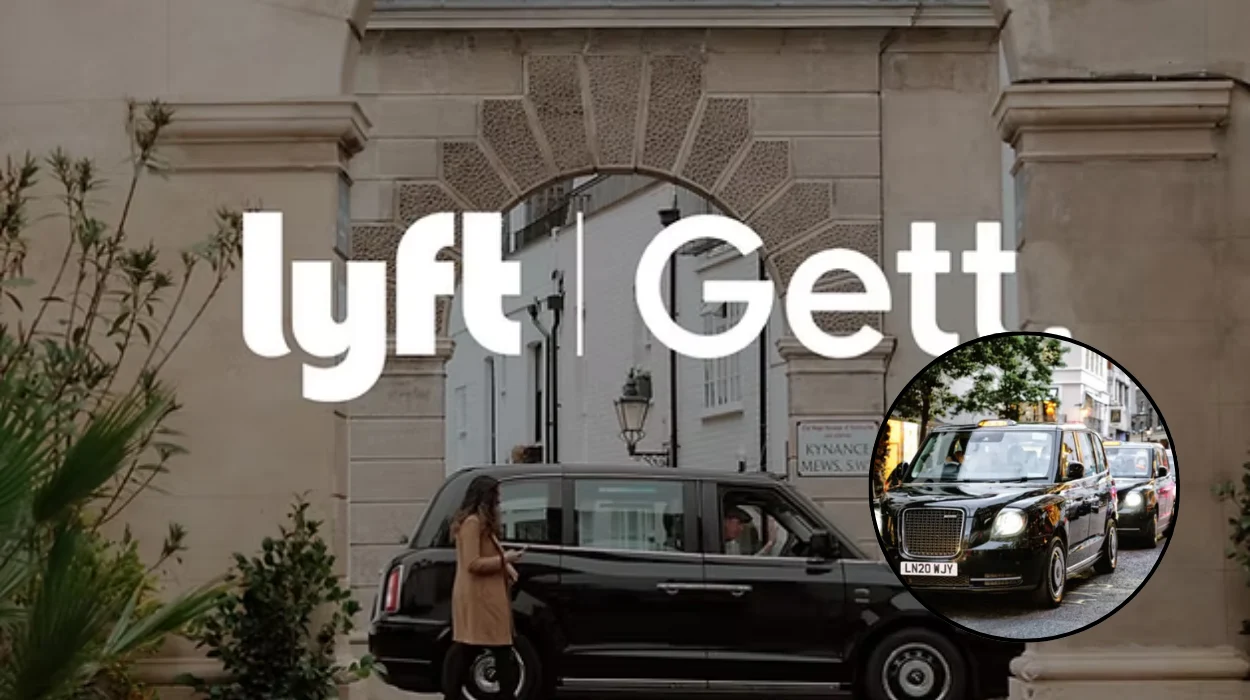
- Lyft has agreed to acquire Gett’s UK business, expanding into London black cabs and adding a regulated market to its ride-hailing model.
- The deal is expected to roughly double Lyft’s London ride volume once the integration is complete.
- The acquisition gives Lyft immediate scale in one of Europe’s busiest ride markets without building a local network from scratch.
- Lyft will also gain established enterprise relationships in the UK, which could strengthen its European presence.
- The move broadens the company’s business beyond its traditional North American focus in the US and Canada.
- Investors are likely to watch the integration closely, especially its effect on earnings, cash flow and European expansion plans.
- The story now includes black cabs, enterprise clients and regulatory considerations, not just private hire rides.
London (Britain Today News) April 24, 2026 – Lyft’s agreement to acquire Gett’s UK business marks a significant strategic move that could reshape how investors think about the ride-hailing company’s long-term value. The deal takes Lyft beyond its core North American footprint and places it directly into London’s regulated black cab market, while also giving it access to established business relationships in the UK. For a company historically centred on the United States and Canada, the transaction adds a new layer of geographic and operational complexity that may influence how the market evaluates its growth prospects.
What has Lyft agreed to buy?
Lyft has agreed to acquire Gett’s UK business, which is described as a leading London black cab app. The move gives Lyft an immediate route into one of Europe’s largest and most competitive ride markets without the need to build a driver network from the ground up. That matters because London is not simply another city for ride-hailing; it is a tightly regulated market with its own operating rules and customer expectations.
The deal also strengthens Lyft’s position in enterprise travel, since Gett’s UK business comes with established corporate relationships. That could prove important because enterprise demand tends to be steadier than consumer demand and can support recurring revenue. In valuation terms, investors may view that as a positive sign if the business can translate scale into more predictable cash generation.
Why does London matter?
London is one of the most important ride markets in Europe, both because of its size and because of the status black cabs still hold in the city. By moving into this space, Lyft is not merely adding another geographic market; it is entering a system with a different operating model and a different customer base from the one it serves in North America. That could improve the company’s international relevance, but it also introduces integration and regulatory risk.
The acquisition offers a faster route to scale than organic expansion. Instead of spending years building brand recognition, recruiting drivers and winning local corporate accounts, Lyft is buying an existing business with local reach. For investors, that shortcut can be appealing if it works, because it may accelerate growth in a market that is hard to enter from scratch.
How much scale could Lyft gain?
The deal is expected to roughly double Lyft’s London ride volume once the businesses are integrated. That is a meaningful increase, particularly in a city where density and utilisation matter for profitability. More ride volume can support stronger network effects, better service availability and more efficient use of driver supply.
However, higher volume does not automatically translate into higher profit. The real test will be whether Lyft can integrate the UK business smoothly, retain customers and drivers, and maintain healthy margins after the transaction. That is why the market will likely focus not only on ride counts, but also on operating performance after completion.
What could it mean for valuation?
From a valuation perspective, the acquisition may be seen as a step towards a more diversified business. Lyft has long been associated with personal and shared transportation in the US and Canada, but the UK acquisition broadens the story to include regulated London black cabs and enterprise transport. A broader business profile can sometimes support a higher valuation if it reduces dependence on a single market or product line.
Still, investors are likely to remain cautious until there is evidence that the deal improves financial performance. The key questions will be whether the integration creates cost synergies, whether the UK business adds durable revenue, and how much capital Lyft must commit to support the expansion. As with any acquisition, the headline value of the deal matters less than the quality of execution that follows.
How does this change Lyft’s Europe strategy?
The acquisition signals that Lyft is willing to move further into Europe through targeted deals rather than broad, capital-intensive expansion. That approach can be attractive because it allows the company to gain local market access, customer relationships and operational infrastructure more quickly. In practical terms, it gives Lyft a stronger foothold in the UK while leaving room for future moves elsewhere in Europe.
It also shows a shift in how Lyft may be thinking about growth. Instead of relying only on the US consumer ride-hailing market, it is adding an international dimension that could help balance future revenue streams. The challenge is that Europe brings different regulations, competitive pressures and customer habits, all of which can complicate integration and execution.
What should investors watch next?
The most important things to watch are the pace of integration, the impact on ride volume and whether the UK business contributes to better earnings quality over time. Investors will also want to see whether Lyft can turn its new London presence into a platform for wider European growth. If the acquisition delivers both scale and profitability, it may strengthen the case for a re-rating of the stock.
There is also a regulatory angle. Black cabs operate in a highly structured market, and success will depend on Lyft’s ability to work within that environment while preserving service quality. That means the story is not only about growth, but also about execution, compliance and long-term strategic discipline.
Why this story matters now
For Lyft, the Gett UK deal is important because it changes the company’s identity slightly from a mostly North American ride-hailing operator into a business with a meaningful London presence. For investors, that makes the stock story more interesting, but also more complex. The upside lies in scale, diversification and access to enterprise customers; the downside lies in integration risk and the challenge of making a regulated market work profitably.
As a result, the acquisition should be viewed less as a short-term headline and more as a strategic signal about Lyft’s ambitions. If the company can use the UK business to build a stronger European platform, the deal could become a meaningful part of its valuation story. If not, it may be seen as an expensive expansion into a difficult market.