
Key Points
- Emotional Resonation: During the Labour Party conference in Liverpool, Prime Minister Andy Burnham paused for 20 seconds to compose himself when speaking about his recently deceased father, drawing a sympathetic standing ovation and highlighting his distinct, emotional communication style compared to predecessor Keir Starmer.
- Polling Resurgence: Under Burnham, Labour regained the top spot in Politico’s Poll of Polls. Ipsos and YouGov polling identify him as the most popular politician in the UK and the only major political figure with a positive net favourability rating.
- Electoral Timeline: Despite persistent speculation in Westminster regarding an early general election, political analyst Sam Freedman notes that Burnham has ruled out a snap poll, leaving a three-year gap until 2029 to maintain public momentum without immediate visible progress.
- Working-Class Reconnection: In former industrial strongholds like Port Talbot, Wales—where Labour previously slipped to third place behind Plaid Cymru and Reform UK—local voters express renewed optimism, describing Burnham’s approach as a return to traditional Labour values focused on working-class interests.
- Domestic Policy Push: In his initial weeks, Burnham enacted cost-of-living measures including capping bus fares, reducing VAT on electricity bills, and lowering business rates for pubs, alongside long-term pledges to end street homelessness, initiate a social housing expansion, reindustrialise, and devolve revenue powers to regional mayors.
- Structural Reforms & EU Stance: Conference announcements featured plans for a free national social care service funded by altering the pensions triple lock from 2030, a national commission on electoral reform, and an explicit criticism of Brexit, with Burnham refusing to rule out an EU rejoin proposal or referendum in future manifestos.
- Foreign Policy Continuity & Adjustments: Burnham supplied Ukraine with British technical expertise to build long-range SCALP missiles during his August visit to Kyiv. On Gaza, he acknowledged earlier shortcomings regarding ceasefire calls and imposed sanctions on illegal West Bank settlements, while maintaining the proscription of Palestine Action as a terrorist group without declaring a genocide or enacting a full arms embargo.
- Fiscal Pressures: Burnham faces fiscal hurdles, including funding a defense commitment of 3.5% of GDP by 2035 with Chancellor John Healey hesitant on intermediate targets. Major promises depend heavily on the upcoming budget and full spending review.
Britain Today News (BTN) October 20, 2026 – Executive Summary: Three months into his tenure as the UK Prime Minister, Andy Burnham continues to maintain strong public support and positive net favourability ratings. His early administration has combined rapid domestic cost-of-living relief with sweeping structural proposals across social care, housing, and devolution. However, analysts note significant fiscal challenges ahead as his ambitious agenda faces the reality of upcoming budget allocations and long-term spending constraints.
- Key Points
- What Marked the Emotional Turning Point at the Labour Conference?
- How Are Polling Numbers Reflecting Burnham’s Early Performance?
- How Is the Working-Class Electorate Responding to the New Leadership?
- What Are the Key Domestic Policies Introduced in Burnham’s First Weeks?
- What Long-Term Reform Plans Were Unveiled at the Party Conference?
- How Does Burnham’s Foreign Policy Align with Previous Administrations?
- What Financial and Defense Pressures Lie Ahead for the Administration?
- Background of the Development
- Prediction: How This Development Can Affect Working-Class Voters and Regional Communities
What Marked the Emotional Turning Point at the Labour Conference?
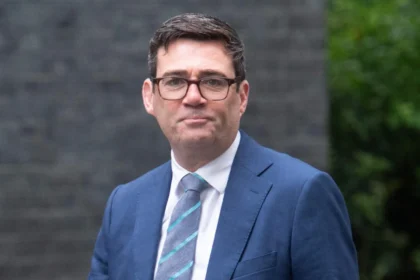
There was a moment towards the end of Andy Burnham’s conference speech in Liverpool that, through silence, spoke volumes. The new prime minister and Labour leader fell quiet. For 20 seconds he stood, saying nothing. He had not forgotten his words; he was gathering his emotions for a passage of the speech he had not been able to make it through in rehearsals without crying. Burnham’s father had died just a couple of weeks before, and this was the section where he was set to talk about it.
As the audience realised what was coming, they stood, applauding, and urging him on with shouts of “Come on, lad!” and “Come on, Andy!”. Thanking them, he composed himself and continued. Conference speeches are theatre, and contemporary British political standards require that a leader be relatable. But there was little doubt that Andy Burnham handled this moment with an emotional register that struck many attendees as genuine. His predecessor Keir Starmer sometimes came across as wooden, almost robotic, and uncomfortable in front of cameras. Burnham, the seventh prime minister in 10 years, presents a more emotional demeanor, talking big ideas and grand solutions while relishing the opportunity to communicate.
How Are Polling Numbers Reflecting Burnham’s Early Performance?
In the vibes-denominated currency of modern political discourse, this communication style has yielded measurable results. Politico’s Poll of Polls indicated that the Labour Party retook top spot shortly after Burnham became prime minister—a position it has held continuously since. At the end of September, polling conducted by Ipsos found Andy Burnham to be the only politician in the UK with a positive net favourability rating. Concurrent tracking from YouGov similarly evaluated him as the most popular politician in the country.
However, sustaining these figures requires delivering tangible change prior to the next general election, scheduled for 2029 unless an early poll is called. As observed by political analyst Sam Freedman, “So many in Westminster keep coming back to an early election, despite Burnham ruling it out … No one can quite figure out how Burnham keeps the hope vibe going for three more years with relatively little visible progress.”
How Is the Working-Class Electorate Responding to the New Leadership?
In the Welsh town of Port Talbot, terraces of workers’ cottages cluster beside the UK’s largest steelworks. Like much of Wales, Port Talbot voted Labour for a century until elections for the Senedd Cymru (Welsh Parliament) in May, when Labour was beaten to an unprecedented third place behind Plaid Cymru’s nationalists and Reform UK.
That defeat occurred prior to Burnham taking over the party leadership. Myles Lewis, who organises social walks for Port Talbot’s elderly population, stated to Al Jazeera that Labour had previously failed to convince people on immigration and that Starmer’s communication was insufficient. Reflecting on the current leadership, Lewis stated that “[now], it’s kind of going back to what Labour was in the 50s and 60s, where they actually looked after the working-class people. I do believe Andy Burnham can get there because I think he has the interests of the working-class people.”
What Are the Key Domestic Policies Introduced in Burnham’s First Weeks?
During his initial weeks in office, Prime Minister Burnham implemented a rapid series of domestic, cost-of-living-focused interventions. These early policy steps included:
- Capping bus fares across England.
- Cutting the value-added tax (VAT) on electricity bills.
- Reducing business rates for local pubs.
In addition to these immediate measures, Burnham outlined commitments to end street homelessness, reindustrialise the nation, bring public services back under state control, and initiate the largest build-out of social housing since World War II. Having served as Mayor of Greater Manchester for nine years, Burnham has consistently advocated for the devolution of powers from Westminster to the UK’s nations and regions. In July, he announced mechanisms allowing regional mayors to retain a share of business rates starting in April 2027, followed by a share of income tax revenue from 2028.
What Long-Term Reform Plans Were Unveiled at the Party Conference?
Burnham’s September conference speech set out the parameters for several major legislative and constitutional proposals. He pitched the creation of a national social care service that would be free at the point of use, funded by modifying the UK pensions’ triple lock starting in 2030, with full implementation targeted for the next parliament.
Furthermore, Burnham proposed a national commission on electoral reform accompanied by a manifesto commitment to overhaul the voting system. On international affairs and European integration, he delivered a direct evaluation of Brexit, stating that it “has done more harm than good.” He explicitly refrained from ruling out an in-out referendum or a formal manifesto pledge for the UK to rejoin the European Union in the future.
How Does Burnham’s Foreign Policy Align with Previous Administrations?
On international relations, the distinction between Burnham and his predecessors remains less pronounced. During an official visit to Ukraine in August, Burnham announced that the UK would provide technical expertise to assist in building long-range SCALP missiles. This visit marked him as the fourth British prime minister to travel to Kyiv since the onset of Russia’s full-scale invasion.
Regarding the situation in Gaza, Burnham stated publicly that the previous Labour government “didn’t get it right” and should have called for a ceasefire earlier. In September, his administration introduced a targeted sanctions package directed at illegal West Bank settlements. However, his government has stopped short of issuing a genocide declaration or imposing a comprehensive arms embargo against Israel. Additionally, Burnham has maintained the decision made under the Starmer administration to proscribe the protest group Palestine Action as a designated terror organisation.
What Financial and Defense Pressures Lie Ahead for the Administration?
Defense expenditure presents an ongoing policy challenge for the Treasury. The government’s formal pledge targets defense spending at 3.5 percent of gross domestic product (GDP) by 2035. Burnham has refrained from specifying whether this commitment will be met through tax increases or reductions in welfare spending.
John Healey, who resigned as defense secretary in June citing underfunding concerns, currently serves as Chancellor of the Exchequer. Healey has declined to commit to the interim target of 3 percent by 2030 that he had previously advocated. With Burnham’s first budget scheduled for the end of October and a comprehensive spending review following next year, the fiscal viability of his primary initiatives—including reindustrialisation, public service nationalisation, and social care reform—remains dependent on upcoming budgetary decisions.
Background of the Development
The political transition that brought Andy Burnham to 10 Downing Street marks a significant shift in the trajectory of the Labour government following its return to power. Burnham previously served in the Cabinet under Prime Ministers Tony Blair and Gordon Brown as Chief Secretary to the Treasury, Culture Secretary, and Health Secretary. After contesting the Labour leadership in 2010 and 2015, he stepped away from Westminster politics to serve as the Mayor of Greater Manchester from 2017 to 2026.
During his nine years in local government, Burnham built a national platform centered on regional devolution, public transport integration (the Bee Network), and local social policy. His return to Parliament and subsequent elevation to Prime Minister followed internal party shifts and public dissatisfaction with Keir Starmer’s administration, which had faced criticism regarding communication style, economic trajectory, and regional electoral losses such as those seen in Wales. Burnham’s premiership represents an attempt to bridge traditional Labour working-class support with structural economic reforms.
Prediction: How This Development Can Affect Working-Class Voters and Regional Communities
The policy direction and political survival of Andy Burnham’s government will directly impact working-class voters and regional communities across the UK in several distinct ways:
- Immediate Household Budgets: Short-term interventions such as capped bus fares, reduced VAT on energy bills, and lower pub business rates provide immediate, albeit modest, relief to lower- and middle-income households managing cost-of-living pressures.
- Long-Term Intergenerational Finances: The proposal to alter the pensions triple lock from 2030 to finance a free National Social Care Service creates a trade-off. While it promises to relieve working-class families of catastrophic social care costs in the future, it may reduce expected retirement income growth for future pensioners.
- Regional Political Power: Expanding fiscal devolution by allowing regional mayors to retain portions of business rates and income tax from 2027 and 2028 shifts resource allocation away from Westminster. This could empower regional authorities to fund localized infrastructure and housing projects tailored to former industrial areas like Port Talbot.
- Public Service Delivery: Promises to expand social housing construction and re-establish public control over services could improve living stability for low-income demographics, provided the upcoming budget successfully funds these commitments without prompting severe cuts in other public sectors.