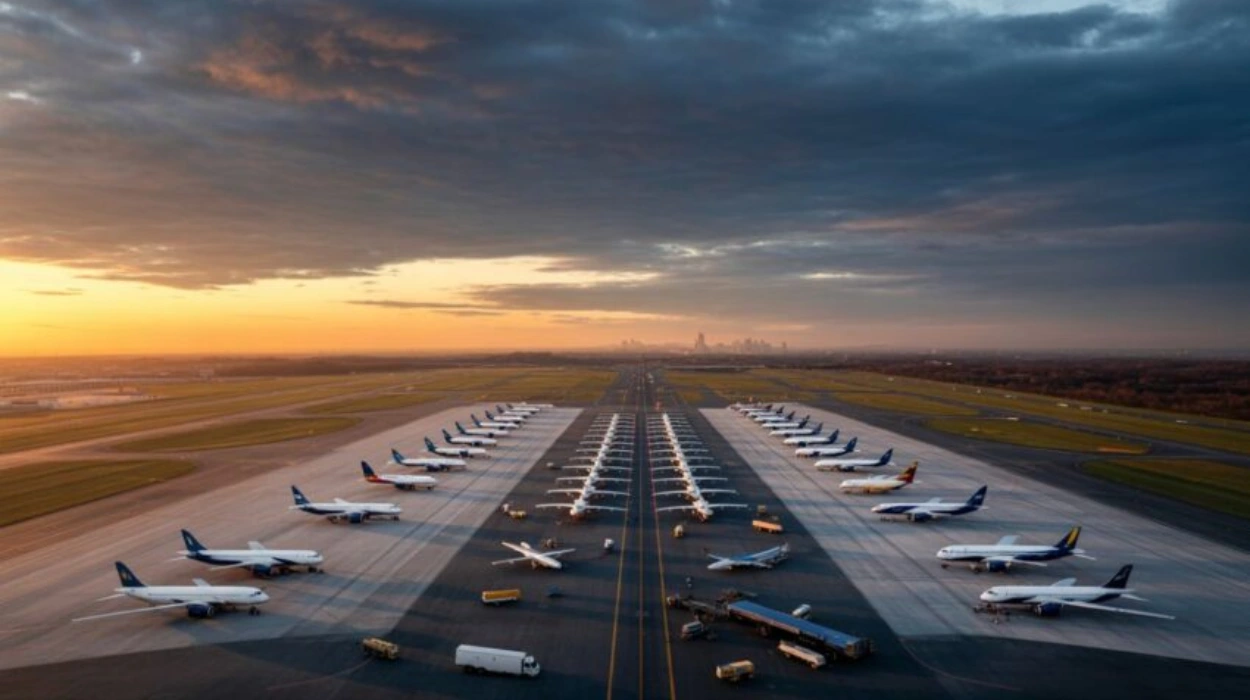
A jet fuel shortage disrupts aviation when airlines, airports, and fuel suppliers cannot secure enough kerosene-based fuel to operate scheduled flights. In April 2026, the International Energy Agency warned that Europe had about six weeks of jet fuel left, and the International Air Transport Association said cancellations in Europe could begin by the end of May if supplies do not recover.
- What is a jet fuel shortage?
- Why does a jet fuel shortage spread so fast?
- What caused the 2026 shortage?
- How does a fuel shortage cancel flights?
- Which regions face the highest risk?
- What do airlines do first?
- How much fuel do airlines need?
- What role do governments play?
- How does the shortage affect travelers?
- What makes this crisis different?
- What happens next for global aviation?
- Why this matters for search and news readers
What is a jet fuel shortage?
A jet fuel shortage is a supply gap between airline fuel demand and available aviation kerosene at airports and storage hubs. It becomes severe when inventories fall fast enough to force schedule cuts, fuel rationing, route reductions, or outright flight cancellations. Jet fuel is the refined petroleum product airlines use in turbine aircraft, and it remains one of the largest operating costs in aviation. The shortage matters because airlines depend on continuous, high-volume supply chains that move fuel through refineries, pipelines, terminals, tankers, and airport hydrants.
The shortage does not begin with a single empty tank. It develops when the system loses resilience across multiple points at once. Those points include crude oil supply, refinery output, shipping access, regional storage, and airport distribution. When one major route is blocked, the rest of the system tightens quickly.
Why does a jet fuel shortage spread so fast?
A jet fuel shortage spreads fast because aviation runs on just-in-time fuel logistics, thin regional inventories, and tightly scheduled aircraft rotations. Once supply tightens, airlines react immediately by trimming lower-margin routes, adjusting fleet use, and canceling flights to protect operations. Airlines cannot absorb long fuel interruptions without changing schedules because fuel is a core input for every departure and arrival. The current crisis shows how geopolitical disruption can hit aviation faster than many other industries because aircraft cannot depart without assured fuel at destination airports.
Aviation fuel markets also move through complex infrastructure. Fuel often travels from refineries through pipelines, storage terminals, barges, trucks, and airport hydrant systems. If any of these links weaken, the available fuel at an airport drops even when global oil production remains substantial. That is why regional shortages often appear first in aviation hubs with high demand and limited local supply.
What caused the 2026 shortage?
The 2026 shortage stems from disruption to oil and fuel flows through the Strait of Hormuz, reduced refinery access, and rising geopolitical risk that tightened global supply chains. Europe became the most exposed region because it imports a large share of its jet fuel and relies heavily on Middle East shipping routes. AP reported that the IEA linked the crisis to restrictions around the Strait of Hormuz and warned that Europe had only about six weeks of jet fuel left. BBC, CNBC, and Euronews also reported that the crisis created a credible risk of shortages in the near term.
Europe’s exposure is structural. Aerospace Global News reported that Europe imports around 30% of its jet fuel needs, with much of that volume normally coming via the Strait of Hormuz from Gulf suppliers. When that route weakens, Europe must rely more on local production, alternate shipping routes, or emergency stock management. That shift raises costs and increases the chance of cancellations on long-haul and short-haul networks.
How does a fuel shortage cancel flights?
A fuel shortage cancels flights by forcing airlines to reduce frequencies, remove marginal routes, and protect aircraft rotations when supply at airports becomes uncertain. If fuel cannot be guaranteed, airlines cut service before the disruption causes stranded aircraft or missed network connections. The IATA said that by the end of May 2026, Europe could start seeing cancellations for lack of jet fuel, and it noted that the problem was already visible in parts of Asia. AP and PBS both reported that airlines could face higher fares and fewer departures as the summer travel period approaches.
Airlines use several operational responses when fuel supply tightens. They can shift aircraft to airports with stronger supply, add technical refueling stops, reduce schedule frequency, or cancel low-yield routes. Airlines for America has long described these remedies as limited and costly, with schedule reductions and rerouting among the main options. The practical result is fewer available seats and less predictable travel across a network.
Which regions face the highest risk?
Europe faces the highest immediate risk because it depends heavily on imported jet fuel and has limited time buffers in the current crisis. Asia also faces pressure, while the United States has a lower direct shortage risk but still faces higher fuel costs and route changes. AP reported that Europe had about six weeks of jet fuel remaining, while IATA said disruption was already appearing in parts of Asia. CNN reported that the U.S. was not facing an immediate shortage, but rising global fuel costs were pushing American airlines to cut weaker routes and raise fares.
The geographic risk differs because fuel systems differ. Europe has dense airline traffic and heavy reliance on imported middle distillates. The United States has larger domestic production and export capacity, which softens the supply shock, even though it still feels the price effect. Asia includes both major fuel-importing hubs and large long-haul networks, which makes airport-by-airport disruption uneven.
What do airlines do first?
Airlines first protect the most profitable and operationally critical flights. They reduce lower-demand routes, cut frequency on duplicate services, and delay expansion plans before they remove major trunk routes. Business Insider reported that 19 of the world’s 20 largest airlines had cut flights in May amid rising fuel pressure, and carriers targeted routes with multiple daily frequencies or weaker demand. Fortune and The Independent also reported route cancellations and capacity cuts as fuel costs surged.
This pattern reflects standard airline economics. If fuel becomes more expensive or less available, airlines preserve network integrity by concentrating aircraft on routes with the highest passenger demand. That means smaller markets, leisure routes, and thin long-haul services face the first cuts. Travelers then see fewer choices, higher fares, and tighter rebooking options.
How much fuel do airlines need?
Commercial aviation needs large, continuous fuel volumes because every scheduled flight consumes fuel during taxi, takeoff, climb, cruise, and landing. Reserve fuel rules add extra protection, so airlines cannot plan around bare-minimum supply. FAA guidance and aviation fuel regulations require reserve fuel and careful in-flight fuel management to keep aircraft safe under changing conditions. Those rules ensure aircraft retain enough fuel to reach an alternate airport and maintain final reserve fuel on landing.
The reserve requirement matters during shortages because it limits flexibility. Airlines cannot simply load less fuel and hope for the best. They must comply with operational fuel rules, especially on international and extended overwater routes. That is why a regional shortage can force route changes even before airport tanks are fully empty.
What role do governments play?
Governments play a central role by coordinating stock monitoring, protecting critical fuel logistics, and using emergency reserves or market measures to stabilize supply. In the 2026 crisis, the European Commission began discussing fuel-sharing and coordinated stock actions to reduce disruption. Euronews and Aerospace Global News reported that the EU downplayed immediate shortage claims while still preparing coordination measures, including stock monitoring, refinery optimization, and possible emergency reserve use. Those actions show that authorities treat aviation fuel as strategic infrastructure.
Public policy matters because jet fuel shortages are not solved only by price increases. Fuel at an airport requires transportation, storage, and regulatory alignment. Governments can speed access to alternative imports, prioritize airport supply, and coordinate with airlines and airports to keep essential routes running. Without that coordination, shortages spread from a regional problem into a national travel problem.
How does the shortage affect travelers?
Travelers face higher fares, fewer nonstop options, more schedule changes, and a greater chance of cancellation on affected routes. The impact becomes strongest during peak travel periods when aircraft loads are high and alternative seats are scarce. AP and PBS reported that a supply shock can raise airfare and force cancellations as summer demand grows. CNN also noted that the global shortfall pushes airlines to scale back low-cost fares and weaker routes.
The passenger effect often appears in stages. First, airlines reduce promotional fares and limit seat inventory. Next, they adjust departure times or switch aircraft size. Then they cancel unprofitable or fuel-intensive routes. Travelers then face narrower rebooking choices because the whole network has less spare capacity.
What makes this crisis different?
This crisis differs because it combines geopolitical disruption, refinery stress, and an already tight aviation supply chain at the same time. It affects both fuel availability and fuel price, which means airlines face operational risk and cost inflation simultaneously. AP described the situation as a major energy shock tied to the Strait of Hormuz, while IEA chief Fatih Birol called it the largest energy crisis encountered so far in this context. Reuters-linked reporting in Aerospace Global News also noted EU plans to improve refinery use and coordinated stock handling, confirming that supply risk reached policy level quickly.
The combination matters because aviation recovers poorly from simultaneous shocks. A price rise alone can be absorbed with fare increases or hedging. A supply problem alone can sometimes be solved with rerouting or alternative sourcing. When both hit together, airlines face fewer ways to protect schedules, especially on routes that depend on imported fuel.
What happens next for global aviation?
The next phase depends on whether fuel flows through the Strait of Hormuz recover quickly, whether refineries can redirect output, and whether governments coordinate supply to airports before inventories fall further. If those conditions fail, more cancellations, reduced capacity, and higher fares follow. IATA said that Europe could start seeing cancellations by the end of May if shortages continue, and AP reported that flight disruptions could appear soon if current conditions persist. These warnings indicate that aviation planning now hinges on short-term fuel logistics rather than normal seasonal demand alone.
Longer term, the crisis reinforces three structural lessons. First, aviation depends on secure fuel corridors. Second, regional inventory levels matter as much as total global output. Third, airlines with fewer fuel options face the biggest schedule risk. The market response will likely include more stock coordination, more alternative supply routes, and tighter capacity management on exposed networks.
Why this matters for search and news readers
Jet fuel shortages matter because they connect energy security, airline operations, and consumer travel costs in one chain of impact. The issue is not only about oil prices; it is about whether airlines can physically obtain fuel at the airports where flights depart and arrive. That is why the topic appears in economic reporting, aviation reporting, and policy coverage at the same time. Readers tracking travel, trade, or energy markets need the full chain to understand why cancellations begin.
For broad audiences, the key signal is simple. When aviation fuel supply tightens, flight schedules become less stable. When the shortage lasts long enough, airlines cut routes and raise fares. When the region is highly dependent on imported fuel, the disruption becomes visible to travelers quickly.